
Liability-Only vs. Full Coverage Auto Insurance
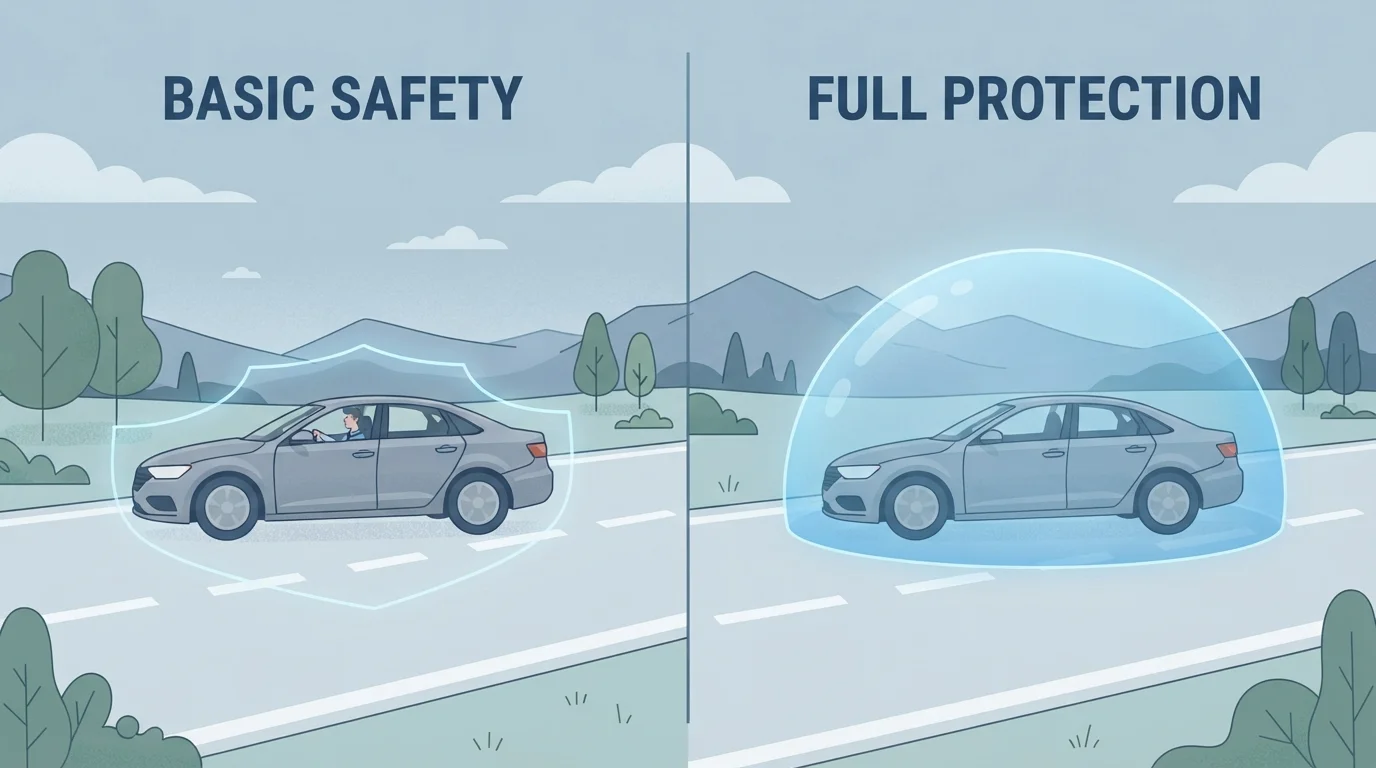
Photo credit: ArticlesHaven.net
In this article
What separates these two coverage tiers, when each makes financial sense, and what you'd be left exposed to with each choice.
Key Takeaways
- Liability-only covers damage and injuries you cause to others; it does not pay for your own vehicle.
- Full coverage typically adds collision and comprehensive protection on top of the required liability.
- Lenders and lessors generally require full coverage when you finance or lease a vehicle.
- The financial case for full coverage weakens as a vehicle's market value declines.
- State minimums for liability are a legal floor, not a recommended coverage level.
What Each Coverage Tier Actually Includes
Before comparing costs and trade-offs, it helps to be precise about what each label means. For a broader breakdown of every coverage type, see our plain-English reference on auto insurance coverage.
Liability-only coverage is the minimum most states legally require to register and drive a vehicle. It has two components:
- Bodily injury liability - pays for injuries to other people when you're at fault in an accident.
- Property damage liability - pays for damage you cause to another person's vehicle or property.
Neither component touches your own vehicle or your own medical costs. For more on what liability does and doesn't protect, see liability coverage explained in plain English.
Full coverage is an informal industry term - not a single policy type - that typically refers to a policy combining liability with two additional protections:
- Collision coverage - pays for damage to your vehicle from a crash, regardless of fault.
- Comprehensive coverage - pays for non-collision damage such as theft, fire, weather events, or animal strikes.
Full coverage policies may also include uninsured/underinsured motorist protection, medical payments coverage, and other optional add-ons depending on the insurer and state. Collision and comprehensive serve different scenarios and are worth understanding individually before bundling.
| Criterion | Liability-Only | Full Coverage |
|---|---|---|
| Covers other party's injuries | Yes | Yes |
| Covers other party's property damage | Yes | Yes |
| Covers your own vehicle in a crash | No | Yes (collision) |
| Covers theft, weather, non-collision damage | No | Yes (comprehensive) |
| Required by lenders/lessors | No | Yes |
| Typical monthly premium | Lower | Higher |
| Deductible applies | No (liability only) | Yes (collision/comprehensive) |
| Best vehicle age/value fit | Older, lower-value vehicles | Newer or higher-value vehicles |
The Financial Logic Behind Each Choice
The core question is straightforward: how does the additional premium for full coverage compare to your vehicle's actual exposure?
~13%
Estimated share of uninsured drivers on US roads
According to Insurance Research Council estimates, roughly 1 in 8 drivers on US roads carries no insurance - a risk that liability-only policyholders absorb directly if hit by an uninsured motorist.
$4,700+
Average collision claim payout
Industry data from insurance research groups indicates average collision claims routinely exceed several thousand dollars, a figure that illustrates the out-of-pocket exposure for liability-only drivers.
2-3×
Full coverage premium multiplier vs. liability-only
Full coverage premiums are typically two to three times higher than liability-only premiums for the same driver, though the exact difference depends on vehicle value, location, and driving history.
A common rule of thumb is to reconsider full coverage when a vehicle's market value drops to the point where annual premium costs for collision and comprehensive represent a significant portion of a potential claim payout - particularly once you subtract the deductible. That said, this threshold varies by person. Someone without savings to cover an unexpected $4,000 repair may rationally carry full coverage on a modest vehicle, while someone with ample reserves might not.
One factor that removes the choice entirely: financing or leasing. When a lender holds a security interest in the vehicle, they require collision and comprehensive coverage to protect their asset. This is a contractual obligation, not optional. If you let coverage lapse, the lender can force-place insurance on your behalf at a much higher cost. GAP insurance is a related consideration here - if you owe more than the vehicle is worth, a standard payout on a total loss might not cover what you still owe the lender.
Your State's Rules Can Affect the Calculation
Some states operate under no-fault insurance systems, which require personal injury protection (PIP) regardless of who caused an accident. This changes how medical costs are handled and may affect how useful additional coverages are in your situation. See how no-fault and at-fault states differ to understand how your state's rules apply.
State minimum liability limits are often quite low relative to real-world accident costs. For context on how gaps form, see what minimums don't cover in practice.
What You're Left Exposed to With Each Option
Understanding the gaps in each tier helps clarify the actual risk you're accepting, not just the premium you're paying.
With liability-only: If you cause an accident, the other driver's car and medical costs are covered up to your policy limits. But your own vehicle damage is entirely your responsibility. A collision with an uninsured driver - common in many states - could leave you with repair or replacement costs and no coverage to draw on unless you've added uninsured motorist property damage coverage separately. Weather events, theft, or a deer strike are similarly uncovered. For a closer look at how liability works across different scenarios, see why liability is often underestimated.
With full coverage: Your vehicle is protected across a wider range of events, but you're not without gaps. Your liability limits still cap what the insurer will pay toward another party's losses - and if those limits are exceeded, you may be personally responsible for the remainder. Higher-value assets or significant income can make this exposure meaningful. Some drivers address this with an umbrella policy; see how umbrella insurance extends liability limits for a breakdown of how that works.
Neither option eliminates all financial risk. Both require honest self-assessment of your vehicle's value, your financial cushion, and how much uncertainty you can absorb.
This article is for general informational purposes only and does not constitute personalized insurance or financial advice. Coverage terms, limits, and availability vary by insurer, policy, and state. Consult a licensed insurance agent or adviser to evaluate your specific situation.

Author
Articles Haven Editorial Contributor
Articles Haven Editorial Team is the collective byline for our editorial team and contributor network. Articles published under this byline or an editorial pen name are researched, written, and reviewed according to our editorial standards for clarity, consistency, and independence before publication.
View all articles →