
Comprehensive vs. Collision Auto Coverage: Picking the Right Protection for Your Car
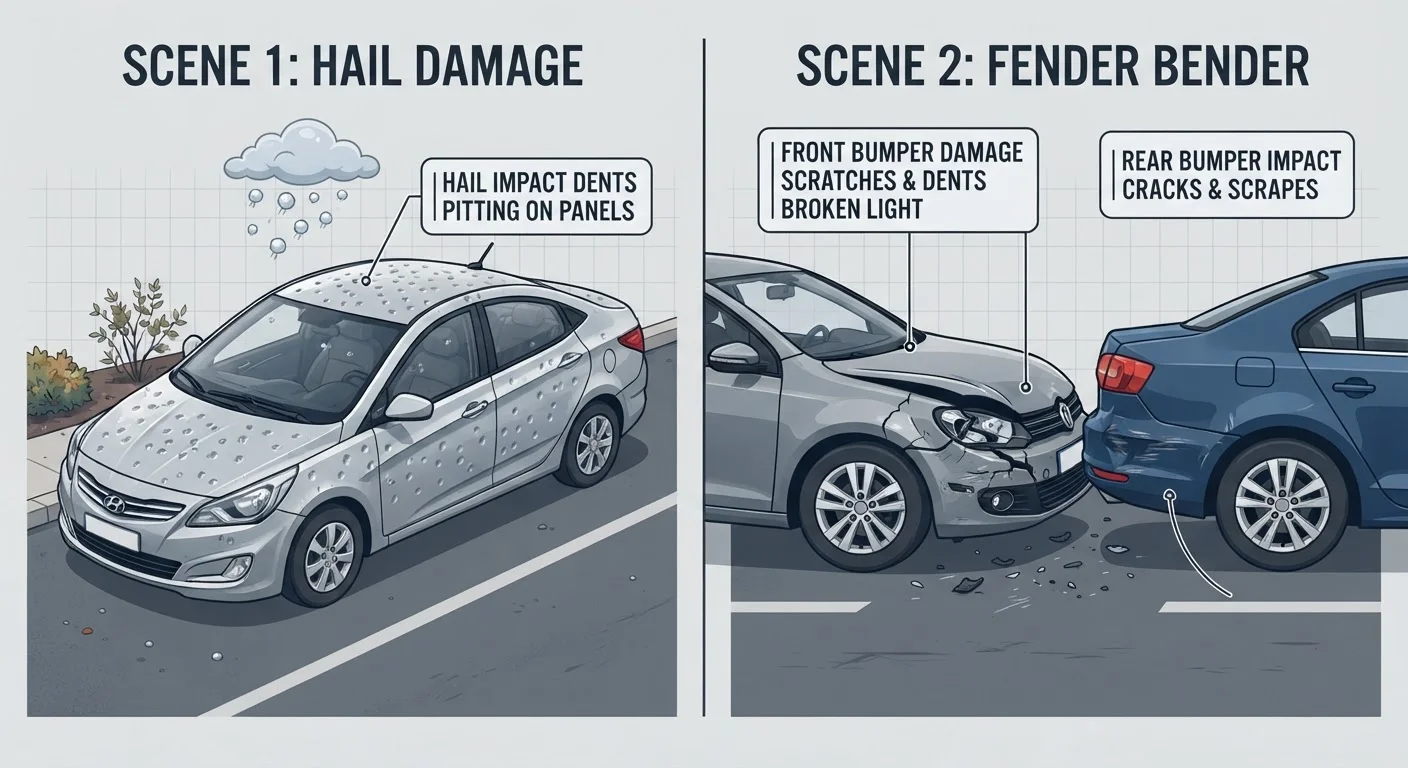
Photo credit: ArticlesHaven.net
In this article
Both cover vehicle damage, but under very different circumstances. Learn what each pays for and when carrying both makes financial sense.
Key Takeaways
- Comprehensive covers non-collision damage: theft, weather, fire, falling objects, and animal strikes.
- Collision covers damage your car sustains in an impact with another vehicle or a stationary object.
- Lenders typically require both coverages when you finance or lease a vehicle.
- Each coverage carries its own deductible, which directly affects your premium.
- Older, lower-value vehicles may not justify the cost of carrying both coverages.
- Dropping either coverage is a personal financial decision - weigh the car's current market value against annual premium cost.
What Each Coverage Actually Pays For
Despite appearing on the same policy page, comprehensive and collision coverage respond to entirely different triggering events. Understanding that distinction is the starting point for deciding how much protection you actually need.
Comprehensive coverage pays for damage caused by events largely outside your control as a driver. Covered perils typically include theft, vandalism, fire, hail, flooding, tornadoes, falling objects (such as tree limbs), and collisions with animals. If a deer runs into the side of your car or a windstorm deposits a tree on your hood, comprehensive is the coverage that steps in.
Collision coverage is narrower in scope: it pays for damage your vehicle sustains when it makes physical contact with another vehicle or a stationary object - a guardrail, a parked car, a utility pole, or a parking structure column. Fault is generally not the determining factor; even a single-car rollover is handled under collision.
For a broader overview of how these fit into your overall policy, see Car Insurance Coverage Types: A Plain-English Reference.
| Criterion | Comprehensive | Collision |
|---|---|---|
| Triggering event | Non-collision perils (weather, theft, fire, animals) | Physical impact with vehicle or object |
| Fault relevance | Not applicable | Pays regardless of fault |
| Typical deductible | $250-$1,500 | $250-$1,500 |
| Required by lenders? | Yes, when financing or leasing | Yes, when financing or leasing |
| Covers theft? | Yes | No |
| Covers weather damage? | Yes (hail, flood, wind) | No |
| Covers single-car accident? | Only if animal-related | Yes (rollover, road-departure) |
| Payout basis | Actual cash value (ACV) | Actual cash value (ACV) |
Deductibles, Premiums, and the Value Question
Both coverages come with a deductible - the amount you pay out of pocket before insurance covers the remainder of a claim. Common deductible amounts range from $250 to $1,500. A higher deductible lowers your premium but increases your exposure on any individual claim.
~$167
Average annual comprehensive premium (U.S.)
According to the National Association of Insurance Commissioners' most recent auto insurance database report, comprehensive coverage averages roughly $167 per year nationally, though rates vary significantly by state and vehicle.
~$363
Average annual collision premium (U.S.)
NAIC data indicates collision coverage costs roughly twice as much as comprehensive on average, reflecting the higher frequency of road-accident claims.
20%
Approximate vehicle value loss in year one
Vehicles commonly lose a significant portion of their value in the first year of ownership, which directly affects the maximum payout comprehensive or collision coverage would ever provide.
The practical test for whether a coverage makes financial sense is straightforward: compare the car's current actual cash value (ACV) against the annual premium you pay plus the deductible you'd owe on a claim. If that combined figure is close to or exceeds the maximum payout you'd ever receive, the coverage offers diminishing value. Insurers pay ACV - not the replacement cost of a new vehicle - so depreciation matters significantly in this calculation.
Carrying liability-only vs. full coverage auto insurance is a separate but related decision that depends on how much financial risk you're comfortable self-insuring.
When Lenders Make the Decision for You
If you're financing or leasing your vehicle, the choice of whether to carry comprehensive and collision is usually not yours to make. Lenders and leasing companies have a financial stake in the vehicle and routinely require both coverages as a condition of the loan or lease agreement. Dropping either coverage without the lender's consent is a contract violation and can trigger force-placed insurance - a lender-selected policy that tends to be significantly more expensive and less favorable than one you'd shop for yourself.
Force-Placed Insurance: A Costly Consequence
If a lender discovers you've dropped required coverage, they may purchase a policy on your behalf and add the cost to your loan balance. Force-placed policies generally protect only the lender's interest - not yours - and tend to carry higher premiums than a standard policy you'd select independently. Maintaining the required coverages and notifying your lender of any policy changes avoids this outcome.
Once the loan is paid off, you regain full discretion. At that point, running the value-versus-cost calculation above becomes worthwhile. If your vehicle has depreciated substantially, maintaining full physical-damage coverage may no longer serve your financial interests.
If you owe more than the car is worth, GAP insurance is a separate product worth examining - it covers the gap between the ACV payout and your remaining loan balance after a total loss.
How to Think Through Your Decision
There's no universal answer to whether you need one coverage, both, or neither beyond what a lender mandates. A few practical questions can sharpen your thinking:
- Where do you live? High-risk weather regions and areas with elevated vehicle theft rates make comprehensive harder to justify dropping.
- How do you drive? High annual mileage and frequent urban driving increase collision exposure.
- What is the car worth? Check a reliable valuation resource to confirm current ACV before your next renewal.
- What deductible can you absorb? If a $1,000 out-of-pocket expense would strain your budget, a lower deductible is worth the higher premium.
For help weighing these factors against each other, guidance on choosing a policy can provide a structured framework. You can also review the main categories of insurance to see how physical-damage coverage fits into the broader picture.
This article is for general informational purposes only and does not constitute insurance, legal, or financial advice. Coverage terms, exclusions, and requirements vary by insurer and by state. Consult a licensed insurance professional and review your actual policy documents before making coverage decisions.

Author
Articles Haven Editorial Contributor
Articles Haven Editorial Team is the collective byline for our editorial team and contributor network. Articles published under this byline or an editorial pen name are researched, written, and reviewed according to our editorial standards for clarity, consistency, and independence before publication.
View all articles →