
Liability Coverage: What It Protects, What It Doesn't, and Why It's Often Underestimated
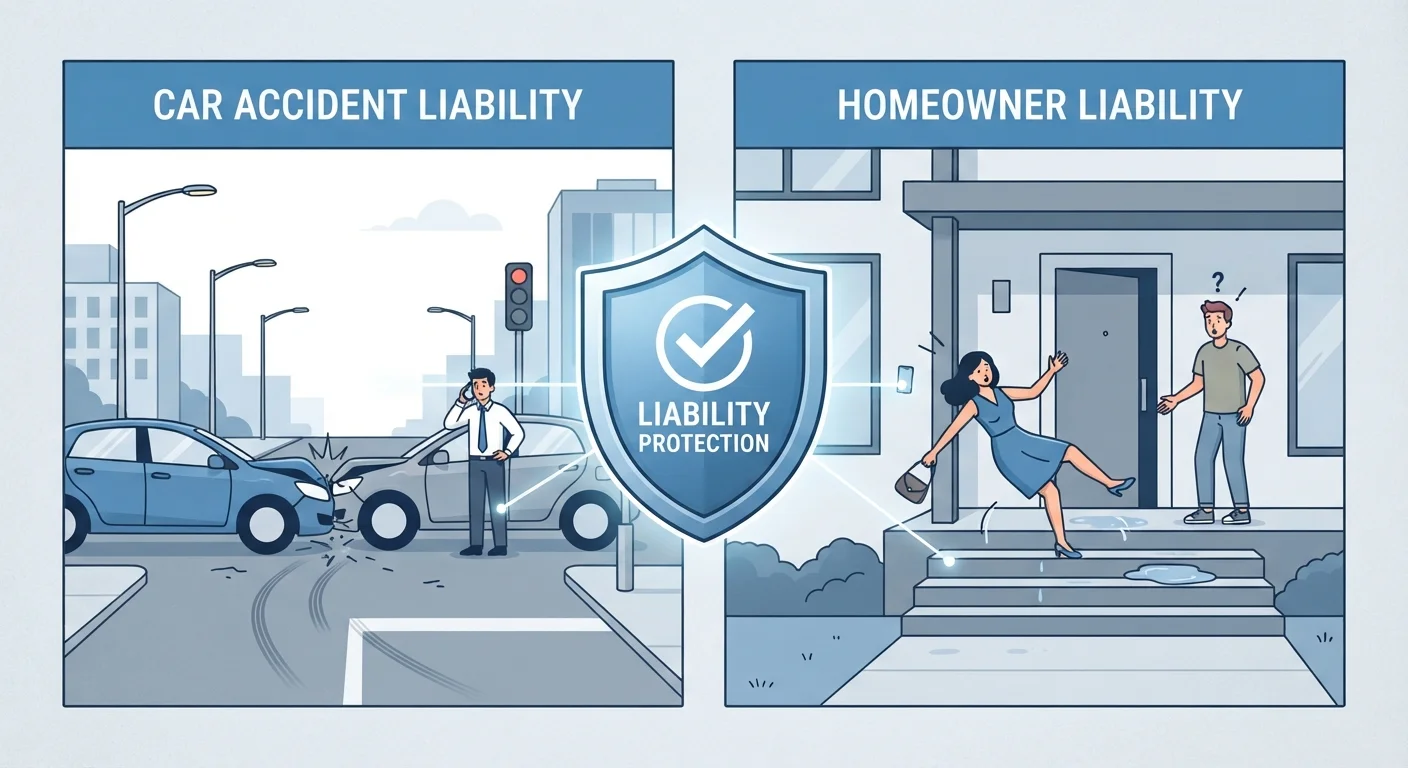
Photo credit: ArticlesHaven.net
In this article
Liability is one of the most consequential coverage types and one of the least understood. Here's a clear breakdown for everyday consumers.
Key Takeaways
- Liability coverage protects others from harm you cause - not you or your own property.
- It appears in auto, homeowners, and renters policies, each with different scope.
- Most state minimums for auto liability are widely considered too low for real-world costs.
- Liability does not cover intentional acts, business activities, or certain excluded relationships.
- Umbrella policies extend liability protection beyond standard policy limits.
What Liability Coverage Actually Does
Liability coverage is the financial buffer between an accident you cause and a lawsuit that could affect everything you own. When you're found legally responsible for someone else's bodily injury or property damage, liability coverage pays on your behalf - up to your policy's limit.
It shows up in several policy types: auto insurance covers liability when you're at fault in a collision; homeowners and renters policies include personal liability for incidents on your property (and often off it); and business policies carry their own commercial general liability (CGL) coverage. The mechanics are similar across all of them - your insurer steps in to cover damages and legal defense costs when a covered claim arises.
For a fuller breakdown of how liability fits within auto insurance specifically, see Car Insurance Coverage Types: A Plain-English Reference.
~$1M+
Potential cost of a serious injury lawsuit
Insurance industry educators commonly cite multi-six-figure to seven-figure jury awards in personal injury cases, underscoring why minimum liability limits are often inadequate.
30+ states
States requiring auto liability coverage
Nearly all U.S. states mandate some level of auto liability insurance, though minimum required limits vary widely by state.
$150-$300/yr
Typical annual cost of umbrella coverage
Industry guidance suggests umbrella policies providing $1 million in additional liability coverage often cost relatively little annually, making them a cost-effective way to extend protection.
What Liability Coverage Does Not Pay For
Understanding the gaps is just as important as knowing the protections. Liability coverage does not cover:
- Your own injuries or vehicle damage - those require separate coverages like collision, comprehensive, or health insurance.
- Intentional acts - if you deliberately cause harm, liability coverage won't respond.
- Business activities from a personal policy - driving for a rideshare or running a home business can void personal liability protection unless you have a commercial or endorsement policy.
- Contractual liability - obligations you assume under a contract are generally excluded unless the policy specifically addresses them.
- Claims within your household - most auto and home liability policies don't cover injuries to family members living in the same household.
These exclusions are where many people get caught off guard. What Liability Insurance Actually Protects You From covers these gaps in more detail.
Check Your Policy Before Starting a Side Gig
If you drive for a rideshare, deliver goods, or run any business activity using a personal vehicle, check your auto policy before assuming you're covered. Many personal policies exclude commercial use entirely. A rideshare endorsement or separate commercial policy may be necessary to avoid a gap at the worst possible moment.
Why Limits Are So Often Underestimated
Most drivers carry the minimum liability limits their state requires. The problem: those minimums were often set decades ago and haven't kept pace with real-world medical and legal costs. A single serious injury claim can easily exceed $100,000 - far beyond what a 25/50/25 minimum policy would cover.
The same problem appears in homeowners policies. Standard liability limits of $100,000 sound substantial until you account for a serious slip-and-fall injury, a dog bite claim, or a lawsuit that includes pain and suffering damages.
“The single biggest mistake people make with liability coverage is treating the state minimum as the right number. State minimums reflect a legal floor, not financial adequacy.”
— J. Robert Hunter, Former Insurance Commissioner and Director of Insurance, Consumer Federation of America
When a claim exceeds your liability limit, you're personally on the hook for the difference. That can mean liens on property, garnished wages, or liquidating savings. The solution most insurance professionals point to is carrying higher base limits and, where appropriate, adding an umbrella policy. Umbrella coverage is generally inexpensive relative to the protection it adds.
For context on how underestimating coverage limits plays out across policy types, The Most Common Ways People Underestimate How Much Coverage They Need walks through common scenarios.
How to Evaluate Your Liability Limits
Choosing the right liability limits comes down to your exposure - not just the minimum your state requires or your lender accepts. A few questions worth working through:
- What are your assets? Someone with significant savings, a home, or investment accounts faces greater financial risk from a judgment than someone with fewer attachable assets.
- What's your risk profile? Longer commutes, teen drivers on your auto policy, a swimming pool, or a dog breed with a history of claims all raise the stakes.
- Do you have coverage gaps between policies? Auto and home liability are separate. An umbrella policy bridges them and extends above both.
If you're comparing liability-only auto coverage to a full policy, the trade-offs go beyond price. Liability-Only vs. Full Coverage Auto Insurance explains what each tier leaves exposed.
Umbrella Policies Require Underlying Coverage
Umbrella policies don't stand alone - they require you to maintain a minimum level of underlying liability coverage on your auto and home policies before the umbrella kicks in. If your base policy lapses or falls below the required limit, your umbrella coverage may not respond. Confirm the requirements with your insurer before purchasing.
Ultimately, liability coverage is general protection against the financial consequences of being legally responsible for harm. Treating it as a minimum compliance checkbox - rather than a financial safety net sized to your actual risk - is where most people come up short.
This article is for general informational purposes only and does not constitute insurance, legal, or financial advice. Coverage terms, exclusions, and limits vary by policy and provider. Consult a licensed insurance agent or adviser to evaluate options appropriate to your situation.
Frequently Asked Questions

Author
Articles Haven Editorial Contributor
Articles Haven Editorial Team is the collective byline for our editorial team and contributor network. Articles published under this byline or an editorial pen name are researched, written, and reviewed according to our editorial standards for clarity, consistency, and independence before publication.
View all articles →