
Cast Iron vs. Stainless Steel Cookware: A Kitchen Chemistry Breakdown
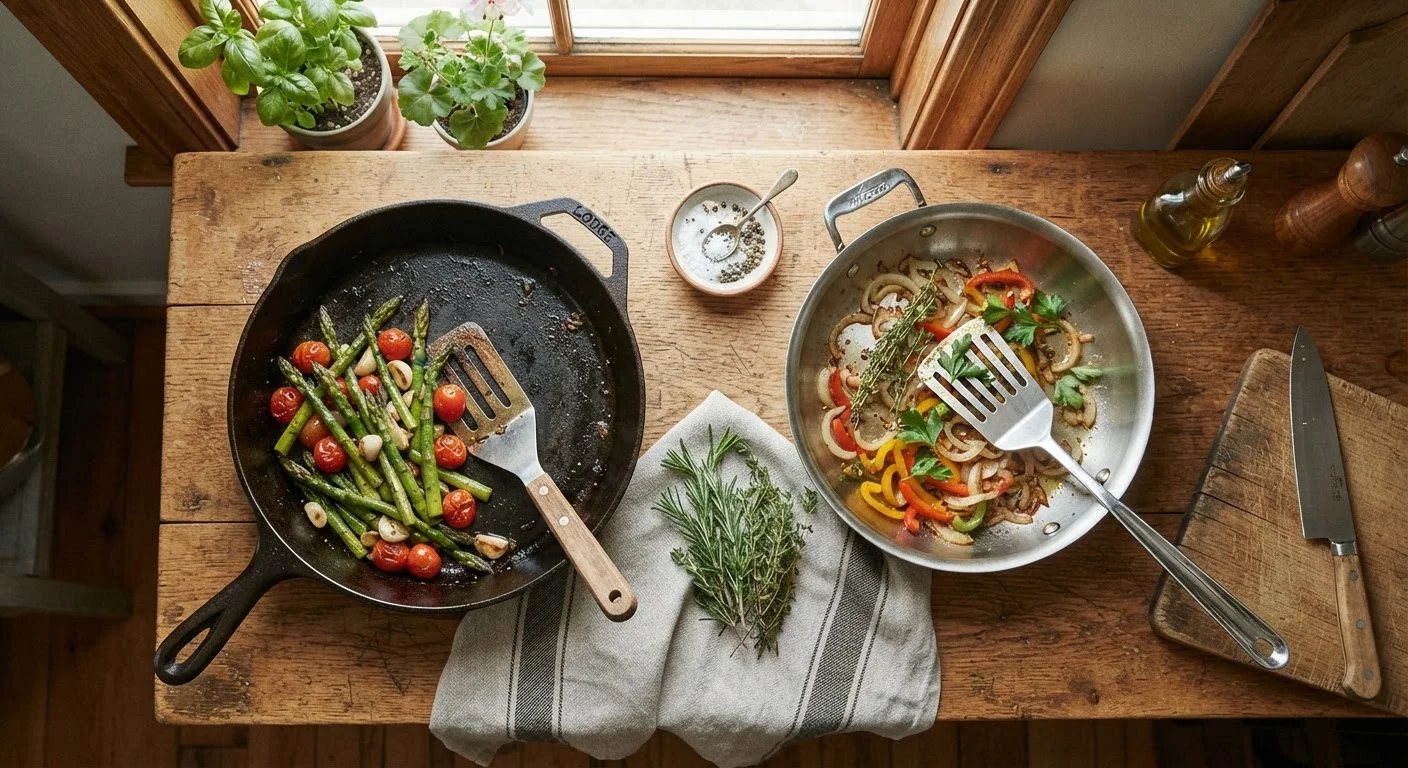
Photo credit: ArticlesHaven.net
In this article
Both materials are durable and heat-responsive, but in different ways. Compare cast iron and stainless steel on cooking style and upkeep.
Key Takeaways
- Cast iron heats slowly but retains heat exceptionally well, making it ideal for searing and baking.
- Stainless steel responds faster to temperature changes, giving cooks more precise control.
- Cast iron requires regular seasoning; stainless steel needs no special maintenance beyond washing.
- Both materials are oven-safe, durable, and free of synthetic non-stick coatings.
- Your cooking habits and stovetop type - including induction compatibility - should guide your choice.
How Each Material Handles Heat
The most meaningful difference between cast iron and stainless steel isn't aesthetic - it's thermal. Cast iron has high thermal mass, meaning it takes longer to heat up but holds that heat stubbornly once it gets there. Drop a cold chicken breast into a preheated cast iron skillet and the surface temperature barely dips. That consistency is what creates deep, even searing.
Stainless steel has lower thermal mass and thinner walls. It heats faster and, critically, cools faster when you reduce the flame. For a cook who needs to move quickly between high and low heat - reducing a sauce or pulling back before vegetables overcook - that responsiveness is genuinely useful.
Neither approach is objectively superior. They suit different cooking rhythms. Understanding which one matches yours is the more productive question. If you're thinking about your range or cooktop setup too, the gas vs. electric ranges guide covers how heat source affects cookware performance.
| Criterion | Cast Iron | Stainless Steel |
|---|---|---|
| Heat-up speed | Slow (5-10 min to preheat) | Fast (2-4 min to preheat) |
| Heat retention | Excellent | Moderate |
| Temperature control | Sluggish response to changes | Quick response to changes |
| Maintenance | Requires regular seasoning | Wash and store; no treatment needed |
| Weight (12-inch pan) | 5-8 lbs typically | 2-4 lbs typically |
| Induction compatible | Yes (ferrous metal) | Yes (most models) |
| Oven-safe | Yes, very high temps | Yes (handle-dependent) |
| Rust risk | Yes, if improperly stored | No |
| Natural non-stick potential | Builds with seasoning over time | Limited; technique-dependent |
Seasoning, Maintenance, and Real-World Upkeep
Cast iron's durability is legendary, but it comes with a condition: the pan must be seasoned. Seasoning means polymerized oil bonded to the surface, which creates a natural, slick layer and protects against rust. It builds over time with use. Neglect it - especially by leaving the pan wet or storing it in humid conditions - and rust appears. The fix is usually straightforward, but the maintenance cadence is real.
Stainless steel requires nothing of the sort. Wash it, dry it, put it away. It won't rust, won't react to acidic foods, and doesn't need oil treatments between uses. The trade-off is sticking: without a non-stick coating, proteins will bond to stainless if the pan isn't preheated correctly or if oil isn't added at the right moment.
Cooking Acidic Foods in Cast Iron
Tomatoes, citrus, and vinegar-based sauces can strip seasoning from cast iron and, in some cases, impart a metallic taste to the food. This doesn't make cast iron off-limits for acidic cooking, but it's worth using a well-seasoned pan or switching to stainless for long-simmered acidic dishes. Stainless steel is chemically inert and won't react with acidic ingredients.
For cooks considering non-stick alternatives, the ceramic vs. Teflon non-stick comparison explains how coated surfaces differ from bare metal in both performance and longevity.
Weight, Compatibility, and Kitchen Fit
Weight is a practical factor that often gets underestimated in cookware decisions. A 12-inch cast iron skillet commonly weighs between 5 and 8 pounds - manageable on the stovetop but awkward to tilt for draining or transfer to the sink. For users with wrist or grip limitations, this matters. Stainless steel pans in the same size typically run 2 to 4 pounds.
Both materials are compatible with gas and electric stovetops. Cast iron works on induction too - its ferrous composition responds to magnetic fields - but the pan's weight on a glass-ceramic induction surface requires care. Most stainless steel cookware is induction-ready and lighter to handle. If you're evaluating induction cooking more broadly, the induction vs. gas cooktops breakdown is worth reading alongside this comparison.
8+ lbs
Typical weight of a large cast iron skillet
Weight is a commonly cited barrier for users who cook frequently or have limited grip strength, according to consumer usability research.
500°F+
Oven-safe temperature for most bare cast iron
Cast iron with no synthetic coatings or non-metal handles can typically handle very high oven temperatures, making it versatile for baking and broiling.
Decades
Lifespan of properly maintained cookware
Both cast iron and stainless steel, when cared for appropriately, are widely regarded as lifetime kitchen investments rather than replacement items.
Oven compatibility is strong for both materials, though handle materials vary - always confirm the manufacturer's stated oven-safe temperature before putting any pan in the oven.
Cooking at home more often in general? The realistic look at cooking more at home covers what shifts in practice - and what doesn't - when you cook more of your own meals.

Author
Articles Haven Editorial Contributor
Articles Haven Editorial Team is the collective byline for our editorial team and contributor network. Articles published under this byline or an editorial pen name are researched, written, and reviewed according to our editorial standards for clarity, consistency, and independence before publication.
View all articles →