
Collision vs. Comprehensive Auto Coverage: Which Is Which?
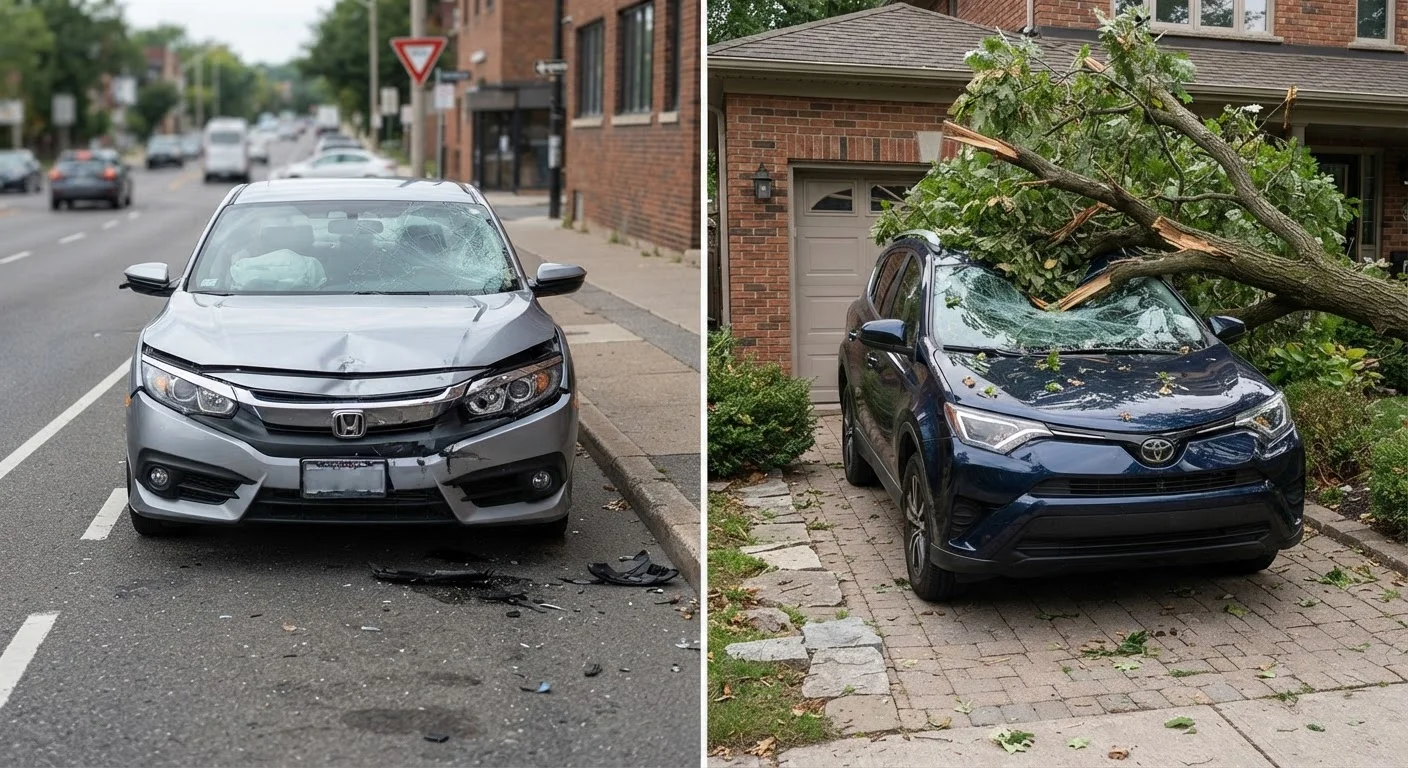
Photo credit: ArticlesHaven.net
In this article
Collision and comprehensive cover different types of damage to your car. Here's a clear side-by-side breakdown of each.
Key Takeaways
- Collision coverage pays for damage caused by your car hitting another vehicle or object.
- Comprehensive coverage pays for damage from theft, weather, animals, and other non-collision events.
- Both types carry a deductible you pay before the insurer covers the remaining repair costs.
- Lenders typically require both coverages if you're financing or leasing your vehicle.
- Neither collision nor comprehensive covers injuries - that's what liability and medical payments coverage handle.
- Whether to carry one, both, or neither often depends on your car's value and your financial situation.
The Core Difference in One Sentence
Collision coverage pays for damage caused by your car physically striking something. Comprehensive coverage pays for damage caused by almost everything else. That single distinction - impact vs. non-impact - is the dividing line between these two types of coverage.
Both are optional in most states (unless required by a lender), and both are add-ons to a base auto policy. For a full overview of how they fit alongside liability, uninsured motorist, and other coverage types, see Car Insurance Coverage Types: A Plain-English Reference.
| Criterion | Collision Coverage | Comprehensive Coverage |
|---|---|---|
| What triggers a claim | Physical impact with an object or vehicle | Non-collision damage (theft, weather, animals) |
| Deer strike | Not covered | Covered |
| Hail or flood damage | Not covered | Covered |
| At-fault accident | Covered | Not covered |
| Vehicle theft | Not covered | Covered |
| Deductible applies | Yes | Yes |
| Required by lenders | Typically yes | Typically yes |
| Required by state law | Generally no | Generally no |
What Collision Coverage Actually Covers
Collision coverage applies when your vehicle is damaged as a result of a physical impact. Common scenarios include:
- Hitting another car, whether you're at fault or not
- Striking a guardrail, pole, fence, or curb
- A rollover accident
- A single-vehicle crash on a slick road
One thing worth noting: if another driver hits you and they're clearly at fault, their liability insurance is typically the first source of recovery - not your own collision coverage. However, if their insurer disputes the claim or they're uninsured, your collision coverage can step in while the dispute is sorted out.
~6M
Annual US car crashes reported
The NHTSA estimates roughly 6 million police-reported motor vehicle crashes occur in the US each year, underlining the frequency of collision-type events.
1 in 88
Odds of vehicle theft per registered car
According to FBI Uniform Crime Reporting data, approximately one in every 88 registered vehicles was stolen in a recent reporting year - a risk comprehensive coverage directly addresses.
$3,900+
Average collision claim payment
Industry data from sources such as the Insurance Research Council suggests average collision claim payouts have consistently exceeded several thousand dollars, reinforcing the financial value of the coverage.
Collision does not cover damage from weather, animals, or theft. It also doesn't cover injuries to you or others - that's the job of liability and personal injury protection (PIP) policies.
What Comprehensive Coverage Actually Covers
Despite the name, comprehensive coverage doesn't cover everything - it covers non-collision damage. Think of it as the "everything except crashing" policy. Covered events generally include:
- Theft or attempted theft (including broken windows from a break-in)
- Weather events: hail, flooding, wind damage
- Fire or explosion
- Falling objects such as tree branches or debris
- Animal strikes - a deer collision is comprehensive, not collision
- Vandalism
The deer example trips people up. Even though your car physically hits a deer, the industry classifies animal strikes as a comprehensive claim because the event wasn't a traffic collision. If you're unsure which coverage applies to a specific scenario, this breakdown of comprehensive vs. collision distinctions walks through common edge cases.
The "Other Than Collision" Label
Some insurers and policy documents use the phrase "other than collision" (OTC) instead of "comprehensive." These terms mean the same thing. If you see OTC on a declarations page or quote, it refers to the same non-collision coverage described here. Always check your policy's definitions section if a term is unclear.
Deductibles, Costs, and the Lender Requirement
Both collision and comprehensive use a deductible - the amount you agree to pay out of pocket before your insurer covers the rest. Common deductible amounts range from $250 to $1,500. A higher deductible typically lowers your monthly premium, but increases what you'd owe after a claim.
Generally speaking, collision tends to cost more than comprehensive because accidents are statistically more frequent than theft or severe weather events. However, both costs vary significantly based on your vehicle's value, your driving record, where you live, and the deductible you choose.
If you're financing or leasing your car, your lender will almost certainly require both coverages. Once you own the car outright, it becomes your choice. Deciding whether to keep, drop, or adjust these coverages is covered in more depth in Liability-Only vs. Full Coverage Auto Insurance.
This article is for general informational purposes only and does not constitute insurance, financial, or legal advice. Coverage terms, exclusions, and requirements vary by provider and state. Always review your actual policy documents and consult a licensed insurance agent for guidance specific to your situation.

Author
Articles Haven Editorial Contributor
Articles Haven Editorial Team is the collective byline for our editorial team and contributor network. Articles published under this byline or an editorial pen name are researched, written, and reviewed according to our editorial standards for clarity, consistency, and independence before publication.
View all articles →