
Liability Coverage in Plain English: What It Protects and What It Doesn't
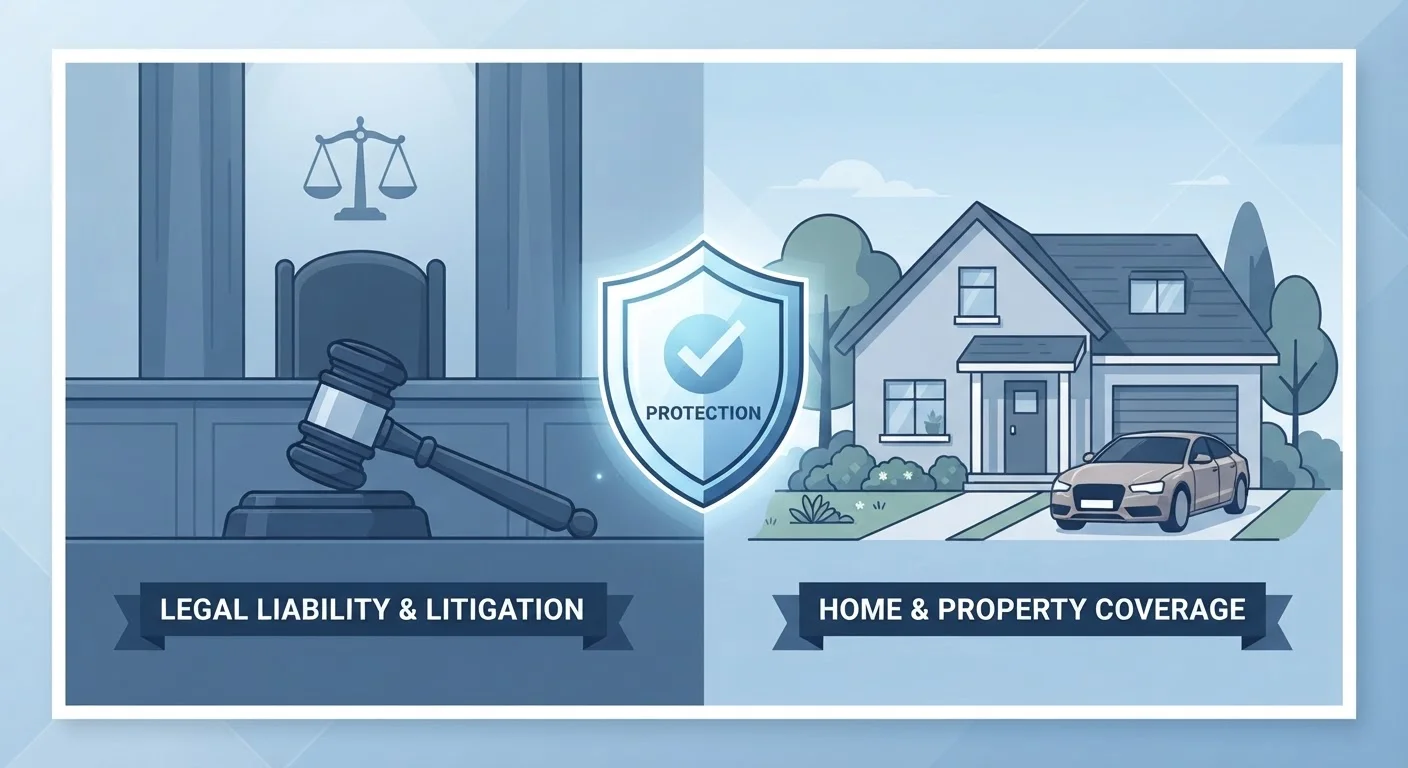
Photo credit: ArticlesHaven.net
In this article
Liability coverage pays when you're legally responsible for harm to others. Here's exactly what that means across different policy types.
Key Takeaways
- Liability coverage pays for harm you cause to others, not damage to yourself or your own property.
- It appears in auto, homeowners, and renters policies - each with its own scope and exclusions.
- Policy limits are a cap, not a guarantee: costs above that cap are your responsibility.
- Intentional acts and certain business-related activities are typically excluded from personal liability coverage.
- Umbrella policies can extend liability limits across multiple policies when standard coverage runs short.
How Liability Coverage Actually Works
Liability coverage is built around a single principle: if you're at fault for harming someone else or damaging their property, your insurer pays on your behalf - up to the limits you've purchased. Think of it as a financial buffer between an accident and a potential lawsuit.
When a covered event occurs, your insurer typically handles two things: paying the claimant's covered losses (medical bills, repair costs, lost wages) and covering your legal defense if the case goes to court. That legal defense benefit is often overlooked but can be substantial - attorney fees alone can run into tens of thousands of dollars before a case is resolved.
Liability doesn't require a lawsuit to trigger. In most cases, insurers negotiate and settle directly with the injured party. Litigation is the exception, not the rule.
~$500K+
Average cost of a serious auto accident claim
The Insurance Research Council has noted that severe injury claims - including those involving hospitalization and long-term care - frequently exceed typical minimum liability limits by wide margins.
49 of 50
U.S. states requiring auto liability insurance
New Hampshire is the one exception, though drivers there must still demonstrate financial responsibility if involved in an accident.
~$150-$300
Typical annual cost of a $1M umbrella policy
Insurance industry estimates suggest umbrella coverage is among the most cost-efficient ways to significantly raise overall liability limits.
Where Liability Shows Up Across Policy Types
Liability coverage isn't limited to one kind of insurance - it's embedded in several policy types most households carry.
Auto Liability
This is the coverage that pays for the other driver's vehicle repairs and medical costs when you cause a collision. It's required at some minimum level in nearly every U.S. state. For a deeper look at how it fits alongside other auto coverage types, see this plain-English guide to car insurance coverage. Note that auto liability does not cover damage to your own car - that's where collision or comprehensive coverage enters the picture. See our guide to comprehensive vs. collision coverage for that comparison.
Homeowners and Renters Liability
These policies include personal liability protection that can cover you if someone is injured on your property - or sometimes even off it. If a guest slips on your icy front steps and sues, your homeowners liability coverage would typically respond.
Umbrella Policies
An umbrella policy provides an additional layer of liability protection that sits above your auto and home policies. It kicks in after those underlying limits are exhausted, making it a common choice for people with significant assets to protect.
Liability vs. Full Coverage: An Important Distinction
"Full coverage" is an informal term - not a defined insurance product. It generally refers to combining liability, collision, and comprehensive coverage in one auto policy. Liability-only coverage is significantly less expensive but leaves your own vehicle unprotected. Whether that trade-off makes sense depends on your vehicle's value and your financial situation.
The Coverage Gaps You Need to Know
Liability coverage has meaningful limits - both in terms of dollar amounts and in terms of what situations it applies to. Understanding the gaps is just as important as knowing what's covered.
- Your own losses aren't covered. Liability pays the other party, never yourself. Your medical bills, your car repair, your lost wages - those require separate coverage.
- Policy limits are a ceiling, not a guarantee. If damages exceed your limit, you're on the hook for the difference personally. Courts can garnish wages or place liens on property to satisfy judgments. Choosing adequate limits matters far more than most consumers realize.
- Business activities are typically excluded. Running a home-based business, delivering goods for a gig platform, or using your vehicle commercially often falls outside standard personal liability coverage. Separate commercial or endorsement coverage is usually required.
- Intentional acts aren't covered. Insurers will not pay for harm you cause deliberately. Only negligent or accidental acts trigger liability protection.
- Certain property types may be excluded. Damage caused by specific animals, certain vehicle types (ATVs, aircraft), or excluded perils can void an otherwise applicable liability claim.
For a more detailed breakdown of where gaps tend to appear across policy types, see what liability insurance actually protects you from.
Review Your Limits Before You Need Them
Pull out your current policy declarations page and note your liability limits. Compare them against your assets - savings, home equity, retirement accounts. If the gap feels uncomfortable, ask your insurer what it would cost to raise limits or add an umbrella policy. The price difference is often smaller than consumers expect.
Choosing the Right Liability Limits
State minimums for auto liability are generally far below what a serious accident can cost. A single hospitalization can easily exceed a 25/50 split limit (meaning $25,000 per person/$50,000 per accident). Most insurance professionals suggest consumers consider their net worth and potential exposure when selecting limits, not just the lowest legally acceptable amount.
For homeowners, standard liability limits typically start around $100,000. Many policies allow you to increase that to $300,000 or $500,000 for a relatively modest premium increase - and an umbrella policy can then extend coverage into the millions.
When comparing liability options, focus on three variables: the per-occurrence limit, the aggregate limit (if applicable), and what the policy excludes. Guidance on evaluating and selecting the right insurance policy can help you frame that decision across different coverage categories. You might also compare liability-only vs. full coverage auto insurance if you're weighing your auto options specifically.
This article provides general insurance information for educational purposes only and does not constitute personalized insurance, financial, or legal advice. Coverage terms, limits, exclusions, and availability vary by provider, policy, and state. Always read your policy documents carefully and consult a licensed insurance agent or adviser for guidance specific to your situation.
Frequently Asked Questions

Author
Articles Haven Editorial Contributor
Articles Haven Editorial Team is the collective byline for our editorial team and contributor network. Articles published under this byline or an editorial pen name are researched, written, and reviewed according to our editorial standards for clarity, consistency, and independence before publication.
View all articles →