
All-Inclusive Resorts: The Full Picture Before You Book
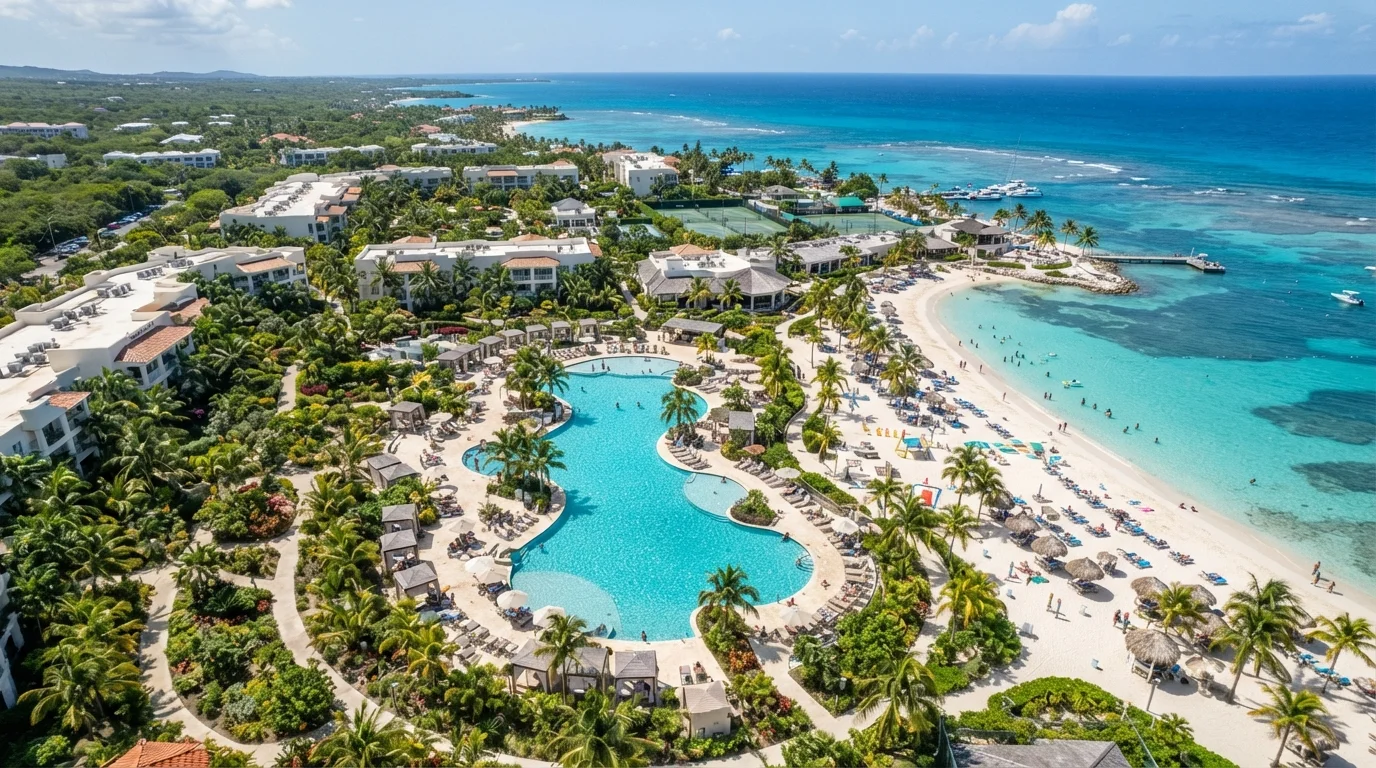
Photo credit: ArticlesHaven.net
In this article
All-inclusive travel has real advantages — and real limitations. A balanced look at what's included, what isn't, and who it actually suits.
Key Takeaways
- All-inclusive pricing covers meals, drinks, and most activities, but "all" varies widely by property.
- Travelers who stay on-property most of the time tend to extract the most value from these packages.
- Hidden costs - excursions, premium dining, spa services - can erode the budget predictability appeal.
- Destination, travel season, and group size meaningfully affect whether all-inclusive beats DIY planning.
- Reading the fine print on what's included versus upgraded is essential before booking.
Upfront cost predictability for the core trip
Meals, drinks, and most activities are pre-paid, reducing day-to-day spending decisions and making it easier to set a firm total travel budget.
Strong value for families and larger groups
Per-person food and beverage costs add up fast for families; bundling these into one rate often delivers meaningful savings compared to paying à la carte.
Low-effort logistics once you arrive
No need to research restaurants, negotiate activity pricing, or plan each meal - the resort handles the infrastructure, which suits travelers seeking genuine downtime.
On-site amenities are typically extensive
Multiple pools, kids' programs, water sports, nightly entertainment, and fitness facilities are usually bundled in, offering variety without additional spend.
Suitable for destinations with limited local dining options
In some resort corridors, independent dining options near the property are sparse or expensive, making the all-inclusive model the more practical and economical choice.
"All-inclusive" rarely means truly all-inclusive
Specialty restaurants, premium spirits, spa services, motorized water sports, and airport transfers are commonly excluded, leading to unexpected additional charges.
Discourages authentic local exploration
The psychological pull of "I've already paid for food here" often keeps travelers on-property and insulated from the destination's culture, food scene, and neighborhoods.
Food quality can be inconsistent at scale
High-volume buffet-style dining is a structural feature of most mid-range all-inclusives, and quality doesn't always match what travelers experience at local restaurants.
Poor value for short stays or frequent day-trippers
Travelers who spend several days off-property on excursions are paying for meals and drinks they won't consume, significantly weakening the value proposition.
Resort-corridor locations limit spontaneity
Many all-inclusive properties are grouped in designated tourism zones that are geographically isolated from urban centers, limiting access to local markets, transport, and culture.
Higher upfront cost requires trust before arrival
Paying a large sum before experiencing the property means travelers absorb more financial risk if the resort's food, service, or atmosphere doesn't meet expectations.
What "All-Inclusive" Actually Means
The term all-inclusive sounds straightforward - one price covers everything. In practice, what's bundled depends entirely on the property and the tier you book. Most all-inclusive packages cover accommodation, three daily meals at the main buffet or casual restaurants, non-premium alcoholic and non-alcoholic beverages, and access to standard amenities like pools, beach areas, and basic entertainment.
What often isn't included: specialty restaurant reservations (which may require an upcharge or are limited per stay), premium liquor brands, motorized water sports, spa treatments, airport transfers, and off-site excursions. Some resorts also charge for room service or late-night snacks beyond the main dining hours.
This distinction matters because the gap between what travelers assume is covered and what actually is can be a significant budget surprise. Before booking, requesting a detailed list of inclusions - not just the marketing summary - is a practical first step. You can also compare this format against independent hotel stays by reviewing flight and hotel booking options to see where the cost-benefit actually lands for your trip.
Inclusions Vary Significantly by Tier
All-inclusive properties span a wide range from budget-oriented to ultra-luxury, and what's bundled scales accordingly. A mid-range resort may limit specialty dining to one visit per stay, while a premium property may offer unlimited à la carte across multiple restaurants. The label 'all-inclusive' is applied to both, so comparing specific inclusion lists - not just price points - is essential when evaluating options.
The Real Advantages of All-Inclusive Travel
For certain travel styles, the format has genuine strengths worth taking seriously.
Upfront cost predictability for the core trip
Meals, drinks, and most activities are pre-paid, reducing day-to-day spending decisions and making it easier to set a firm total travel budget.
Strong value for families and larger groups
Per-person food and beverage costs add up fast for families; bundling these into one rate often delivers meaningful savings compared to paying à la carte.
Low-effort logistics once you arrive
No need to research restaurants, negotiate activity pricing, or plan each meal - the resort handles the infrastructure, which suits travelers seeking genuine downtime.
On-site amenities are typically extensive
Multiple pools, kids' programs, water sports, nightly entertainment, and fitness facilities are usually bundled in, offering variety without additional spend.
Suitable for destinations with limited local dining options
In some resort corridors, independent dining options near the property are sparse or expensive, making the all-inclusive model the more practical and economical choice.
60%+
Travelers citing cost predictability as primary appeal
Survey data from travel industry research consistently shows budget predictability as the leading reason travelers choose all-inclusive packages over standard hotel stays.
30-40%
Typical portion of resort spend on food and drink
Industry estimates suggest food and beverage often accounts for 30-40% of total vacation spending on non-all-inclusive trips, which is the core cost the model bundles.
Budget predictability is the most cited reason travelers choose all-inclusive. Knowing the bulk of your trip cost upfront makes it easier to plan, especially for families where per-person food and drink expenses can escalate quickly on a standard hotel vacation. For travelers who don't want to spend mental energy tracking daily spending, that peace of mind has real value.
All-inclusive resorts also tend to front-load convenience: kids' clubs, on-site entertainment, multiple pools, and beach access are often bundled in. Group trips - families with mixed ages, wedding parties - benefit from having one central hub where no one needs to coordinate logistics for every meal or activity.
Where All-Inclusive Falls Short
The same structure that makes all-inclusive appealing can also limit the experience in meaningful ways.
"All-inclusive" rarely means truly all-inclusive
Specialty restaurants, premium spirits, spa services, motorized water sports, and airport transfers are commonly excluded, leading to unexpected additional charges.
Discourages authentic local exploration
The psychological pull of "I've already paid for food here" often keeps travelers on-property and insulated from the destination's culture, food scene, and neighborhoods.
Food quality can be inconsistent at scale
High-volume buffet-style dining is a structural feature of most mid-range all-inclusives, and quality doesn't always match what travelers experience at local restaurants.
Poor value for short stays or frequent day-trippers
Travelers who spend several days off-property on excursions are paying for meals and drinks they won't consume, significantly weakening the value proposition.
Resort-corridor locations limit spontaneity
Many all-inclusive properties are grouped in designated tourism zones that are geographically isolated from urban centers, limiting access to local markets, transport, and culture.
Higher upfront cost requires trust before arrival
Paying a large sum before experiencing the property means travelers absorb more financial risk if the resort's food, service, or atmosphere doesn't meet expectations.
If you're someone who values authentic local food, wandering neighborhood markets, or building a trip around cultural sites, a resort-centric model actively works against those instincts. Leaving the property for a day trip often generates a psychological friction - "I'm already paying for meals I won't eat today" - that can subtly shape decisions in ways travelers don't always anticipate.
Quality consistency is also a known variable. The all-inclusive model has historically required food and beverage to be produced at high volume, which doesn't always favor quality. Higher-end luxury all-inclusives have addressed this more successfully, but they come at price points that narrow the value argument. If flexible, exploratory travel is your preference, building a flexible itinerary may serve you better than locking into a single-property format.
When the Math Makes Sense - and When It Doesn't
All-inclusive pricing tends to work in the traveler's favor under specific conditions: longer stays (five nights or more), travel with children, destinations where dining out independently is comparably expensive, and off-peak booking windows when resort rates drop without reduced food and drink quality.
The math gets murkier for short stays, solo travelers, or trips to destinations where independent dining is inexpensive and culturally rich. A three-night stay where you plan two full days of off-site excursions means you're paying for meals and drinks you won't consume. In those cases, a standard hotel combined with local restaurant spending often comes out ahead financially - and delivers a richer experience.
Destination matters too. All-inclusive resorts clustered in resort corridors (like those common in parts of the Caribbean and Mexico) are geographically designed around the model; local infrastructure for independent travelers can be limited nearby. In contrast, booking an all-inclusive in a city or culturally dense destination means you're actively surrounded by experiences the format discourages you from taking. For coastal resort destinations specifically, see how coastal versus inland travel compares in terms of activity options and value.
It's also worth comparing this model against other bundled travel formats. Cruises share a similar structure - predictable costs, contained environment - but differ in mobility and destination variety. And if you're weighing a resort against private rentals, vacation rentals come with their own trade-offs worth evaluating separately.
This article is for general informational purposes. Travel costs, inclusions, and conditions vary by property, destination, and booking period. Always verify current inclusions directly with the resort before booking.

Author
Articles Haven Editorial Contributor
Articles Haven Editorial Team is the collective byline for our editorial team and contributor network. Articles published under this byline or an editorial pen name are researched, written, and reviewed according to our editorial standards for clarity, consistency, and independence before publication.
View all articles →