
Ceramic vs. Teflon Non-Stick Pans: Coating Materials and What They Mean for Cooking
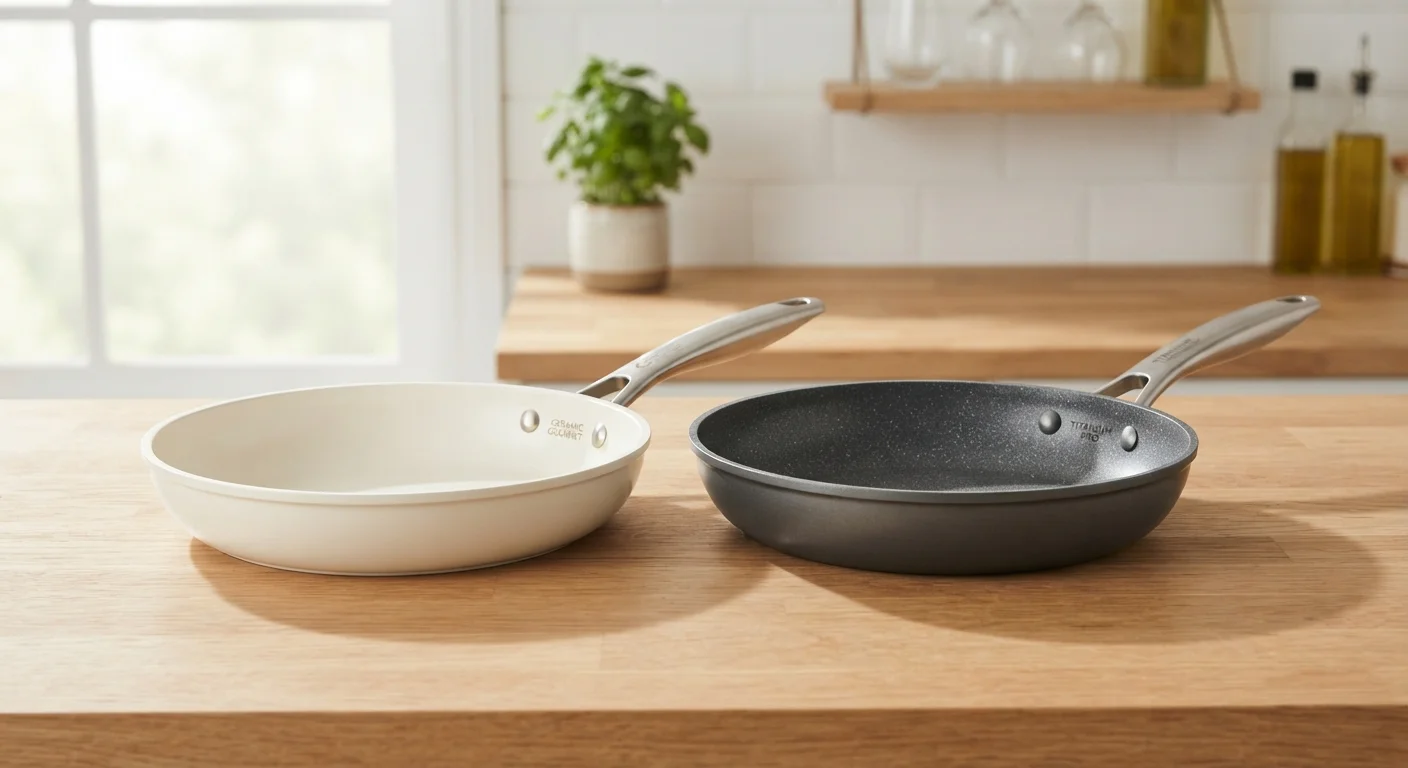
Photo credit: ArticlesHaven.net
In this article
Non-stick coatings vary in durability, heat tolerance, and safety profile. Compare ceramic and PTFE coatings before equipping your kitchen.
Key Takeaways
- PTFE (Teflon) coatings generally outperform ceramic in longevity and release consistency over time.
- Ceramic coatings are free of PTFE and PFAS chemicals, which matters to some health-conscious cooks.
- Both coatings degrade faster when exposed to high heat, metal utensils, or abrasive scrubbing.
- Neither coating type is truly permanent - replacement is eventually necessary regardless of brand.
- Your cooking habits and priorities should drive the choice, not marketing language alone.
What These Coatings Actually Are
Non-stick pans get their slickness from one of two fundamentally different surface technologies. Understanding what they're made of is the first step to evaluating them honestly.
PTFE coatings - marketed under trade names including Teflon - use polytetrafluoroethylene, a synthetic fluoropolymer that creates an extremely low-friction surface. PTFE has been used in cookware since the 1950s. Earlier manufacturing processes used a processing aid called PFOA, which raised health and environmental concerns. PFOA was phased out of US cookware production by 2013, and current PTFE coatings do not contain it. However, PTFE itself is part of the broader PFAS (per- and polyfluoroalkyl substances) chemical family, a distinction worth noting.
Ceramic coatings are not made from traditional fired ceramic clay. They're a sol-gel coating - a silica-based compound applied in liquid form and cured to form a hard, slick surface. Ceramic-coated pans contain no PTFE or PFAS compounds, which is the main reason they're marketed as a cleaner alternative. The trade-off is that the coating is typically thinner and less inherently flexible than PTFE.
For a broader look at how cookware materials behave differently under heat, see our cast iron vs. stainless steel comparison.
Heat Tolerance and Cooking Performance
Heat handling is where these two coatings diverge most sharply in practice.
PTFE coatings perform reliably up to around 500°F (260°C) before the material begins to degrade and can release fumes. At typical stovetop cooking temperatures - usually 300°F to 400°F - PTFE is stable and performs well. The risk zone is an unattended pan preheating on high, which can exceed safe thresholds quickly.
Ceramic coatings are often marketed as higher-heat tolerant, and they do withstand higher surface temperatures without off-gassing concerns. However, thermal cycling - repeated heating and cooling - can degrade the coating's bond to the pan base over time, accelerating surface breakdown.
Protect Your Coating From Day One
Regardless of coating type, always use silicone, wood, or nylon utensils - never metal. Hand-wash with mild soap rather than running through a dishwasher. Store pans with a cloth or paper towel between stacked surfaces to prevent scratching. These habits meaningfully extend the life of either coating.
In practical terms, neither coating type is suited for searing at high heat. If your cooking involves browning meat at high temperatures, a cast iron or stainless steel pan is a more appropriate tool. Non-stick coatings of any kind are best reserved for eggs, fish, pancakes, and other lower-heat tasks.
Cooktop compatibility also matters. If you use an induction cooktop, verify the pan's base is induction-compatible before purchasing - coating type has no bearing on this. Our induction vs. gas cooktop guide covers what to look for in compatible cookware.
Durability and Lifespan
| Ceramic Coating | PTFE (Teflon-style) Coating | |
|---|---|---|
| Chemical composition | Silica-based sol-gel, PFAS-free | Polytetrafluoroethylene (PTFE), a PFAS compound |
| Typical lifespan | 1-2 years with regular use | 3-5 years with proper care |
| Safe cooking temperature | Up to ~450°F before degradation | Up to ~500°F before off-gassing risk |
| Initial non-stick performance | Very slick when new | Consistently slick from day one |
| Long-term release consistency | Declines relatively quickly | Holds up better over time |
| Off-gassing concern | None identified at cooking temps | Risk only above ~570°F |
| Dishwasher safe | Not recommended | Not recommended |
| Metal utensil tolerance | Low - avoid metal tools | Low - avoid metal tools |
Durability is consistently where PTFE holds an advantage. Quality PTFE-coated pans typically maintain effective non-stick performance for three to five years with proper care. Ceramic coatings, while initially very slick, tend to lose their release properties faster - often within one to two years of regular use, sometimes sooner.
The degradation mechanism differs: PTFE scratches and chips when abraded, while ceramic's non-stick properties diminish gradually as the surface's microscopic pores fill with cooking residue and oils that bond permanently. Neither damage type is reversible.
Both coatings share the same enemies: metal utensils, dishwashers, abrasive sponges, and stacking pans without protection. Treating either type with care extends its useful life significantly.
Don't Let Non-Stick Pans Preheat Empty
An empty non-stick pan on high heat can exceed safe temperature limits in just a few minutes. This applies to both ceramic and PTFE coatings. Always add oil, butter, or food before or shortly after placing the pan over heat, and avoid leaving non-stick cookware unattended on a burner set to high.
Safety Considerations
Safety questions around non-stick coatings generate more confusion than most cookware topics. Here's what current information supports:
Current PTFE coatings, manufactured without PFOA, are considered safe for normal cooking use by major regulatory bodies including the FDA. The concern arises at overheating: above roughly 570°F (299°C), PTFE begins to decompose and can release fumes that cause flu-like symptoms in humans and are dangerous to pet birds, which have highly sensitive respiratory systems. Keeping PTFE pans away from very high, unattended heat largely eliminates this risk in practice.
Ceramic coatings contain no PTFE or PFAS, which appeals to cooks who prefer to minimize exposure to fluorinated compounds on general principle, even if the documented risk from properly used PTFE pans is low. There is no established harm from ceramic coatings at cooking temperatures, though the long-term data on sol-gel coatings in cookware is less extensive than for PTFE.
Both types are general-use kitchen products. If you have specific health concerns about cookware materials, a conversation with a qualified healthcare professional is more reliable than marketing claims in either direction.
If you're cooking more meals at home and want a clearer picture of what equipment choices actually matter day-to-day, our piece on cooking at home more often offers a grounded perspective.

Author
Articles Haven Editorial Contributor
Articles Haven Editorial Team is the collective byline for our editorial team and contributor network. Articles published under this byline or an editorial pen name are researched, written, and reviewed according to our editorial standards for clarity, consistency, and independence before publication.
View all articles →