
Buying a Car Online: How the Process Differs from Walking into a Dealership
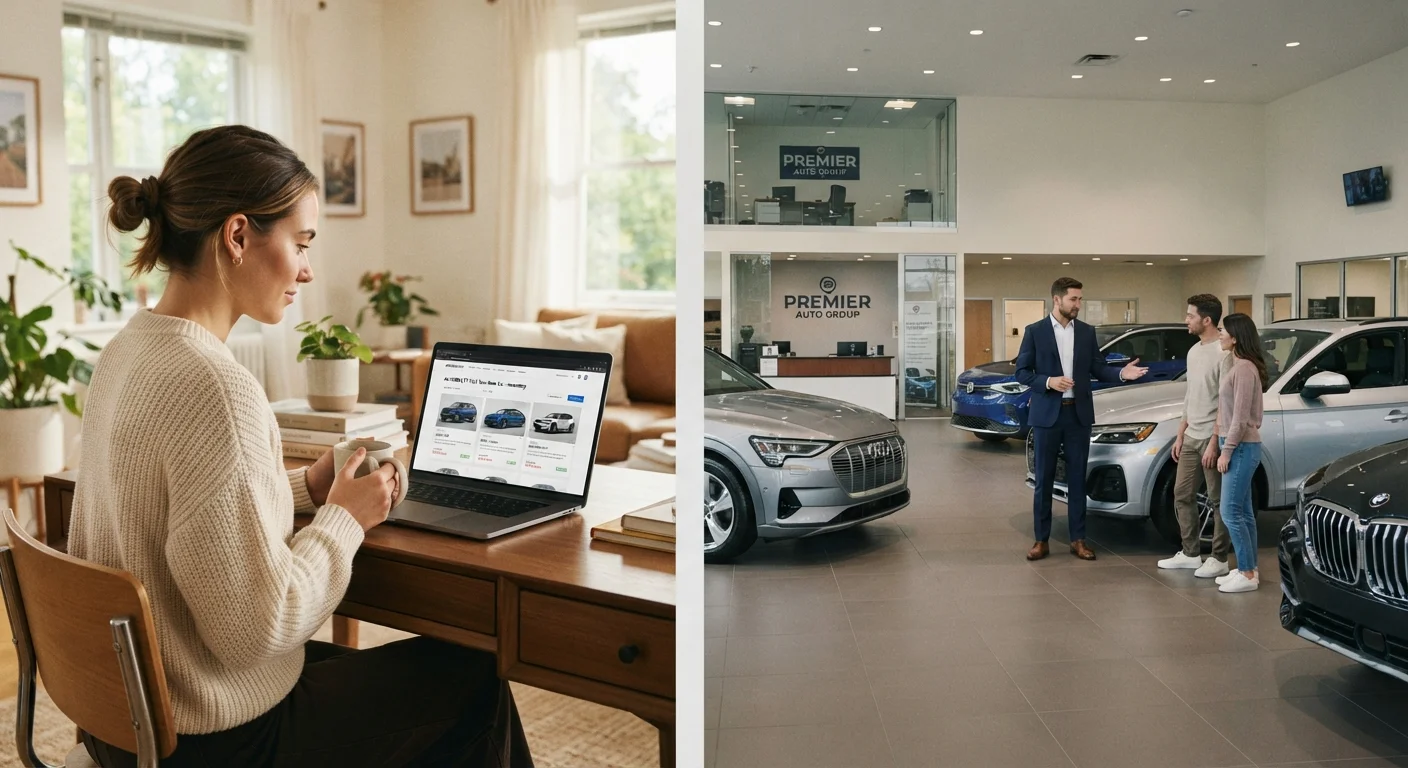
Photo credit: ArticlesHaven.net
In this article
Online car buying has expanded in recent years. Understand how digital purchases work, what's streamlined, and what's still required in person.
Key Takeaways
- Online car buying moves faster on paper but still requires identity verification and often in-person document signing.
- Test drives and physical inspections remain the clearest advantage of the dealership experience.
- Financing options may differ between platforms - online lenders don't always match dealer-arranged rates.
- Vehicle delivery is possible online, but logistics vary widely by platform and your location.
- Neither path eliminates negotiation entirely; price transparency levels just differ.
How Each Path Starts
The first meaningful difference between online and in-person car buying is how the process gets going. At a dealership, you typically browse the lot or walk in with a model in mind, speak with a sales representative, and test-drive before anything else happens. The conversation shapes the deal.
Online, the process starts with inventory search tools - usually filtered by make, model, trim, mileage, and location. You can compare multiple listings side-by-side without speaking to anyone. Many platforms show upfront pricing with little or no room for back-and-forth. That transparency can feel like a relief if you've found dealership negotiations uncomfortable, though it also means there's often less flexibility. See our guide to vehicle price negotiation for context on what's actually movable in either setting.
One thing both paths share: the importance of knowing what you're after before committing. Whether you're buying new, used, or considering a lease shapes the experience significantly - compare those three options before you start either process.
Test Drives, Inspections, and the Tactile Gap
This is where online buying has its clearest limitation. No photo gallery or 360-degree virtual tour fully replicates sitting in a driver's seat, checking sightlines, testing road feel, or noticing that the back seat is tighter than you expected. For used vehicles especially, a physical inspection - ideally by a trusted mechanic - is one of the most practical risk-reduction steps available.
Some online platforms allow you to arrange a test drive by having the vehicle delivered to your location for a trial period. Policies vary widely: some offer a return window of a few days, others do not. Read those terms carefully before assuming flexibility exists.
Buying Sight-Unseen Carries Real Risk
Purchasing a vehicle online without a physical inspection or test drive means you're relying on platform-provided information and photos. Condition descriptions can miss things a mechanic or in-person walkthrough would catch. If you can't inspect a vehicle before buying, look for platforms that offer independent condition reports or a return window - and read those terms closely before committing.
If you're purchasing a used vehicle sight-unseen online, consider whether the platform provides any inspection documentation or third-party condition reports. Absent that, you're relying heavily on photos and seller descriptions. For more on the risks involved in remote purchases, the out-of-state car buying guide covers verification steps worth applying even to in-state online deals.
Financing and Paperwork Differences
At a dealership, financing is often arranged through the finance and insurance (F&I) office, where you may be offered rates from multiple lenders - sometimes competitive, sometimes not. The back-and-forth can include add-ons like extended warranties and gap insurance, which catch many first-time buyers off guard.
Online platforms typically integrate financing applications directly into the checkout flow. You submit credit information, receive offers, and select terms before the vehicle ships or is prepared for pickup. This can reduce pressure, but it doesn't guarantee better rates. Always compare any financing offer - online or dealership - against pre-approval from your own bank or credit union.
Confirm Your State's Signing Requirements Early
Online car buying platforms vary in how much paperwork can be completed digitally versus in person. Some states require wet signatures on title documents, which may mean a trip to a notary or DMV even if you bought entirely online. Ask the platform directly before assuming the process is fully remote - it can affect your delivery timeline.
Paperwork is one area where online buying hasn't gone fully digital everywhere. Depending on your state, you may still need to sign certain title transfer documents in person, at a notary, or through a mailed packet. Confirm this before assuming the process is entirely remote.
| Online Purchase | In-Person Dealership | |
|---|---|---|
| Price transparency | Often upfront, fixed pricing | Negotiable; varies by dealer |
| Test drive access | Limited; delivery trials vary | Standard before purchase |
| Financing process | Integrated online application | F&I office, multiple lender offers |
| Trade-in handling | Remote quote; may adjust later | On-site appraisal, same transaction |
| Paperwork completion | Partially digital; may need notary | Handled on-site by staff |
| Vehicle delivery | Often available; fees vary | Pickup at dealership |
| Negotiation room | Typically limited | Generally present |
For a broader view of the full car-buying timeline, understanding where financing fits in the sequence helps you avoid last-minute surprises regardless of which path you choose.
Trade-Ins, Delivery, and What Comes After
Trading in a vehicle is generally more straightforward at a dealership - the staff appraise it on-site and the value offsets your purchase in the same transaction. Online platforms often allow trade-in quotes, but the process may involve mailing a key, scheduling a pickup, or accepting a quote that adjusts after a physical inspection. If getting maximum value from your trade-in matters, see our comparison of selling privately versus trading in.
Vehicle delivery is a genuine convenience of online buying when it's available. Some platforms include delivery in the price; others charge fees that vary by distance. At a dealership, you pick up the car yourself - but you also have the chance to walk through the vehicle with a staff member and flag anything that needs addressing before you drive off the lot.
~30%
US car buyers open to fully online purchase
Cox Automotive's Car Buyer Journey studies have consistently found that a substantial share of buyers would consider completing a purchase entirely online, though the majority still prefer some in-person interaction.
43%
Buyers who find dealership finance office stressful
Industry surveys have noted that the finance and insurance office is among the steps buyers report as most uncomfortable in the traditional dealership process.
Post-purchase, registration and titling follow the same general process regardless of how you bought. Your state's DMV sets those requirements. What changes is who handles the paperwork - the dealership's title team or you, working through whatever system the online platform uses. Neither is harder inherently, but online purchases occasionally involve more self-directed follow-up. Informed shopping habits apply here just as they would for any major purchase.

Author
Articles Haven Editorial Contributor
Articles Haven Editorial Team is the collective byline for our editorial team and contributor network. Articles published under this byline or an editorial pen name are researched, written, and reviewed according to our editorial standards for clarity, consistency, and independence before publication.
View all articles →