
Vertical Gardening: Structures, Plant Choices, and Realistic Expectations
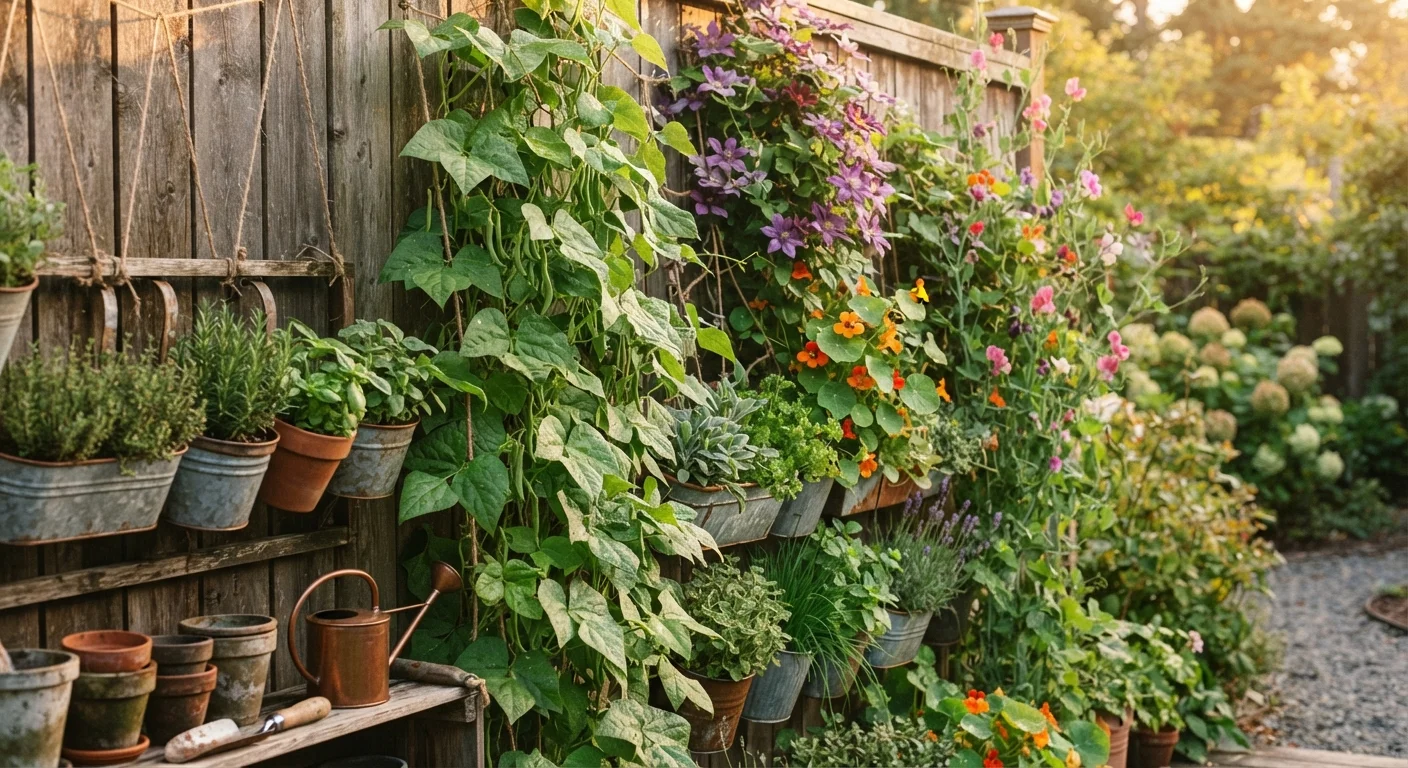
Photo credit: ArticlesHaven.net
In this article
Trellises, wall planters, and living fences expand your growing space upward. A grounded guide to what vertical gardening can and can't do.
Key Takeaways
- Vertical gardening maximizes growing space in small yards, balconies, and urban plots.
- Structure choice - trellis, wall planter, or living fence - affects cost, plant suitability, and maintenance.
- Not all vegetables and flowers climb; matching plants to structures is critical for results.
- Soil volume and watering frequency are the most common underestimated challenges.
- Vertical setups work best as a complement to, not a replacement for, ground-level growing.
Expands usable growing space without more ground area
Walls, fences, and railings become productive surfaces. This is especially valuable in urban plots, small yards, or balconies where horizontal space is the main constraint.
Improves airflow around plants
Lifting foliage off the ground promotes air circulation, which can reduce fungal disease pressure on susceptible crops like cucumbers and peas.
Makes harvesting easier on your back
Eye-level or waist-height produce means less bending and stooping - a meaningful benefit for gardeners with mobility limitations.
Can double as privacy screening or aesthetic feature
A well-planted trellis or living wall adds visual structure to a garden while providing functional growing space - two goals with one installation.
Many setups are removable or renter-friendly
Free-standing trellises, modular wall panels, and hanging pocket systems can be taken down without permanent modification to a wall or fence.
Containers and pockets dry out much faster
Reduced soil volume means vertical planters retain far less moisture than in-ground beds. In hot weather, daily or even twice-daily watering is often required, making it labor-intensive.
Structural failure is a real risk
Underpowered anchors, rotting wood, or undersized fasteners can cause trellises to collapse under the weight of a full growing season's vines. Repair mid-season is disruptive and can damage crops.
Plant choices are meaningfully limited
Vertical structures suit a relatively narrow range of plants - primarily vining or shallow-rooted varieties. Deep-rooted vegetables and non-climbing crops won't benefit and may underperform.
Upfront cost can exceed simple ground planting
Quality trellises, wall-mounted systems, and installation hardware add up. DIY approaches reduce cost but require time and some basic construction skill.
Shading adjacent beds is a common problem
Tall vertical structures on the south or west side of a garden can cast shade on neighboring beds, reducing sun exposure for crops that need full light. Placement planning is essential.
What Vertical Gardening Actually Means
Vertical gardening is the practice of training or mounting plants to grow upward rather than outward, using structures like trellises, wall-mounted planters, wire mesh, or purpose-built towers. The goal is usually simple: get more plants into less horizontal ground space.
The approach shows up in a surprising range of settings - a cucumber trellis in a suburban backyard, a pocket planter on an apartment balcony railing, or a living fence of climbing roses separating two properties. As the layout choices you make affect yield and access across any garden, so does the decision to go vertical rather than horizontal.
It's worth being clear upfront: vertical gardening isn't a magic solution for space or productivity. It's a tool, and like any tool, it works well in the right situation and poorly in the wrong one.
Common Structures and What They're Good For
Choosing a structure before choosing your plants is a common misstep. The two decisions need to happen together.
- Trellises and arbors: Classic choices for vining vegetables like pole beans, peas, cucumbers, and indeterminate tomatoes. Wood and powder-coated metal versions are widely available; DIY wire-and-post versions can be built for less. These work best anchored into soil or weighted containers - loose attachments fail fast in wind.
- Wall-mounted pocket planters: Fabric or felt pockets hung on fences or walls suit herbs, lettuce, and compact annuals. Drainage and drying out are the persistent problems here - pockets have minimal soil volume, so daily watering is often necessary in warm weather.
- Wire mesh panels and cage systems: Versatile and reusable, these work for both food and ornamental plants. They're particularly useful for training sprawling crops like squash or melons, though you may need to support heavy fruit with small slings.
- Living fences: Fast-growing perennials or dense shrubs trained along a fence line can serve double duty as privacy screening and habitat. See common fencing trade-offs for how living and built options stack up on cost and upkeep.
6-8x
Potential yield increase per square foot of ground
Cooperative extension research suggests vining crops like pole beans can yield significantly more per ground square foot when trellised versus left to sprawl.
2x
More frequent watering often needed in pocket planters
Horticultural guidance from multiple university extension programs notes that wall-mounted containers may require watering twice as often as comparable in-ground plantings during summer.
Plant Choices That Work - and Ones That Don't
Not every plant climbs, and not every climbing plant handles vertical constraints well. Matching plant to structure is where vertical gardens succeed or stall.
Strong performers: Pole beans, sugar snap peas, cucumbers, small-fruited squash, morning glories, black-eyed Susan vine, climbing nasturtiums, and many herb varieties do well vertically. Peas and beans are especially forgiving of imperfect setups.
Poor candidates: Large-fruited vegetables like full-size pumpkins, watermelons, or winter squash can technically be trained upward but require significant structural support for the fruit weight. Bush-type tomatoes, peppers, and root vegetables have no climbing instinct and don't benefit from vertical structures.
For wall-mounted pockets specifically, stick to shallow-rooted plants: herbs like basil, thyme, and chives perform well, as do lettuce varieties and strawberries. Deeper-rooted plants will struggle - this complements the guidance in our herb-growing overview for deciding what thrives in constrained spaces.
Annual vs. Perennial Climbers: A Planning Note
Most fast-climbing food crops - beans, peas, cucumbers - are annuals, meaning you'll replant each season. Ornamental perennial climbers like climbing hydrangea or wisteria take several years to establish but then require minimal replanting. Mixing both types gives you seasonal productivity and long-term structure. See our annuals vs. perennials guide for planning a garden that balances both.
Pros and Cons of Going Vertical
Like container gardening, vertical setups introduce real benefits but also constraints that ground-level growing doesn't. Here's an honest breakdown:
Expands usable growing space without more ground area
Walls, fences, and railings become productive surfaces. This is especially valuable in urban plots, small yards, or balconies where horizontal space is the main constraint.
Improves airflow around plants
Lifting foliage off the ground promotes air circulation, which can reduce fungal disease pressure on susceptible crops like cucumbers and peas.
Makes harvesting easier on your back
Eye-level or waist-height produce means less bending and stooping - a meaningful benefit for gardeners with mobility limitations.
Can double as privacy screening or aesthetic feature
A well-planted trellis or living wall adds visual structure to a garden while providing functional growing space - two goals with one installation.
Many setups are removable or renter-friendly
Free-standing trellises, modular wall panels, and hanging pocket systems can be taken down without permanent modification to a wall or fence.
Containers and pockets dry out much faster
Reduced soil volume means vertical planters retain far less moisture than in-ground beds. In hot weather, daily or even twice-daily watering is often required, making it labor-intensive.
Structural failure is a real risk
Underpowered anchors, rotting wood, or undersized fasteners can cause trellises to collapse under the weight of a full growing season's vines. Repair mid-season is disruptive and can damage crops.
Plant choices are meaningfully limited
Vertical structures suit a relatively narrow range of plants - primarily vining or shallow-rooted varieties. Deep-rooted vegetables and non-climbing crops won't benefit and may underperform.
Upfront cost can exceed simple ground planting
Quality trellises, wall-mounted systems, and installation hardware add up. DIY approaches reduce cost but require time and some basic construction skill.
Shading adjacent beds is a common problem
Tall vertical structures on the south or west side of a garden can cast shade on neighboring beds, reducing sun exposure for crops that need full light. Placement planning is essential.
Realistic Expectations and Maintenance Considerations
The most common disappointment with vertical gardens comes from underestimating watering demands. Wall planters and small containers dry out faster than in-ground or raised bed soil - in summer heat, twice-daily watering isn't unusual. Before committing to a wall of pocket planters, assess honestly whether that routine fits your schedule.
Structural integrity matters too. Trellises loaded with mature vines are heavier than they look. Use appropriate anchoring - concrete anchors for masonry, deep stakes for soil - and inspect connections at the start of each growing season. Wind is the most common cause of structural failure.
Soil quality in contained vertical systems degrades faster than ground soil. Top-dress with compost regularly, and consider refreshing potting mix in pocket planters every season. For composting your own amendment material, backyard composting basics covers the setup without overcomplicating it.
Finally, vertical systems don't eliminate the need for ground-level beds - they complement them. If you're weighing your full garden layout, see raised beds versus in-ground planting for how different ground-level approaches compare on cost and soil control.

Author
Articles Haven Editorial Contributor
Articles Haven Editorial Team is the collective byline for our editorial team and contributor network. Articles published under this byline or an editorial pen name are researched, written, and reviewed according to our editorial standards for clarity, consistency, and independence before publication.
View all articles →