
Raised Beds vs. In-Ground Planting: Which Suits Your Garden?
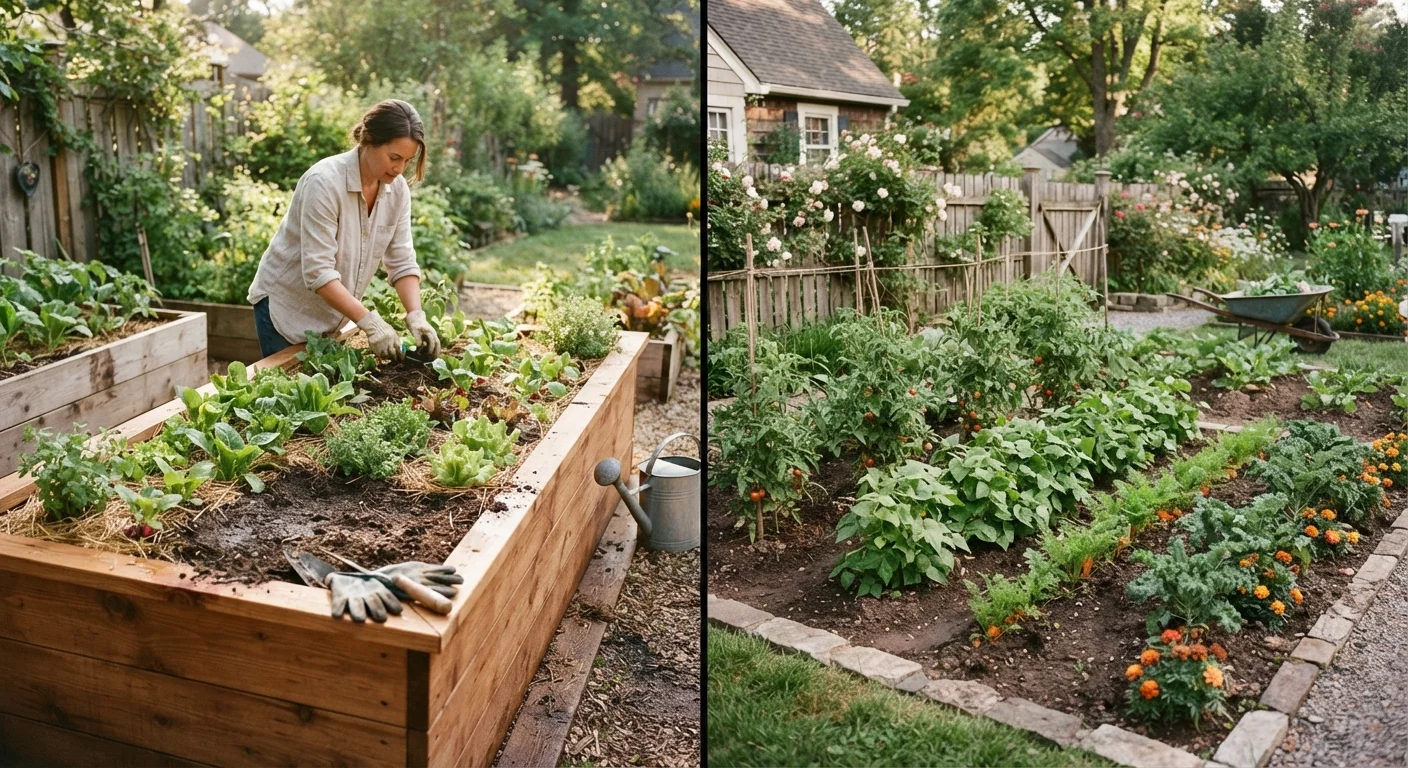
Photo credit: ArticlesHaven.net
In this article
Weigh the real trade-offs between raised beds and in-ground gardens—drainage, cost, soil control, and long-term effort—before you dig in.
Key Takeaways
- Raised beds offer superior drainage and soil control but carry meaningful upfront material costs.
- In-ground planting scales more easily and costs less to start, but depends heavily on existing soil quality.
- Raised beds warm up faster in spring, often extending your planting season by one to three weeks.
- In-ground gardens are better suited to large root vegetables, sprawling crops, and long-term perennials.
- Your native soil quality is often the single most important factor in choosing between the two methods.
The Core Trade-Off: Control vs. Scale
The choice between raised beds and in-ground planting ultimately comes down to one central tension: how much control you want over your growing environment versus how much space you need to grow efficiently.
Raised beds give you the ability to build your soil from scratch - blending compost, topsoil, and amendments in ratios that suit exactly what you're planting. That level of control is hard to replicate in native ground without years of amendment work. The trade-off is cost and physical effort upfront: lumber, hardware cloth (if you're excluding burrowing pests), and fill soil add up quickly, particularly for multiple beds.
In-ground planting asks you to work with what you have. If your native soil is loamy and well-draining, that's a genuine advantage - you can break ground, amend lightly, and plant at scale for a fraction of the cost. But if your yard has heavy clay, rocky substrates, or drainage issues, in-ground planting requires significant soil preparation before it performs reliably. For a broader look at how layout decisions affect yield and access, see garden layout planning approaches that experienced growers rely on.
| Criterion | Raised Beds | In-Ground Planting |
|---|---|---|
| Startup cost | Higher (materials + fill soil) | Lower (tools + amendments) |
| Soil control | Full - build from scratch | Limited by native soil |
| Drainage | Excellent by design | Varies with native soil |
| Spring soil warmup | Faster (exposed sides) | Slower (ground mass) |
| Scalability | Limited by cost and space | Easily expanded |
| Accessibility / ergonomics | High (reduced bending) | Lower (ground level) |
| Weed pressure | Lower initially | Higher, especially early on |
| Suitability for perennials | Limited | Well-suited |
| Long-term soil building | Requires periodic topping-up | Improves steadily with amendments |
Drainage, Soil Warmth, and Season Length
Two practical advantages consistently favor raised beds: drainage and soil temperature. Because the growing medium sits above grade, water moves through more freely - this matters most in regions with wet springs or heavy clay soils where standing water can suffocate roots.
Raised beds also warm up faster in spring because the soil mass is exposed on multiple sides. Depending on your climate, this can translate to an earlier planting window - sometimes two to three weeks ahead of in-ground beds. For gardeners trying to maximize a short growing season, that difference is meaningful.
In-ground soil, by contrast, holds temperature more consistently through hot summers, which can benefit certain crops that prefer stable conditions. It also retains moisture longer during dry stretches, potentially reducing irrigation frequency. How you water matters too - whether you use drip irrigation or sprinkler systems will interact differently with each planting method.
2-3 weeks
Earlier planting possible in raised beds
Raised bed soil warms faster in spring due to exposure on multiple sides, commonly allowing an earlier start in cooler climates.
$150-$400+
Typical cost per 4×8 raised bed
Material and fill soil costs vary significantly by region and material choice; cedar and composite options sit at the higher end of the range.
10-12 inches
Minimum bed depth for most vegetables
Most common vegetable crops, including tomatoes, peppers, and greens, perform well in raised beds at this depth with quality growing medium.
Cost, Maintenance, and Long-Term Commitment
Startup costs differ sharply. A single 4×8-foot raised bed using cedar lumber and quality fill soil can run $150-$400 or more depending on material choices and regional prices - and most productive gardens need several beds. In-ground planting's primary costs are labor, basic tools, and soil amendments like compost, which are significantly cheaper per square foot of growing area.
Over time, raised beds require periodic topping-up of soil as organic matter breaks down, and wooden structures eventually rot - cedar and redwood last longest but aren't permanent. In-ground gardens benefit from continuous improvement through cover cropping, compost, and mulching, and don't have the structural replacement cost. For guidance on maximizing the benefit of organic layers in either system, understanding mulch types and depth is worth reviewing.
Weed pressure is another ongoing factor. Raised beds filled with quality soil start with fewer weed seeds, though wind-blown seeds will eventually colonize. In-ground beds frequently battle established weed banks in native soil, which demands more consistent attention, especially in the first two seasons.
Soil Testing Is Worth Doing First
Before choosing your method, a basic soil test (available through many cooperative extension services) tells you your native soil's pH, drainage characteristics, and nutrient profile. If your soil tests well, in-ground planting becomes far more competitive. If it reveals contamination, compaction, or extreme pH, raised beds may be the more practical choice regardless of cost.
Which Crops Suit Each Method
Raised beds excel with shallow- to medium-rooted crops: lettuce, herbs, tomatoes, peppers, and most brassicas perform well in 10-12 inches of quality growing medium. If you're mapping out what to plant in either setup, pairing your method choice with smart plant selection - including the annuals vs. perennials decision - helps the whole system work together.
Deep-rooted crops like parsnips, large carrots, and winter squash can technically grow in raised beds but do better with at least 18 inches of depth or in open ground where roots aren't confined. Sprawling crops like pumpkins and melons are generally more practical in-ground simply due to their footprint.
Perennials, fruit trees, and large shrubs belong in the ground. Their root systems need room to expand over years and decades in ways that no raised bed can realistically support. If you're considering something beyond the standard annual vegetable patch, starting a vegetable garden from scratch covers how to match site, method, and crop from the beginning. Alternatively, if space is genuinely limited, container gardening is a third path worth considering before committing to either raised beds or in-ground planting.

Author
Articles Haven Editorial Contributor
Articles Haven Editorial Team is the collective byline for our editorial team and contributor network. Articles published under this byline or an editorial pen name are researched, written, and reviewed according to our editorial standards for clarity, consistency, and independence before publication.
View all articles →