
Checked Bags, Carry-On Rules, and Airline Baggage Policies Compared
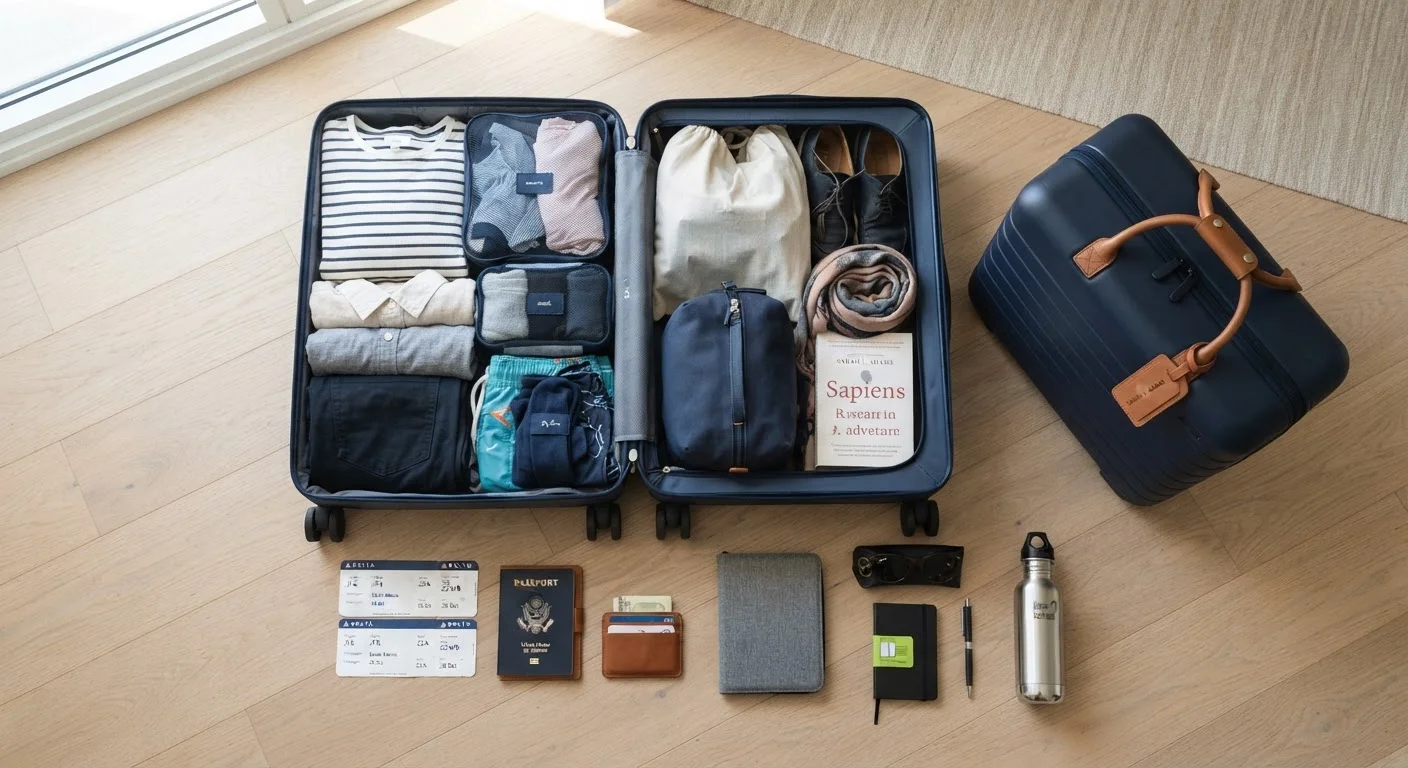
Photo credit: ArticlesHaven.net
In this article
An overview of how major US carrier baggage allowances and fees are structured, and what to verify before you pack.
Key Takeaways
- Carry-on size limits are fairly consistent across US carriers, but weight limits and personal item rules vary more than most travelers expect.
- Checked bag fees differ significantly between full-service and ultra-low-cost carriers, and fare class often determines what's included.
- Co-branded airline credit cards frequently waive the first checked bag fee, which can offset the card's annual cost on just a few round trips.
- Always verify baggage policies directly with your airline before packing, as rules change and vary by route and fare type.
How US Airline Baggage Policies Are Structured
US airlines generally divide baggage into three categories: the personal item (a small bag that fits under the seat in front of you), the carry-on (overhead bin bag), and checked luggage. Each tier carries its own size, weight, and fee rules - and those rules are not uniform across carriers.
Full-service carriers like the major legacy airlines typically include at least one carry-on in every fare, though their lowest "basic economy" tickets have clawed back that benefit in recent years. Ultra-low-cost carriers (ULCCs) often charge for overhead bin carry-ons as a separate add-on, making the base fare look deceptively low. Understanding which tier your ticket falls into is the first step before you decide how to pack. For a deeper look at how these carrier types compare overall, see our comparison of budget and full-service airlines.
| Full-Service (Legacy) | Ultra-Low-Cost (ULCC) | Low-Cost (e.g., Southwest-style) | |
|---|---|---|---|
| Personal item included | Yes, all fare types | Yes, but size limits strict | Yes, all fare types |
| Carry-on included | Yes (not basic economy) | Extra fee required | Yes, all fare types |
| First checked bag fee | ~$35-$40 each way | Varies; cheaper at booking | Often included (varies) |
| Weight limit (checked) | 50 lbs standard | 40-50 lbs; varies | 50 lbs standard |
| Status/card fee waiver | Common with elite/card | Rarely offered | Depends on carrier |
| Gate enforcement | Moderate | High | Moderate |
Carry-On Rules: Size, Weight, and What Actually Gets Enforced
The commonly cited carry-on size maximum across major US domestic carriers is roughly 22 x 14 x 9 inches, including wheels and handles. In practice, most carriers enforce this through overhead bin space rather than gate measurement - but enforcement tightens significantly on smaller regional aircraft and heavily booked flights.
Weight limits on carry-ons are rarely enforced on US domestic routes, but international legs operated by the same carrier or a partner airline may apply strict limits (often 15-17 lbs). If your itinerary includes a transatlantic or transpacific segment, check the weight policy for every operating carrier, not just the one you booked through.
Personal item rules are where travelers frequently get caught off guard. Some carriers define a personal item narrowly - essentially a purse or laptop bag - while others allow a full-size backpack. ULCCs in particular have tightened these definitions, and gate agents are increasingly instructed to enforce them. A structured carry-on packing system can help you stay within limits without sacrificing what you need.
Measure Your Bag Before the Airport
Carry-on size limits include wheels and handles, which many travelers forget when choosing luggage. A bag marketed as a "22-inch carry-on" may measure closer to 24 inches with its hardware. Measure your specific bag against the airline's published dimensions before you travel, not just the product listing. This is especially important on regional aircraft, where overhead bins are smaller than on mainline jets.
Checked Bag Fees: What the Numbers Actually Look Like
Checked bag fees on US carriers have risen considerably over the past decade. For most major legacy carriers, a first checked bag on a domestic round trip can run between $35 and $40 each way, with the second bag adding another $45-$50 each way. These figures are general ranges based on publicly published fee schedules; always confirm current pricing on the airline's website before you travel, as fees shift periodically.
ULCCs typically charge for checked bags at booking (cheaper) versus at the gate (significantly more expensive). The price gap between booking-time and gate fees can be substantial - sometimes double - making it essential to add bags when you purchase your ticket rather than at the airport.
$6.8B+
US airline baggage fee revenue (annual)
US airlines collectively reported billions in annual baggage fee revenue in recent DOT Air Travel Consumer Reports, underscoring how central these fees have become to carrier economics.
50 lbs
Standard checked bag weight limit
Most major US carriers set 50 pounds as the standard limit before overweight surcharges apply, though some international partners use lower thresholds.
Co-branded airline credit cards from major issuers commonly waive the first checked bag fee for the cardholder and sometimes one or more companions on the same reservation. On a carrier that charges $35-$40 each way per bag, a round trip for two passengers can generate $140-$160 in fee waivers - enough to offset a card with a modest annual fee in just one trip. This is general information; card terms and eligibility vary, so review current card benefits before making any financial decisions.
Fare Class, Status, and Bundle Upgrades
Baggage allowances are often tied directly to fare class. Basic economy fares on legacy carriers - the lowest-priced tier - frequently restrict carry-on to a personal item only, mirroring the ULCC model. Moving up to a standard economy or "main cabin" fare typically restores overhead bin access. Business and first class fares usually include two or more checked bags at no extra charge.
Elite frequent flyer status can override many of these restrictions. Elite members on most US carriers receive complimentary checked bags regardless of fare class, and some status levels extend that benefit to companions on the same reservation. If you fly a particular carrier multiple times per year, understanding the status tier system may make more financial sense than paying per-bag fees.
Many carriers also sell fare "bundles" that package a checked bag, seat selection, and sometimes flight change flexibility into a single upgrade fee. Whether a bundle is worth it depends on what you'd pay for each component separately - do the math at booking rather than assuming the bundle is a deal. For broader guidance on researching fares before committing, see flight and hotel research best practices.
Special Items, Oversize Bags, and Common Pitfalls
Bags that exceed standard size or weight limits - typically over 50 lbs or 62 linear inches - incur oversize and overweight fees that stack on top of the standard checked bag fee. A single oversized, overweight bag can add $100-$200 or more in fees on domestic routes. Sports equipment (skis, golf clubs, surfboards, bicycles) often falls into special item categories with their own pricing and packaging requirements.
Gate Bag Fees Are Significantly Higher
On ultra-low-cost carriers especially, checking a bag at the gate - rather than during online check-in or at booking - can cost double or more compared to prepaying. If you know you'll be checking a bag, add it during your initial booking to lock in the lower rate. Waiting until the airport removes that option.
Connecting flights and codeshare itineraries introduce complexity. If your ticket involves multiple carriers - especially a US carrier partnered with an international airline - baggage rules may default to the most restrictive carrier on the itinerary. Verify each operating carrier's policy separately, not just the marketing carrier's website. The same caution applies to cabin class differences across a multi-leg trip; cabin class distinctions can affect what's included on each segment.
For travelers deciding whether to check a bag at all, comparing the carry-on versus checked bag trade-offs can clarify which approach fits your specific trip type. And if you're aiming to travel for two weeks without checking anything, extended trip packing strategies offer a practical starting point.

Author
Articles Haven Editorial Contributor
Articles Haven Editorial Team is the collective byline for our editorial team and contributor network. Articles published under this byline or an editorial pen name are researched, written, and reviewed according to our editorial standards for clarity, consistency, and independence before publication.
View all articles →