
The Carry-On Packing Framework Frequent Travelers Swear By
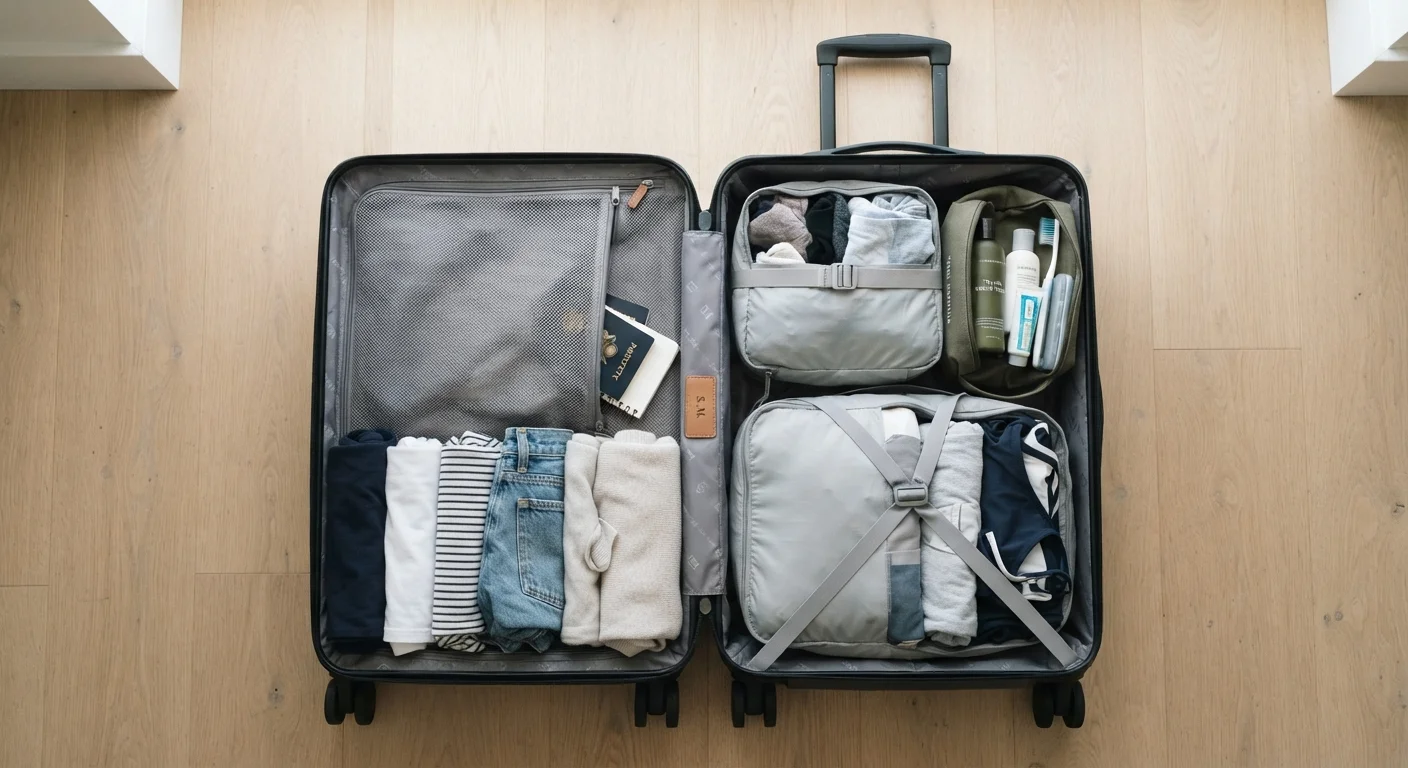
Photo credit: ArticlesHaven.net
In this article
A practical system for fitting everything you need into a carry-on bag, from clothing rolls to toiletry rules and tech organization.
Key Takeaways
- Rolling clothes instead of folding saves meaningful space and reduces wrinkles.
- Packing cubes help segment your bag so retrieval is fast and repacking is easy.
- TSA's 3-1-1 liquids rule limits toiletries to 3.4 oz containers in one quart-sized bag.
- Choosing versatile, mix-and-match clothing eliminates the need for excess outfits.
- Tech cables and accessories should be bundled together in a single dedicated pouch.
Why a Framework Beats a Random Packing List
Most people approach packing the same way every trip - throwing items onto the bed and hoping they fit. The result is a bag that's either overstuffed or missing something critical. Frequent travelers think differently: they use a repeatable system that scales to any trip length or destination.
The core idea is to treat your carry-on as a fixed container with zones, not a flexible void you fill until it zips. Once you establish that mental model, packing becomes a quick, low-stress process rather than a last-minute scramble. If you're also weighing whether a carry-on is the right call for your specific trip, compare the trade-offs of carry-on versus checked luggage before committing to either strategy.
Carry-On Size Limits Vary by Airline
While most US carriers use a common maximum around 22 x 14 x 9 inches, individual airlines and aircraft types can vary - and international carriers often enforce stricter limits. Always verify the specific carry-on dimensions for every airline on your itinerary, especially for connecting flights on smaller regional jets.
The Clothing Zone: Roll, Cube, and Mix
Clothing is typically the biggest space-waster. The fix involves two non-negotiable habits: rolling and cubing.
Roll, don't fold. Rolling compresses soft items and eliminates the air pockets that folding creates. It also makes individual items easier to identify without disturbing the rest of the bag.
Use packing cubes. Cubes let you segment clothing by type - tops in one, bottoms in another, underwear and socks in a third. When you arrive, the cube drops into the drawer and you're unpacked in under two minutes.
Pack for outfits, not items. Before packing anything, lay out complete outfits. Aim for a base of neutral pieces that work together so you can mix and match rather than packing a separate look for every day. For a trip-type breakdown of what to prioritize, see packing essentials by trip type.
Roll all soft clothing items before placing them in your bag.
Rolling removes dead air space that folding traps, increasing usable volume by a meaningful margin. It also makes it easier to see each item at a glance without unpacking everything.
Pack only clothing that works in at least two complete outfits.
Single-use items are the primary cause of overpacking. Building around versatile pieces means you carry fewer clothes without sacrificing flexibility.
Keep your toiletry bag pre-loaded with travel-size versions of your daily products.
Repacking toiletries from scratch every trip adds time and increases the risk of forgetting something or packing a full-size container by mistake.
Assign a fixed zone in your bag for each category of item.
When items always live in the same spot, retrieval is fast, repacking is consistent, and you're less likely to leave something behind at your destination.
Place frequently needed items in the outermost accessible pocket.
Digging through a packed bag at the gate or during a flight wastes time and disturbs your organized packing. Items you'll reach for often should require zero unpacking.
Toiletries and the 3-1-1 Rule
If you're flying in the US, the TSA's 3-1-1 liquids rule applies: liquids, gels, and aerosols must be in containers of 3.4 oz (100 ml) or less, all fitting in a single, clear, quart-sized zip-top bag, one bag per passenger. Violating this is one of the most common reasons security lines slow down.
Practical toiletry tips that frequent travelers rely on:
- Decant your regular products into reusable travel-size bottles rather than buying travel versions every trip.
- Solid alternatives (shampoo bars, solid deodorant) bypass the liquids rule entirely.
- Keep your toiletry bag packed and ready to go between trips - only remove items you use daily at home.
Pre-Pack Your Toiletry Bag Between Trips
Instead of rebuilding your toiletry kit before every trip, keep it stocked and ready in your closet. After returning home, replace anything you used up and zip it back up. This turns a 20-minute task into a 30-second grab.
Avoid overpacking "just in case" products. Most hotels provide basics, and pharmacies are available at virtually every destination if you forget something minor.
Tech, Cables, and Personal Items
Electronics and their accessories are notorious for creating a tangled mess that slows down both packing and security screening. The solution is a single dedicated tech pouch that lives at the top of your bag or in an outer pocket.
Keep in that pouch: charging cables, earbuds or headphones, a portable power bank, any adapters, and a USB multi-port charger. Wrap cables with velcro ties rather than loose loops. At security, this pouch can be pulled out quickly as a single unit - no digging required.
Laptops and large tablets typically need to be removed from bags at TSA checkpoints. Keep them in an easy-access sleeve rather than buried under clothing. For a broader walkthrough of airport processes, see the airport navigation guide for step-by-step checkpoint guidance.
The Pre-Departure Check and Common Slip-Ups
Even a solid packing framework breaks down when you rush it at the last minute. The most damaging packing errors - like forgetting medication, packing prohibited items, or losing your travel documents in the bag - tend to happen in the final hour before departure.
Build a short personal checklist you run through before zipping the bag: documents in outer pocket, liquids bag accessible, electronics charged, medications accounted for. Review the most common last-minute packing errors so you know exactly what to double-check. For a broader pre-travel routine, the complete pre-departure checklist covers confirmations, documentation, and day-of essentials beyond just packing.
~30%
Average wasted space from improper folding
Travel organization experts estimate that rolling versus folding can reclaim roughly 20-30% of usable bag volume in typical soft-sided luggage.
1 quart
TSA-allowed liquids bag size per passenger
The TSA 3-1-1 rule has been a standard US security requirement since 2006, applying to all carry-on liquids, gels, and aerosols.

Author
Articles Haven Editorial Contributor
Articles Haven Editorial Team is the collective byline for our editorial team and contributor network. Articles published under this byline or an editorial pen name are researched, written, and reviewed according to our editorial standards for clarity, consistency, and independence before publication.
View all articles →