
Packing for a Two-Week Trip Without Checking a Bag
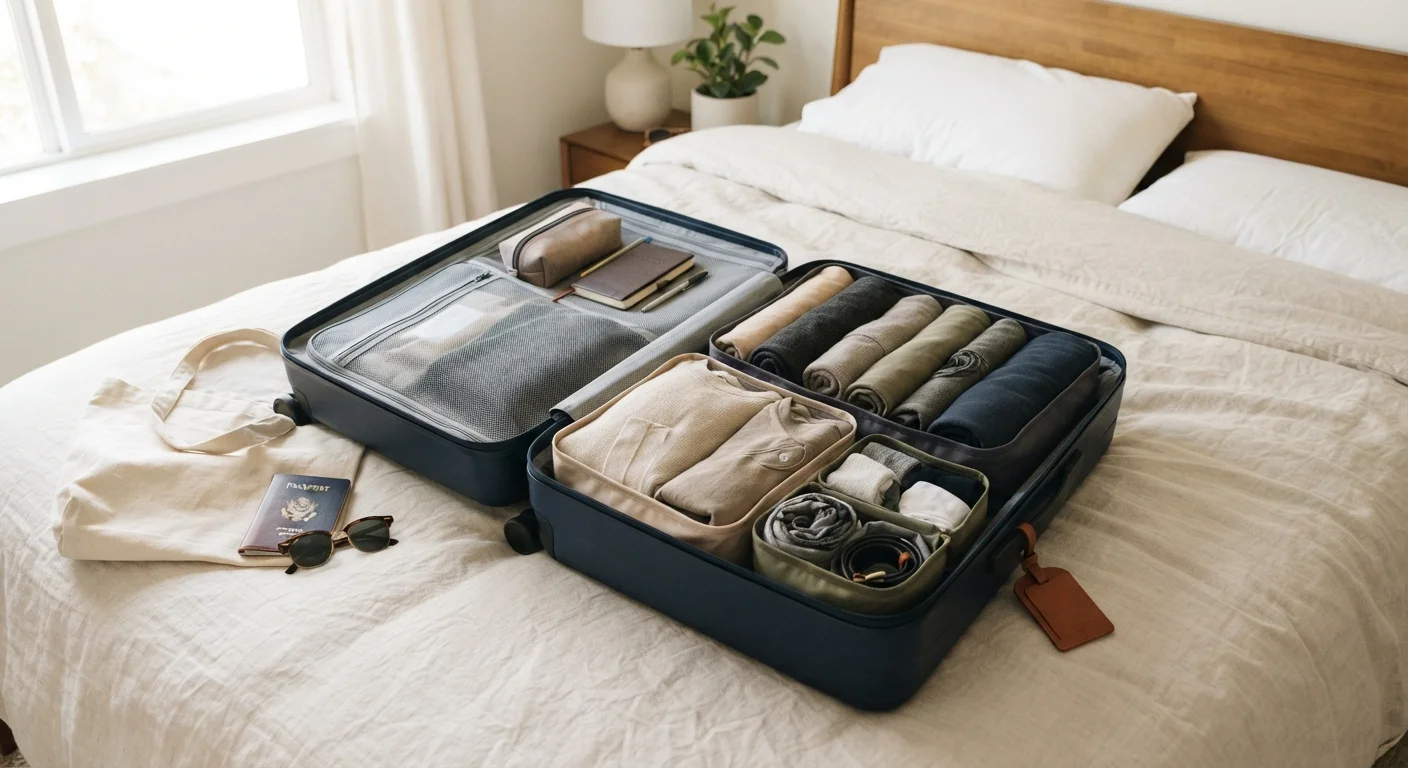
Photo credit: ArticlesHaven.net
Strategies for condensing two weeks of clothes and gear into a single carry-on, including capsule wardrobe basics and laundry planning.
Key Takeaways
- A capsule wardrobe of 9-11 versatile pieces covers most two-week itineraries without overpacking.
- Planning one mid-trip laundry day is the single biggest enabler of carry-on-only travel.
- Rolling clothes and using packing cubes recovers significant bag space compared to flat folding.
- Toiletries and liquids are usually the first category to blow a bag's weight or size limits.
- Checking airline size and weight rules before packing saves stress at the gate.
Why Two Weeks Is the Real Carry-On Challenge
A three-day weekend trip in a carry-on is easy. Two weeks feels like a different category entirely - and mentally, it often is. The instinct to "just in case" pack multiplies with trip length, and most overpacked bags reflect anxiety more than actual need.
The honest reality: you wear far fewer outfits than you pack, laundry is available almost everywhere, and most destinations have shops if you genuinely forget something critical. The goal isn't to pack as little as humanly possible - it's to pack a deliberate amount that covers your actual itinerary without weighing you down.
Trip type matters too. Beach trips, city breaks, and hiking getaways have very different gear profiles. If you're cross-referencing your list, the packing list essentials by trip type article breaks down priorities by category. And if you're curious how packing complexity compares to shorter trips, how planning complexity scales from short to extended travel puts it in perspective.
What you will need
What You'll Need
Packing cubes (set of 3-4)
Compress and organize clothing categories so every cubic inch of the bag is used efficiently.
Travel-size toiletry containers (TSA 3-1-1 compliant)
Decant full-size products into containers under 3.4 oz to meet carry-on liquid rules.
Luggage scale
Check bag weight at home to avoid overweight surprises at check-in or the gate.
Dry-fast or merino wool clothing pieces
Quick-drying fabrics allow sink washing and overnight drying, reducing the laundry burden.
Verify your airline's carry-on dimensions and weight limits
Carry-on rules vary significantly across carriers. Low-cost airlines may allow bags as small as 20" × 16" × 8", while major US carriers typically accept up to 22" × 14" × 9". Weight limits range from none on some US domestic carriers to as low as 15 lbs on budget international ones.
Pull up your specific carrier's baggage policy page before you buy or pack anything. Write down the exact dimensions and weight cap, then physically measure your bag while it's full.
Build a capsule wardrobe around a single color palette
Choose one neutral base (navy, grey, or black) and one or two accent colors. Every piece should pair with at least two others in your bag. A workable two-week capsule typically looks like this:
- 3-4 tops (mix of casual and slightly dressy)
- 2 bottoms (one casual, one versatile enough for an evening out)
- 1 lightweight layer or jacket
- 1 pair of shoes worn on the plane plus 1 packed pair
- 5-7 pairs of underwear and socks
Resist the urge to pack "just in case" outfits. If you haven't worn something in the past month at home, you almost certainly won't reach for it abroad.
Plan your mid-trip laundry day
One laundry session around day seven or eight is the structural move that makes a two-week carry-on trip possible. Research your options before you leave:
- Hotel laundry service: Convenient but often expensive per item.
- Coin laundromat: Cheap and fast; most urban destinations have one within walking distance.
- Sink washing: Practical for underwear and quick-dry fabrics. Pack a small travel clothesline and let items dry overnight.
Build laundry day into your itinerary rather than treating it as an afterthought. A few hours at a neighborhood laundromat can actually be a low-key, local experience.
Pack using the roll-and-cube method
Flat folding wastes space and creates wrinkles. Instead, tightly roll each garment and load items into packing cubes by category (tops, bottoms, underlayers). Stand the cubes upright in your bag like file folders rather than stacking them - this lets you see and access everything without unpacking.
Stuff socks inside shoes. Use the space inside your personal item for items you'll want during the flight: a book, headphones, a light layer, and your toiletry quart bag.
Audit and pare down toiletries ruthlessly
Toiletries are the category most likely to sink a carry-on attempt. Apply the TSA 3-1-1 rule (liquids in containers of 3.4 oz or less, all fitting in a single quart-sized clear bag) and stick to it strictly. Decant only what you'll actually use - not full bottles.
Items to consider cutting entirely: full-size shampoo and conditioner (use hotel provided or buy a small bottle at destination), multiple skincare steps that can be consolidated, and any aerosols not critical to your routine.
Do a trial pack 48 hours before departure
Pack everything you intend to bring, then weigh and measure the bag. If it's over limit, remove items in order of how often you expect to use them - the least-used items go first. A trial pack done two days out gives you time to swap items or ship something home rather than scrambling at the airport.
For a broader framework on fitting everything in, see the carry-on packing framework frequent travelers rely on. And if you're still on the fence about whether to check a bag at all, comparing carry-on versus checked baggage trade-offs lays out when each approach makes sense.
Common Mistakes to Avoid
Airline Rules Vary - Don't Assume
Budget and international carriers frequently enforce stricter size and weight limits than major US domestic airlines. A bag that sails through on one carrier may be gate-checked on another. Always check the specific policy for every flight on your itinerary - not just your home carrier's standard rules.
Merino Wool Is Worth Considering
Merino wool garments resist odor longer than synthetic fabrics, which means you can re-wear them more times between washes. A single merino t-shirt or base layer can pull double duty across several days of activity without needing a wash cycle. It's not cheap, but for frequent carry-on travelers it often justifies the cost over time.
Even well-intentioned packers tend to stumble in predictable ways. Over-packing shoes is the most common: three pairs of shoes for two weeks is rarely justified when one versatile pair plus a casual option suffices. Electronics and charger cables are another weight trap - audit your tech load honestly and consider whether a phone can replace a tablet for casual reading or navigation.
The other frequent error is treating the personal item as overflow rather than as a strategic compartment. Your personal item should carry flight-day essentials and anything you'll access regularly - not just the items that didn't fit in the main bag.
For anyone still refining their overall approach, the carry-on packing framework offers a repeatable system worth building on.

Author
Articles Haven Editorial Contributor
Articles Haven Editorial Team is the collective byline for our editorial team and contributor network. Articles published under this byline or an editorial pen name are researched, written, and reviewed according to our editorial standards for clarity, consistency, and independence before publication.
View all articles →