
The American South as a Travel Region: Culture, Food, and Geography
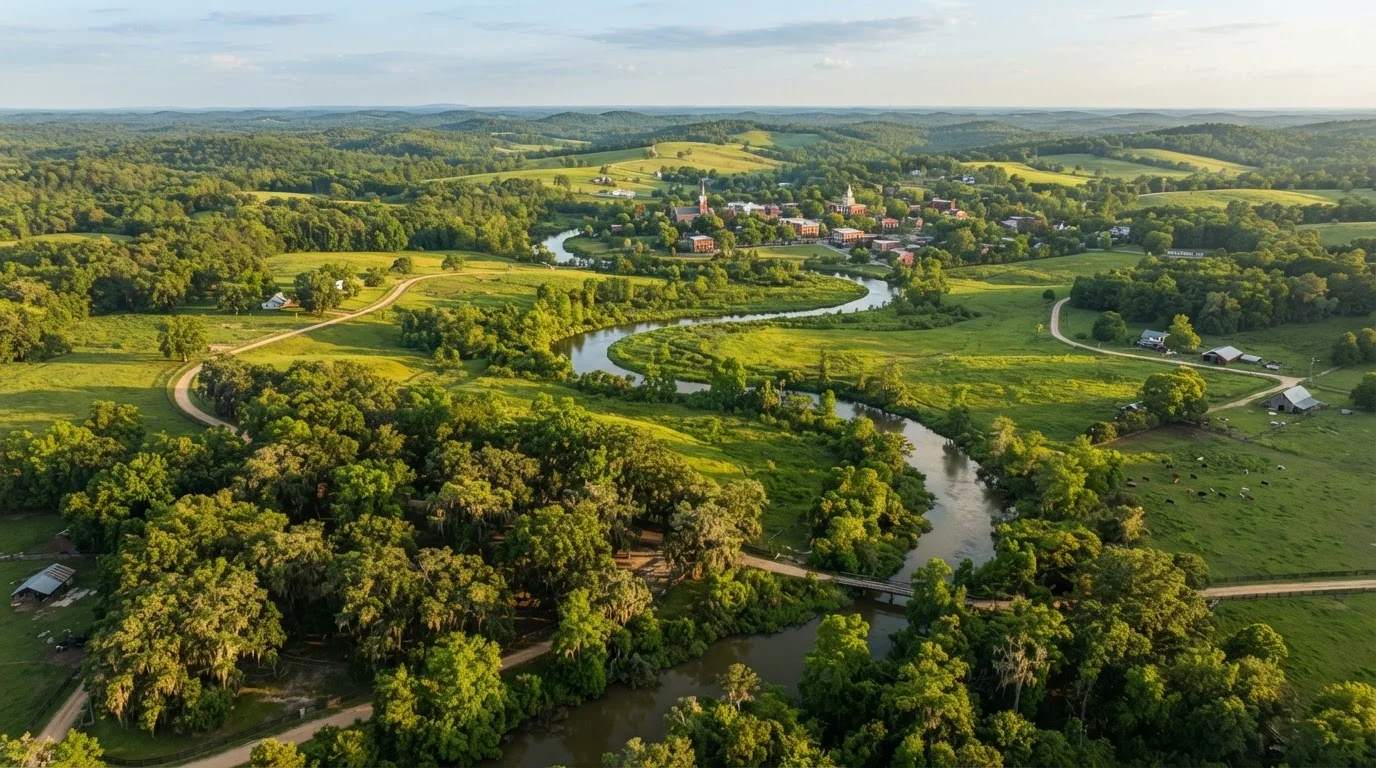
Photo credit: ArticlesHaven.net
In this article
The Gulf Coast, Appalachians, Deep South cities, and the Texas Hill Country all sit under one regional label. Here's how to think about them as distinct trips.
One Label, Many Regions
When someone says they're heading to "the South," that could mean a beach week in the Florida Panhandle, a city trip to New Orleans, hiking in the Blue Ridge Mountains, or a drive through the Texas Hill Country. These are fundamentally different trips - different climates, different costs, different things to do - that happen to share a geographic label.
Understanding the South as a collection of sub-regions rather than a single destination helps travelers plan smarter. The same is true for other large American travel regions: the Pacific Northwest breaks down similarly once you start comparing the coast against the Cascades.
| States commonly included | TX, LA, MS, AL, GA, FL, SC, NC, TN, AR, VA (partial) |
| Peak travel season (most sub-regions) | March-May and September-November |
| Hurricane season overlap | June 1 - November 30 (Gulf and Atlantic coasts) (National Hurricane Center) |
| Primary travel draws | Food, music, history, beaches, outdoor recreation |
| Relative cost range | Low to high - varies significantly by sub-region and city |
| Domestic flight hubs | Atlanta (ATL), Dallas (DFW), Nashville (BNA), New Orleans (MSY) |
This article treats the South as four loosely defined travel corridors: the Gulf Coast, the Deep South cities, the Appalachian highlands, and the Texas interior. Each has its own character and trade-offs.
The Gulf Coast: Sun, Heat, and Seafood
Stretching from the Florida Panhandle through Alabama, Mississippi, and Louisiana's southern edge, the Gulf Coast is the South's most beach-oriented travel zone. Water temperatures are warmer than the Atlantic, crowds are lighter than Florida's main peninsula, and costs tend to be lower than comparable coastal destinations in the Northeast.
The food profile here leans hard into Gulf seafood - oysters, shrimp, blue crab - with Cajun and Creole influences increasing as you move west toward Louisiana. The climate is genuinely hot and humid from May through September, with hurricane season (June-November) worth factoring into trip timing. Spring and fall offer more comfortable conditions and are generally considered the region's travel sweet spots.
Top 5
Most visited US national park
Great Smoky Mountains National Park consistently ranks among the most visited national parks in the US, according to National Park Service annual data.
~19M
Annual visitors to New Orleans
New Orleans tourism data from the New Orleans & Company visitor bureau places annual visitor volume in the high tens of millions in pre-pandemic years.
6 months
Hurricane season duration on Gulf Coast
The official Atlantic hurricane season runs June through November, affecting planning for Gulf and Southeast Atlantic coastal travel.
If you're weighing Gulf Coast against other warm-weather options, see how it compares in a broader coastal vs. inland decision framework.
Deep South Cities: History, Music, and Food Culture
Cities like New Orleans, Memphis, Nashville, Charleston, and Savannah draw travelers primarily for culture - music scenes, culinary traditions, architecture, and history. Each has a distinct identity that resists generalization.
New Orleans is the most internationally recognized, with a food and music culture unlike anywhere else in the US. Memphis anchors itself to blues heritage and barbecue. Nashville has shifted toward a broader entertainment economy but retains a genuine country music infrastructure. Charleston and Savannah offer well-preserved antebellum architecture alongside a growing contemporary restaurant scene.
Event Timing Affects Prices Sharply
Southern cities often host major events - Mardi Gras, music festivals, college football weekends - that can double or triple typical accommodation rates. Checking local event calendars before booking is especially important in New Orleans, Nashville, and New Orleans. Flexibility of even a few days can produce meaningful cost differences.
Budget-wise, Nashville has become one of the pricier Southern city destinations, particularly for weekend travelers during peak event seasons. New Orleans can be managed on a range of budgets depending on how far outside the French Quarter you're willing to stay and eat. Charleston tends toward the higher end for accommodations.
For travelers drawn to regional character and local cuisine as primary trip drivers, the Deep South city corridor competes well against other culturally rich destinations. The Caribbean vs. Mediterranean comparison is useful if you're deciding between domestic and international cultural travel.
Cajun
A cultural and culinary tradition rooted in the French-speaking Acadian settlers of southern Louisiana. Cajun cooking is known for bold spices, one-pot dishes, and heavy use of local seafood and game.
Creole
In a New Orleans context, Creole refers to a mixed cultural heritage blending French, Spanish, African, and Caribbean influences, expressed in both cuisine and architecture.
Blue Ridge Parkway
A 469-mile federal scenic highway running through Virginia and North Carolina along the Appalachian highlands, managed by the National Park Service.
Texas Hill Country
A loosely defined region of central Texas characterized by limestone hills, spring-fed rivers, cedar and live oak terrain, and a cluster of small towns between San Antonio and Austin.
Appalachian Highlands and Texas Interior: The Other South
The Great Smoky Mountains, Blue Ridge Parkway, and broader Appalachian highlands represent a cooler, quieter version of Southern travel. Elevations shift the climate meaningfully - summers are more tolerable, fall foliage rivals New England's fall draw at lower crowds and often lower cost. The region suits hikers, scenic drivers, and travelers looking to decompress rather than experience urban energy.
The Texas Hill Country - centered around the San Antonio-to-Austin corridor - occupies its own category entirely. Hill Country combines wide-open limestone terrain, spring-fed rivers, wine trails, and a food scene that leans toward Texas barbecue and Tex-Mex. It's a road-trip-friendly region that pairs well with time in Austin or San Antonio as urban anchors. The underrated road trip routes guide covers some Hill Country corridors worth knowing.
Both sub-regions skew toward outdoor and independent travel styles and tend to be more budget-accessible than major city or coastal destinations. For comparison with another varied domestic landscape, the American Southwest overview is a natural counterpart - similarly expansive, but drier and more dramatic in terrain.
National Park Service - Southern Parks & Trails
The NPS site provides trail conditions, entrance fees, and reservation requirements for parks across the Appalachians and Gulf region, including Smoky Mountains and Gulf Islands National Seashore.
US State Tourism Offices
Each Southern state maintains an official tourism site with regional itineraries, event calendars, and travel advisories - useful for planning across multiple states in one trip.
National Hurricane Center
For Gulf and Atlantic coast travel, the NHC provides seasonal outlooks and active storm tracking - worth checking when planning travel between June and November.

Author
Articles Haven Editorial Contributor
Articles Haven Editorial Team is the collective byline for our editorial team and contributor network. Articles published under this byline or an editorial pen name are researched, written, and reviewed according to our editorial standards for clarity, consistency, and independence before publication.
View all articles →