
Caribbean vs. Mediterranean: Which Region Fits Your Travel Style?
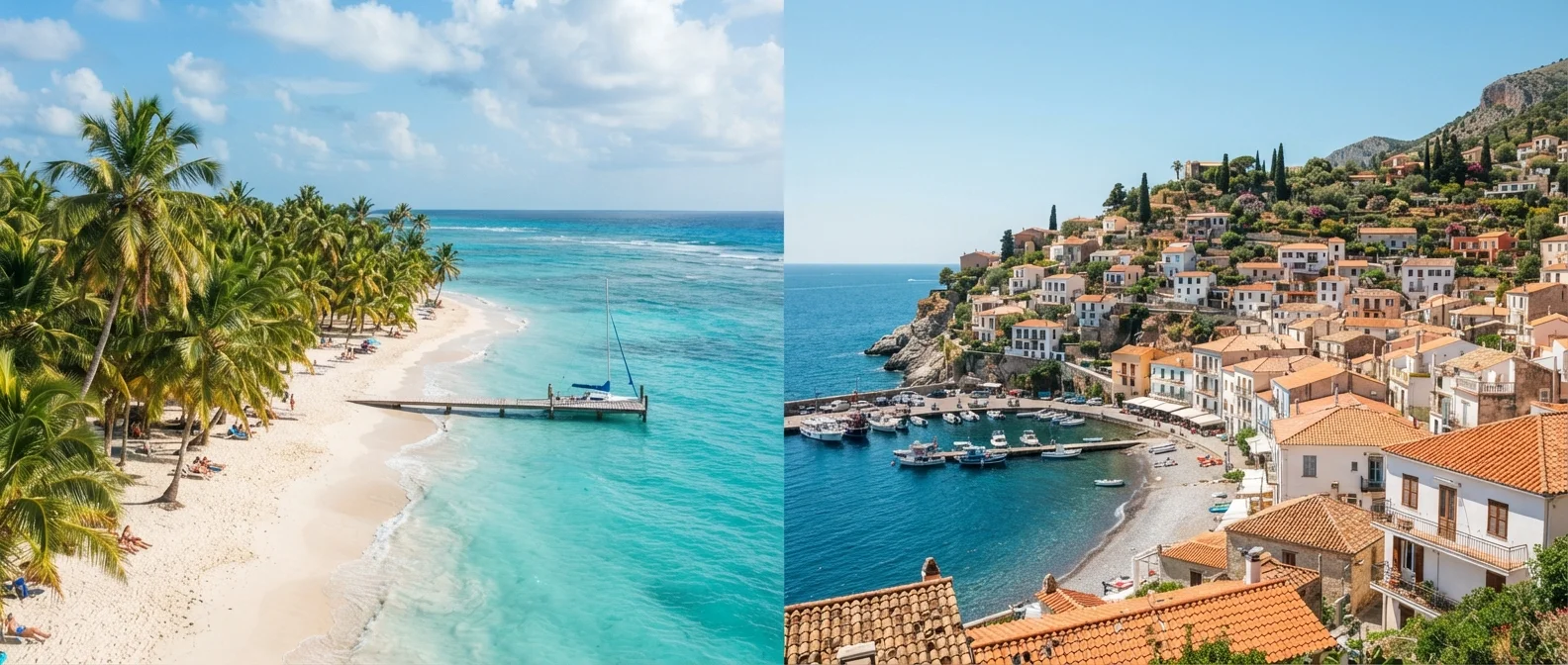
Photo credit: ArticlesHaven.net
In this article
Sun, sea, and culture — but very different vibes. Break down the key differences between Caribbean and Mediterranean travel to find your match.
Key Takeaways
- The Caribbean prioritizes beach relaxation; the Mediterranean layers culture and cuisine into the experience.
- Caribbean travel peaks in winter (December-April); Mediterranean travel peaks in summer (June-August).
- All-inclusive resorts are more common and competitively priced in the Caribbean than in Europe.
- Mediterranean destinations typically require more planning and independent navigation between sites.
- Both regions carry seasonal trade-offs - hurricanes in the Caribbean, overcrowding in the Mediterranean.
- Your travel style - beach-passive vs. explore-actively - is the clearest guide to which region suits you.
Two Regions, Two Very Different Trips
At first glance, both destinations offer sun, sea, and a slower pace. Look closer and they diverge sharply. The Caribbean is built around the beach - powdery sand, warm water, and resort infrastructure designed for ease. The Mediterranean is a coastal backdrop to something bigger: layers of history, distinct national cuisines, and ancient cities that reward wandering on foot.
Neither is objectively better. The right pick depends on what you want your days to actually look like. That's the frame this comparison uses throughout. For a different angle on trip structure, see our guide on city breaks vs. nature escapes.
| Criterion | Caribbean | Mediterranean |
|---|---|---|
| Peak travel season | December - April | June - August |
| Primary appeal | Beach relaxation, resorts | Culture, food, history |
| All-inclusive availability | Widely available | Limited; mostly independent |
| Flight time from US East Coast | 3-5 hours | 8-11 hours |
| Weather risk | Hurricanes (Aug-Oct) | Heat & crowds (Jul-Aug) |
| Budget predictability | High (all-inclusive model) | Variable; can escalate |
| Multi-country itinerary ease | Moderate (island-hopping) | High (EU rail, ferries) |
Timing, Weather, and Seasonal Trade-Offs
Timing is one of the sharpest practical differences between the two regions. The Caribbean's prime window runs from December through April, when rainfall is low and humidity is manageable. Summer and early fall bring hurricane season - not a disqualifier, but a real risk worth accounting for, especially August through October.
The Mediterranean flips that calendar. Summer (June-August) is peak season: long days, warm water, and every attraction open. The downside is crowds and higher prices, particularly in popular spots in Greece, Italy, and southern France. Shoulder seasons - May and September - are widely considered the sweet spot for weather and manageability.
~6 months
Atlantic hurricane season duration
NOAA defines the Atlantic hurricane season as June 1 through November 30, with peak activity typically from mid-August through mid-October.
Top 3
Mediterranean countries by tourist arrivals
France, Spain, and Italy consistently rank among the world's most visited countries, according to UN Tourism (formerly UNWTO) annual data.
3-5 hrs
Typical US East Coast flight to Caribbean
Direct flight times from cities like New York or Miami to major Caribbean destinations typically fall in the three-to-five hour range, depending on the island.
If you're a winter traveler wanting reliable warmth, the Caribbean wins. If you travel in summer and want the most out of every day, the Mediterranean has the edge - just verify entry requirements and local conditions with official government travel resources before booking, as rules can change.
Cost, Planning Effort, and Trip Structure
Budget plays out differently depending on how you travel. In the Caribbean, all-inclusive resorts package flights, accommodation, meals, and activities into a single price - which simplifies budgeting considerably. For US travelers, direct flights to major Caribbean hubs are plentiful from most major airports.
Mediterranean travel tends to be more variable. Flights are longer and often pricier, especially to European hubs. Once there, the region rewards independent exploration - but hopping between islands or countries adds transport costs quickly. Accommodation ranges from budget hostels to luxury hotels; the average spend per day can swing dramatically based on country and style.
For a deeper look at how cost structures differ between packaged and independent trips, our piece on cruises vs. independent travel covers overlapping trade-offs. You can also match your spending habits to destination type with our guide on budget vs. comfort travel.
Visa and Entry Requirements Vary Widely
US passport holders can enter most Caribbean islands without a visa for short stays, though requirements vary by territory and nationality. Mediterranean entry rules differ by country - EU Schengen rules apply across much of southern Europe. Always verify current entry requirements directly with official government and embassy sources before you travel, as policies can change.
Activities, Culture, and What You'll Actually Do
The Caribbean excels at passive enjoyment - snorkeling, sailing, beach bars, and resort pools. Cultural depth exists (Jamaica, Cuba, and Trinidad each offer distinct local character), but it often requires deliberate effort to seek out beyond the resort perimeter.
The Mediterranean is almost unavoidably cultural. You're walking past Roman amphitheaters, eating regional food that varies town by town, and navigating cities that have been layered over millennia. Water activities are present - particularly in Greece and Croatia - but they share the itinerary with market visits, museum stops, and long restaurant meals.
If the idea of a coastline as a launching point for exploration appeals, our article on coastal vs. inland destinations offers a useful companion perspective on how geography shapes the travel experience.

Author
Articles Haven Editorial Contributor
Articles Haven Editorial Team is the collective byline for our editorial team and contributor network. Articles published under this byline or an editorial pen name are researched, written, and reviewed according to our editorial standards for clarity, consistency, and independence before publication.
View all articles →