
Pollinators in the Garden: What Attracts Them and What Drives Them Away
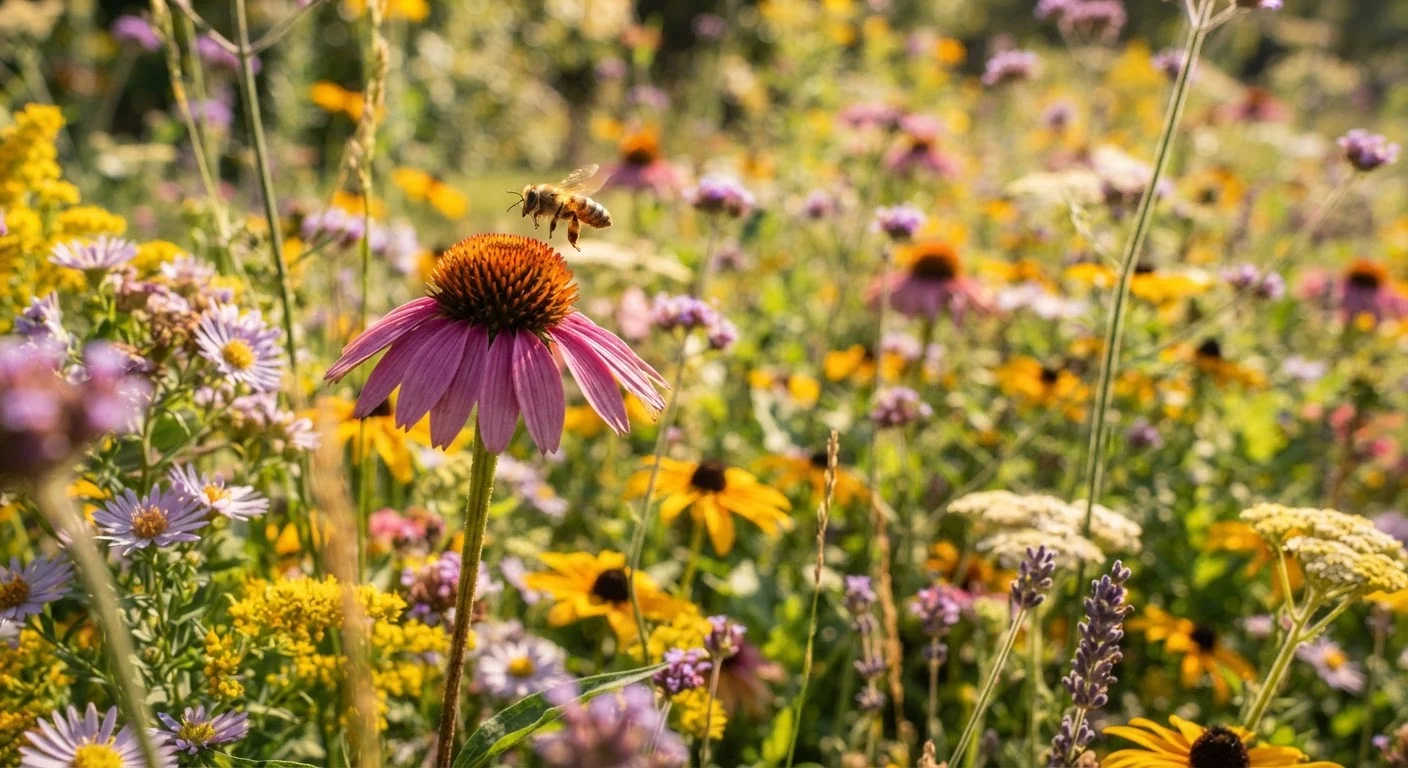
Photo credit: ArticlesHaven.net
In this article
Bees, butterflies, and other pollinators respond to specific plant and habitat cues. Learn what genuinely supports them—and what inadvertently harms.
Key Takeaways
- Native plants consistently outperform exotic ornamentals at attracting local pollinators.
- Pesticide use-even occasional spraying-can significantly reduce pollinator activity in your garden.
- Providing continuous bloom from early spring through late fall is more effective than a single seasonal burst.
- Bare ground, leaf litter, and hollow stems offer nesting habitat many gardeners unknowingly remove.
- Water sources and reduced mowing frequency meaningfully support pollinator populations.
Why Pollinators Matter-and Why They're Struggling
Roughly one-third of the food humans eat depends on pollination, yet bee populations across North America have declined sharply over the past several decades. Butterflies, moths, beetles, and hoverflies are also under pressure from habitat loss, pesticide exposure, and the spread of plants that offer little wildlife value. For home gardeners, this isn't just an environmental concern-it's a practical one. A garden with active pollinators produces more fruit, stronger vegetable yields, and more reliable seed set.
The good news: individual garden decisions genuinely add up. Even a small suburban plot, managed thoughtfully, can function as meaningful habitat. But it requires understanding what pollinators are actually looking for-and what quietly pushes them out.
~70%
Native bee species that nest in the ground
According to the USDA Agricultural Research Service, the majority of North America's 4,000+ native bee species are ground-nesters, making soil habitat a critical but often overlooked garden feature.
35%
Share of global food production dependent on pollinators
The Food and Agriculture Organization of the United Nations estimates that pollinators directly affect roughly one-third of global food production, including most fruits, vegetables, and nuts.
What Draws Pollinators In
Pollinators respond to a predictable set of cues. Getting these right doesn't require a large budget or a complete garden overhaul-it requires thoughtful plant selection and a willingness to let go of the ultra-tidy aesthetic.
Plant for continuous bloom across the full growing season
Pollinators need reliable food from early spring through late fall. A garden that blooms only in midsummer forces them to look elsewhere during lean periods, reducing the chances they establish your space as a regular foraging route.
Prioritize native flowering plants over double-flowered ornamentals
Native plants co-evolved with local pollinators, making their pollen and nectar more accessible and nutritionally appropriate. Double-flowered cultivars-bred for visual appeal-often have inaccessible or reduced pollen, making them far less useful as food sources.
Provide a shallow, reliable water source
Many pollinators, including bees and butterflies, need water for hydration and nest-building. A garden that lacks any water feature is less attractive as habitat, particularly during dry summer months.
Leave areas of bare or loosely mulched soil for ground-nesting bees
Approximately 70% of native bee species in North America nest in the ground. Dense mulch coverage and compacted soil block access to nesting sites, effectively removing these species from your garden even if food plants are present.
Plant in dense clusters rather than isolated specimens
Pollinators forage more efficiently when they can move between flowers of the same species in a concentrated area. Isolated single plants are harder to locate and offer less energy return per foraging trip.
For a deeper look at how to combine plant types strategically, see planning annuals and perennials together to keep blooms consistent across the season. And if you're weighing native versus exotic plant choices, native plants vs. exotic ornamentals covers the wildlife value trade-offs in detail.
What Drives Pollinators Away
Some of the most common garden habits inadvertently make a space hostile to the visitors you want. These aren't obscure mistakes-they're widespread practices that simply weren't designed with pollinators in mind.
Read Labels Before You Spray Anything
Even products marketed as 'natural' or 'organic' can harm pollinators. Spinosad, for example, is an organic-approved insecticide that is highly toxic to bees when wet. The timing of application matters as much as the product itself - spraying in the early morning or late evening, when pollinators are less active, reduces but does not eliminate risk. When in doubt, skip the spray and try a physical or cultural control first.
Pesticide use is the single biggest driver. Systemic insecticides-including those used as soil drenches or seed treatments-can persist in pollen and nectar long after application. Even products labeled for use on specific pests can harm non-target insects. If pest pressure is a concern, managing garden pests without pesticides first outlines physical and cultural alternatives worth trying.
Over-tidying is the second major factor. Removing leaf litter, clearing hollow stems in fall, and cultivating bare soil eliminates nesting sites for ground-nesting bees (which make up roughly 70% of native bee species) and overwinter shelter for butterfly pupae. Leaving a designated unmaintained corner of the garden-or simply delaying cleanup until late spring-makes a measurable difference.
Monoculture planting and blooms concentrated in a single season leave pollinators without reliable food sources. A garden that peaks in July but offers nothing in April or October is harder to colonize than one with staggered bloom times.
Quick Actions That Make an Immediate Difference
You don't need to redesign the entire garden to improve its value for pollinators. Several targeted changes can take effect within a single season.
Soil health plays a supporting role too-healthy, well-structured soil supports the root systems of flowering plants and helps them bloom more vigorously. choosing between compost, mulch, and fertilizer explains how each input works differently and when each is appropriate.
Designing for Pollinators Long-Term
Sustaining a pollinator-friendly garden over multiple seasons means thinking beyond individual plant choices. Layout, plant density, and the way you manage the space between seasons all matter.
Regional Plant Choices Matter Significantly
What works as a pollinator plant in the Pacific Northwest may have limited value in the Southeast or the arid Southwest. Native plant societies and university extension programs in your state are reliable, free resources for region-specific plant lists. The Xerces Society also maintains publicly available guides organized by region and pollinator type, which can help you prioritize plants that match both your climate and your target insects.
Clusters of the same plant species-rather than scattered individuals-are easier for pollinators to locate and exploit efficiently. A single patch of three to five square feet of one flowering plant is more useful than the same number of plants spread across the garden in ones and twos. garden layout planning approaches covers how spatial decisions affect the way wildlife and plants interact across the growing season.
“The single most important thing anyone can do for biodiversity in a suburban or urban setting is to increase the native plant cover on their property. Native plants support exponentially more wildlife than non-native ornamentals.”
— Doug Tallamy, Professor of Entomology and Wildlife Ecology, University of Delaware, and author on native plants and biodiversity
Building a pollinator-friendly garden isn't about perfection-it's about reducing the barriers that currently make your space less usable for the insects doing the work your garden depends on.

Author
Articles Haven Editorial Contributor
Articles Haven Editorial Team is the collective byline for our editorial team and contributor network. Articles published under this byline or an editorial pen name are researched, written, and reviewed according to our editorial standards for clarity, consistency, and independence before publication.
View all articles →