
Native Plants vs. Exotic Ornamentals for US Home Gardens
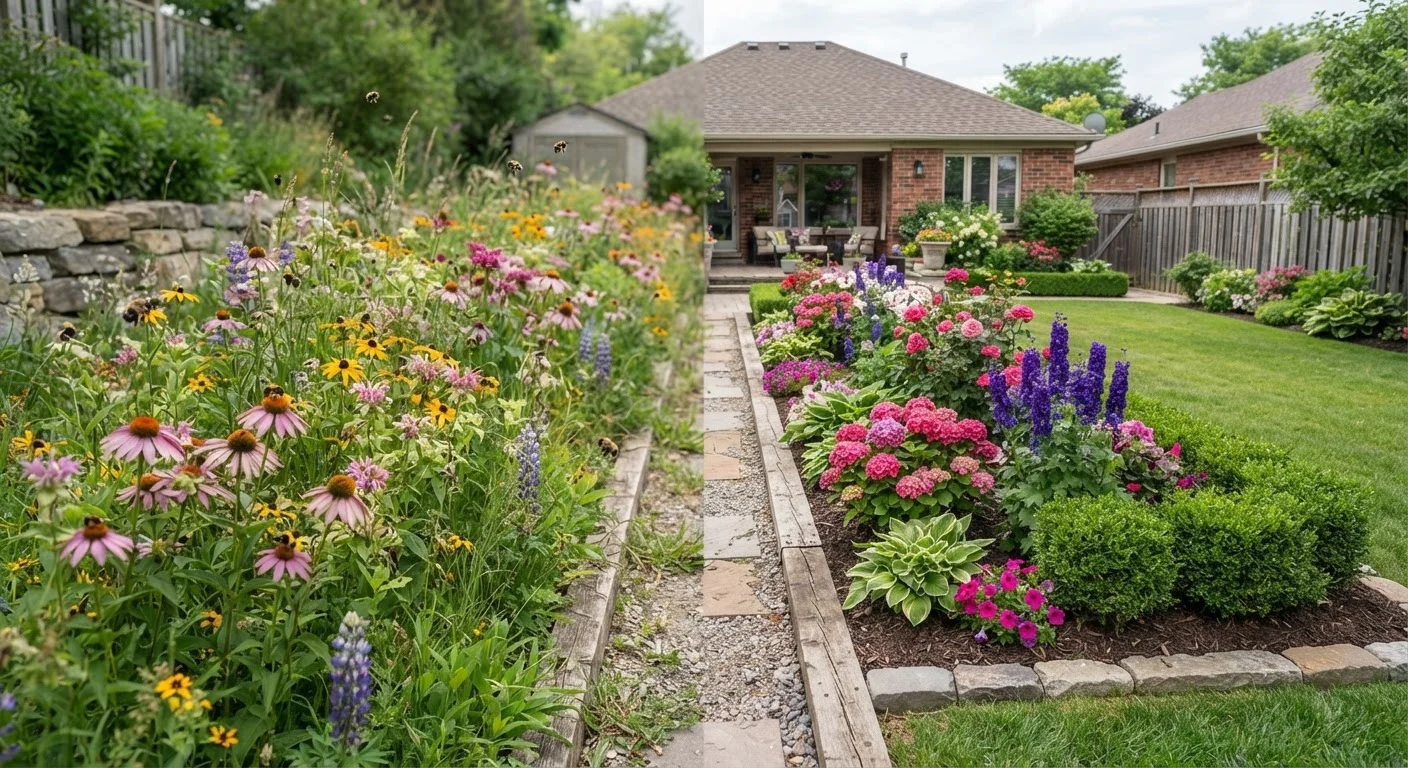
Photo credit: ArticlesHaven.net
In this article
Native and exotic plants each bring different benefits and challenges. See how they compare on maintenance, wildlife value, and regional fit.
Key Takeaways
- Native plants are adapted to local soils and climate, typically requiring less water and fertilizer once established.
- Exotic ornamentals offer broader design flexibility but may need more maintenance and careful species selection to avoid invasiveness.
- Native plants generally provide significantly greater value to local pollinators, birds, and other wildlife.
- Some exotic ornamentals can become invasive - check your state's invasive species list before planting.
- A mixed approach combining natives and non-invasive exotics is practical and increasingly popular among gardeners.
What Sets Native Plants Apart
A native plant is one that occurred naturally in a specific region before European colonization - it evolved alongside local soils, climate patterns, insects, and animals. In practical garden terms, this adaptation matters enormously. A coneflower (Echinacea purpurea) native to the Midwest, or a California poppy native to the West Coast, has spent thousands of years fine-tuning its relationship with local rainfall and soil chemistry.
That history translates into measurable advantages once a native plant gets past its first season. Water needs typically drop substantially, since the plant's root systems and leaf structures evolved for the region's natural precipitation patterns. Fertilizer inputs can often be reduced or eliminated - local soils already contain the microbial communities and nutrient cycles these plants depend on.
From a wildlife standpoint, research from University of Delaware entomologist Doug Tallamy and others has consistently shown that native plants support dramatically more insect diversity - including specialist bees and moth and butterfly larvae - than exotic ornamentals. Those insects, in turn, support bird populations. If supporting pollinators is a goal, natives offer a significant structural advantage.
| Criterion | Native Plants | Exotic Ornamentals |
|---|---|---|
| Water needs (established) | Generally low; adapted to local rainfall | Varies; often higher supplemental irrigation needed |
| Wildlife & pollinator value | High; supports local insects and birds | Low to moderate; limited co-evolutionary ties |
| Invasiveness risk | None by definition in home region | Varies; some species are ecologically problematic |
| Design flexibility | Moderate; selection growing but still limited | High; vast cultivar range and color options |
| Fertilizer needs | Low; thrives in local soil conditions | Often moderate to high depending on species |
| Long-term maintenance | Lower after establishment | Generally higher ongoing effort |
| First-season effort | Moderate; needs establishment care | Moderate; similar establishment requirements |
| Nursery availability | Improving, but still limited in some regions | Widely available at most garden centers |
What Exotic Ornamentals Bring to the Table
Exotic ornamentals - plants introduced from other regions or countries - dominate most garden centers in the US, and for understandable reasons. Breeders have developed thousands of cultivars with specific bloom colors, compact growth habits, extended flowering seasons, and disease resistance. If you want a garden that looks a particular way, the exotic plant catalog is simply larger.
Many exotic ornamentals are also genuinely well-behaved in garden settings. Dahlias, roses, lavender, and Japanese maples, for instance, are widely grown without causing ecological disruption. The critical caveat is that some exotic species have escaped cultivation and become invasive - spreading aggressively in natural areas and crowding out native vegetation. English ivy, Japanese barberry, and burning bush are among those flagged by conservation agencies in various US states.
Before planting an exotic ornamental, it's worth checking your state's invasive species list (most state departments of agriculture or natural resources maintain one). The risk isn't uniform - a plant invasive in the Southeast may be well-contained in the arid Southwest.
35x
More caterpillar species supported by native oaks vs. exotics
Research by entomologist Doug Tallamy found native oak trees support over 500 caterpillar species, compared to roughly 5 for the widely planted ginkgo.
~4,000
Exotic plant species listed as invasive across US states
The USDA estimates several thousand non-native plant species have naturalized in the US, with a subset posing documented ecological threats in various states.
50-70%
Potential water savings with established native plantings
Various cooperative extension programs cite water savings in this range when replacing traditional turf and exotic ornamental beds with adapted native plantings in appropriate regions.
Maintenance-wise, many exotics require more supplemental irrigation, especially in their first years or if planted outside their original climate zone. Choosing the right irrigation approach can help manage those water needs more efficiently.
Head-to-Head: Key Comparison Factors
The honest comparison between native plants and exotic ornamentals depends heavily on your gardening goals, your region, and how much time and resource you want to invest. A few factors consistently come up in gardening literature and practitioner experience:
- Establishment period: Both natives and exotics typically require regular watering and attention in their first one to two seasons. Natives often outperform exotics after that window, once root systems are developed.
- Soil amendment: Exotic ornamentals are more likely to require amended soil or added fertilizers, particularly in regions with soil types that differ significantly from the plant's origin.
- Pest and disease pressure: Native plants face fewer novel pest threats in their home region, while some exotic ornamentals are vulnerable to pests and diseases for which they lack natural resistance.
- Regional availability: Native plant nurseries are expanding across the US, but selections can still be limited compared to mainstream garden centers. Online nurseries have broadened access significantly.
How you structure your planting setup can affect both categories. See how raised beds vs. in-ground planting affects soil control and drainage if you're working with challenging site conditions. Also consider how your plant choices interact with the annual vs. perennial framework - many natives are perennials, while a number of popular exotics are annuals replanted each season.
Native to Where, Exactly?
"Native" is regional, not national. A plant native to Florida may be completely out of place - and struggle or die - in Oregon. When shopping for natives, look for plants native to your specific ecoregion or state, not just plants labeled "native" generically. Your local cooperative extension service or native plant society is a reliable starting point for region-specific guidance.

Author
Articles Haven Editorial Contributor
Articles Haven Editorial Team is the collective byline for our editorial team and contributor network. Articles published under this byline or an editorial pen name are researched, written, and reviewed according to our editorial standards for clarity, consistency, and independence before publication.
View all articles →