
Companion Planting: Which Vegetables and Herbs Actually Benefit Each Other
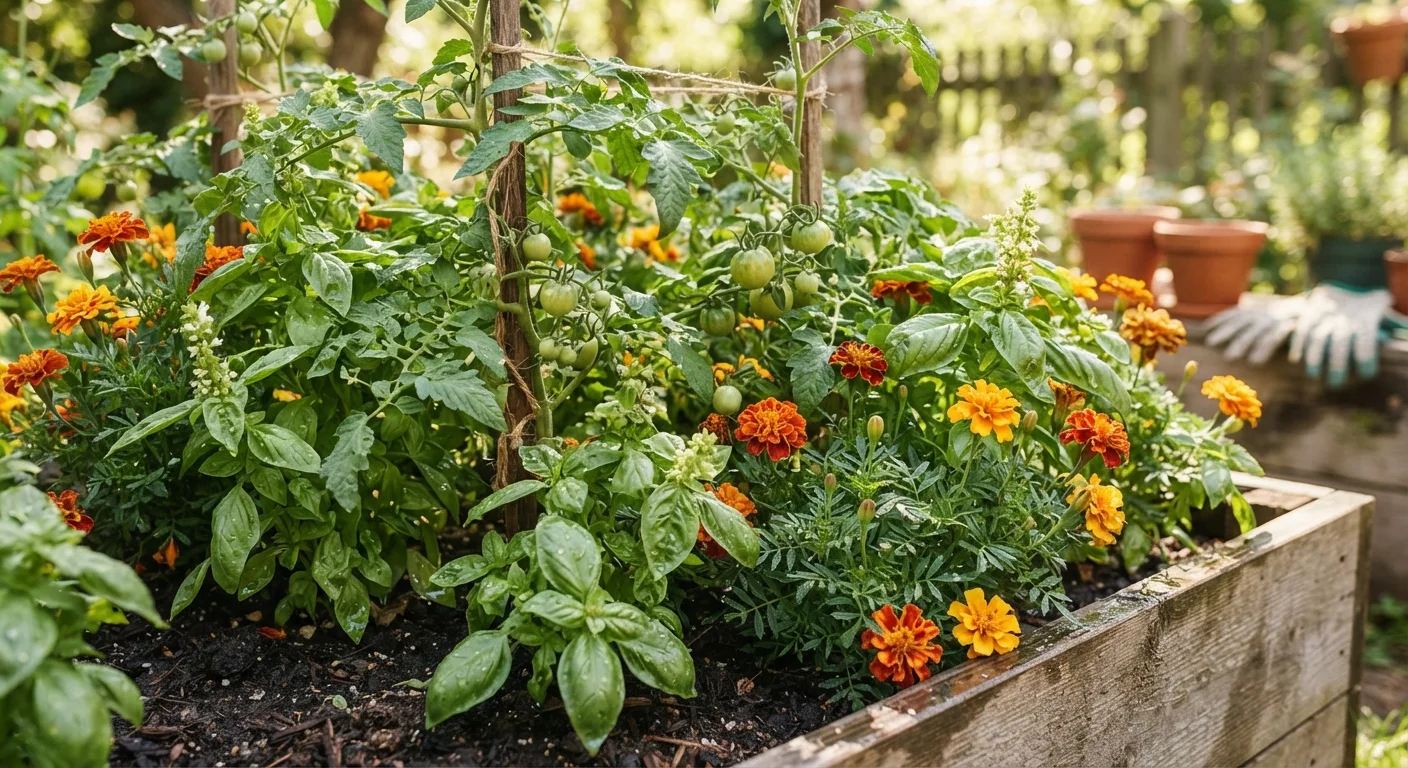
Photo credit: ArticlesHaven.net
In this article
Some plant pairings genuinely help each other grow. A grounded look at companion planting with realistic expectations and practical pairings.
What Companion Planting Actually Does
Companion planting is the practice of growing different plants in close proximity so they support one another - whether by repelling pests, improving soil, attracting pollinators, or simply using space more efficiently. It has deep roots in traditional farming, including the well-known Indigenous practice of planting corn, beans, and squash together (commonly called the Three Sisters).
That said, not every pairing that gets repeated online has solid evidence behind it. Some combinations have clear, documented mechanisms. Others are based largely on gardener folklore. This guide focuses on pairings with plausible or observed benefits, and flags where the evidence is stronger versus more anecdotal. If you're just getting started, see our introduction to vegetable gardening for foundational context.
| Origin of Three Sisters planting | Indigenous North American agricultural tradition |
| Crops in the Three Sisters combination | Corn, beans, and squash |
| Primary benefit of legume companions | Nitrogen fixation in soil |
| Fennel's effect on neighbors | Allelopathic - inhibits many nearby plants |
| Marigold nematode suppression | Requires dense planting over a full season (University extension research) |
| Lettuce shade benefit | Extends growing season in hot weather |
Pairings That Hold Up Well
These combinations are consistently cited by extension services and supported by at least observational or controlled garden research:
- Tomatoes + Basil: Basil may help deter thrips and aphids. More practically, they share similar water and sun needs, making them easy to manage together. The benefit isn't dramatic but the coexistence is straightforward.
- Corn + Beans + Squash (Three Sisters): Corn provides a vertical trellis for beans; beans fix nitrogen that benefits corn and squash; squash leaves shade the soil, retaining moisture and suppressing weeds. This is one of the most documented functional pairings.
- Carrots + Onions: Onion scent is thought to confuse carrot fly, while carrot scent may deter onion fly. Results in home gardens vary, but both crops are low-competition and grow well side by side either way.
- Brassicas + Nasturtiums: Nasturtiums act as trap crops, luring aphids away from cabbage, broccoli, and kale. You'll need to monitor and manage aphid-laden nasturtiums, but this is a legitimate pest-management strategy.
- Lettuce + Tall Vegetables: Fast-growing lettuce benefits from the shade cast by taller plants like tomatoes or peppers during hot weather, extending the growing window before lettuce bolts.
For herbs specifically, understanding which thrive outdoors versus in containers can shape your pairing choices - our article on growing herbs at home covers that in detail.
Allelopathy
A biological phenomenon where one plant releases chemicals that inhibit or affect the growth of nearby plants. Fennel and black walnut trees are common examples in garden contexts.
Trap crop
A plant grown specifically to attract pests away from more valuable crops. The trap crop is then managed or removed along with the pests it has drawn in.
Nitrogen fixation
A process by which certain plants - primarily legumes like beans and peas - convert atmospheric nitrogen into a form usable by plants in the soil, benefiting neighboring crops.
Bolting
When a plant rapidly produces a flower stalk and goes to seed, usually triggered by heat or long days. Bolting typically makes leafy vegetables like lettuce bitter and less palatable.
Beneficial insects
Insects that help gardens by pollinating plants or preying on pest species. Ladybugs, lacewings, and parasitic wasps are common examples attracted by certain flowering plants.
Combinations to Approach Carefully
Some pairings are commonly recommended but deserve a more cautious read:
- Marigolds as universal pest repellents: French marigolds (Tagetes patula) do produce compounds that suppress root-knot nematodes in soil - but this effect requires dense planting over a full season, not a few border plants. They attract beneficial insects, which is genuinely useful, but don't expect them to repel all pests from neighboring crops.
- Dill + Tomatoes: Young dill is often said to benefit tomatoes, while mature dill may inhibit them. If you grow dill, harvest it before it goes to seed near tomatoes.
- Fennel: Fennel is widely regarded as allelopathic - it releases compounds that inhibit many neighboring plants. Keep it isolated or in its own container rather than integrating it into mixed beds.
Garden Results Vary by Conditions
Companion planting outcomes depend heavily on your local climate, soil health, pest pressure, and plant density. A pairing that works well in one region or garden may show little effect in another. Treat recommendations as starting points, not guaranteed outcomes, and observe your own results over a season or two.
When planning which plants go where, layout strategy matters as much as pairing logic. Our guide on garden layout planning can help you organize beds efficiently.
Making the Most of Your Garden Space
Companion planting works best when it's one layer of a broader soil and bed management approach. Healthy, well-fed soil reduces plant stress and makes the benefits of good pairings more visible. See our comparison of compost, mulch, and fertilizer to make sure your soil is supporting your plantings, not undermining them.
If space is limited, vertical growing can open up room for companion combinations that would otherwise crowd each other. Our vertical gardening guide walks through practical structures worth considering.
3-in-1
Functions of the Three Sisters combination
Corn, beans, and squash each provide structural, nutritional, and moisture-retention benefits to the others simultaneously.
~80%
Of legume-fixed nitrogen available to soil
According to soil science literature, legumes can make a significant portion of fixed nitrogen available to surrounding plants after decomposition.
Ultimately, companion planting is a tool - not a guarantee. Treat pairings as experiments, keep notes on what works in your specific conditions, and build on that over time. The combinations above give you a reasonable, evidence-grounded starting point.

Author
Articles Haven Editorial Contributor
Articles Haven Editorial Team is the collective byline for our editorial team and contributor network. Articles published under this byline or an editorial pen name are researched, written, and reviewed according to our editorial standards for clarity, consistency, and independence before publication.
View all articles →