
The Hidden Cost of Cheap: When Low Prices Cost You More in the Long Run
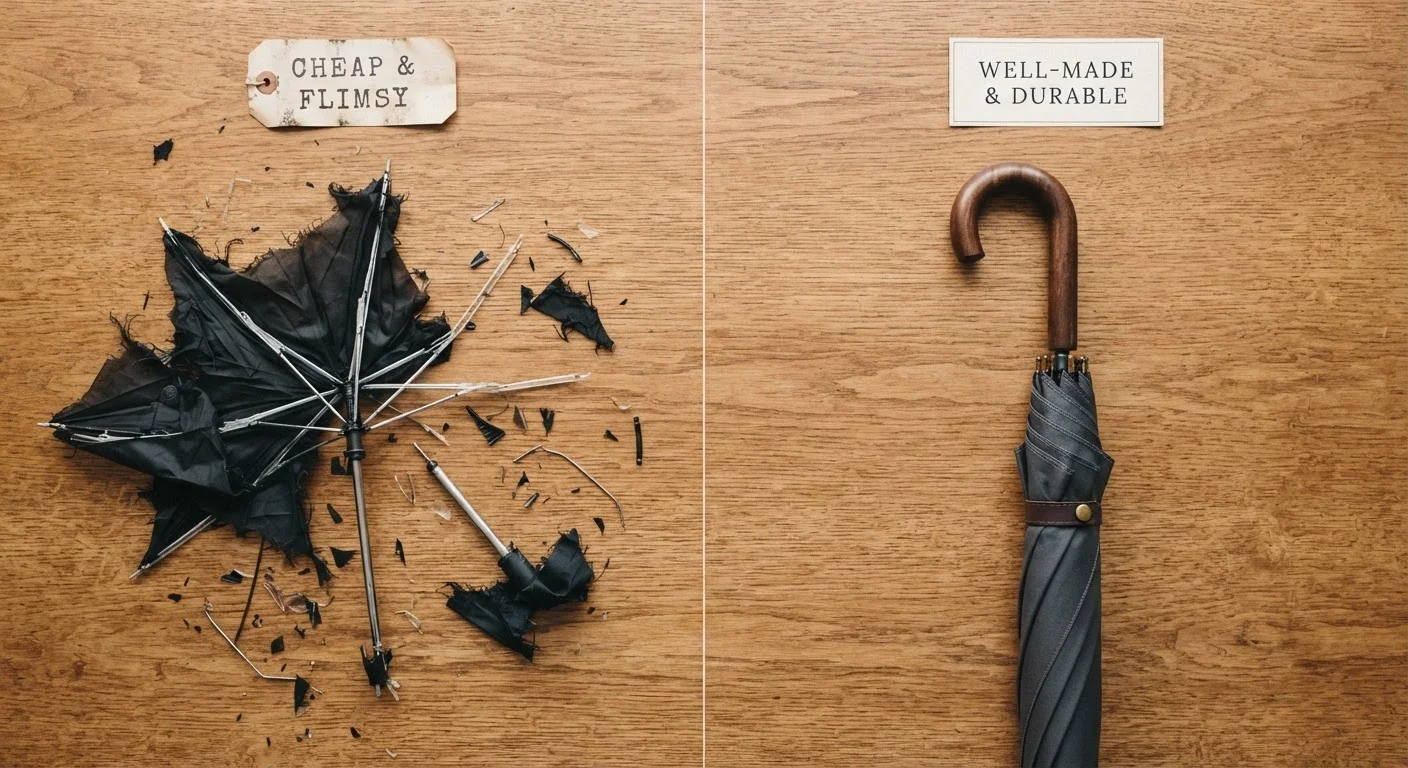
Photo credit: ArticlesHaven.net
In this article
Choosing the cheapest option isn't always the smartest. Explore the concept of cost-per-use and when spending more up front actually saves money.
Key Takeaways
- The cheapest upfront price often becomes the most expensive choice over time.
- Cost-per-use is a simple calculation that reveals the real value of a purchase.
- Frequent-use items and safety-related products generally warrant higher initial spending.
- Cheap options make the most sense for low-stakes, infrequent, or one-time purchases.
- Replacement cycles, energy consumption, and maintenance all add to a product's real cost.
The Illusion of the Low Price Tag
Everybody wants to save money - that instinct is completely reasonable. But price tags only tell you one number: what leaves your wallet today. They say nothing about what leaves your wallet over the next two, five, or ten years. That gap between upfront cost and total cost is where cheap purchases quietly become expensive ones.
This isn't about being a spendthrift or chasing luxury. It's about recognizing that the decision framework most people use - scanning for the lowest number - is incomplete. Price-only comparisons consistently overlook factors that end up mattering a great deal.
The math isn't complicated once you know what to include. The challenge is building the habit of asking the right questions before you buy.
2-3x
Typical replacement cost multiplier for low-quality goods
Consumer durability research consistently finds that cheap versions of frequently-used products are replaced two to three times more often than mid-range alternatives.
$500+
Annual energy cost difference between efficient and inefficient appliances
The U.S. Department of Energy notes that energy-efficient appliances can result in significant cumulative savings compared to less efficient models over their lifetime.
What "True Cost" Actually Includes
To understand whether something is actually cheap, you need to account for more than its price. The full picture includes:
- Replacement frequency: How long will it realistically last, and what does it cost to replace when it fails?
- Maintenance costs: Does it require consumables, servicing, or repairs that add up over time?
- Energy consumption: Appliances and devices with lower purchase prices sometimes run inefficiently, costing more over months and years of use.
- Failure consequences: If it breaks at the wrong moment, does that create a secondary cost - missed work, damaged property, a rushed replacement at full retail price?
- Opportunity cost: Time spent dealing with poor-quality products - returning, repairing, or shopping again - has real value.
None of these show up on a price tag. But they all show up in your budget eventually.
Quality Claims Aren't Always What They Seem
Higher prices don't automatically signal better quality. Some product categories show very little real-world performance difference across price tiers, while others show dramatic variation. In consumer electronics, spending more doesn't always mean proportional improvement. The goal is informed spending, not reflexive up-spending.
Cost-Per-Use: The Number That Changes the Conversation
One of the most practical tools for evaluating a purchase is cost-per-use. The calculation is simple: divide the price by how many times you expect to use the item before it wears out or you replace it. This mental model reframes what's actually expensive in ways that sticker prices hide.
A $25 kitchen knife that dulls and chips within six months, used daily, costs far more per meal than a $90 knife that holds its edge for years. A $15 umbrella that inverts in the first real storm costs more per rainy day than a $45 one that lasts a decade.
The model applies equally well to clothing, tools, luggage, mattresses, and even services. Frequency of use is the key variable: the more often you reach for something, the more the cost-per-use math matters.
Where Cheap Costs You Most - and Where It Doesn't
Not every purchase warrants deep analysis. Knowing when to apply this thinking - and when to just grab the cheaper option - is the real skill.
Higher scrutiny is worth it when:
- You'll use the item frequently or daily
- Failure creates a safety risk or significant secondary cost
- The product category has meaningful quality variation across price points
- You're making a long-term commitment (mattresses, appliances, shoes for daily wear)
The cheaper option is often fine when:
- It's a one-time or very infrequent use
- Failure is low-stakes and easy to replace
- You're buying into a trend that may not last
- The quality difference across price points is minimal
Similarly, bulk buying appears to save money but can introduce its own hidden costs - spoilage, storage, and cash tied up in products you may not use.
Before You Buy Cheap, Ask Three Questions
How often will I use this? What happens if it fails early? How does it compare on cost-per-use to a mid-range option? These three questions won't take long to answer, but they'll redirect a surprising number of purchases. Also watch for common shopping beliefs that don't hold up under scrutiny - they often reinforce the instinct to grab the lowest price without questioning it.
A Note on Insurance and Services
The same logic extends well beyond physical goods. In insurance, for example, low monthly premiums can mask high deductibles and coverage gaps that become apparent only when you file a claim. The cheaper plan looks like savings until the moment it isn't. This is general consumer information - always review actual policy terms and consult a licensed agent for guidance specific to your situation.
With internet and telecom services, bundled packages aren't always cheaper than standalone options when you factor in services you don't use. Introductory rates, contract terms, and included-but-unwanted features all affect the real cost over a contract period.
The pattern is consistent across categories: the number that's easiest to see - the price, the premium, the monthly rate - is rarely the number that tells the whole story.
“The bitterness of poor quality remains long after the sweetness of low price is forgotten.”
— Benjamin Franklin, Often attributed to Franklin; a widely cited principle in consumer and business decision-making
Frequently Asked Questions

Author
Articles Haven Editorial Contributor
Articles Haven Editorial Team is the collective byline for our editorial team and contributor network. Articles published under this byline or an editorial pen name are researched, written, and reviewed according to our editorial standards for clarity, consistency, and independence before publication.
View all articles →