
Why Comparing Products on Price Alone Usually Backfires
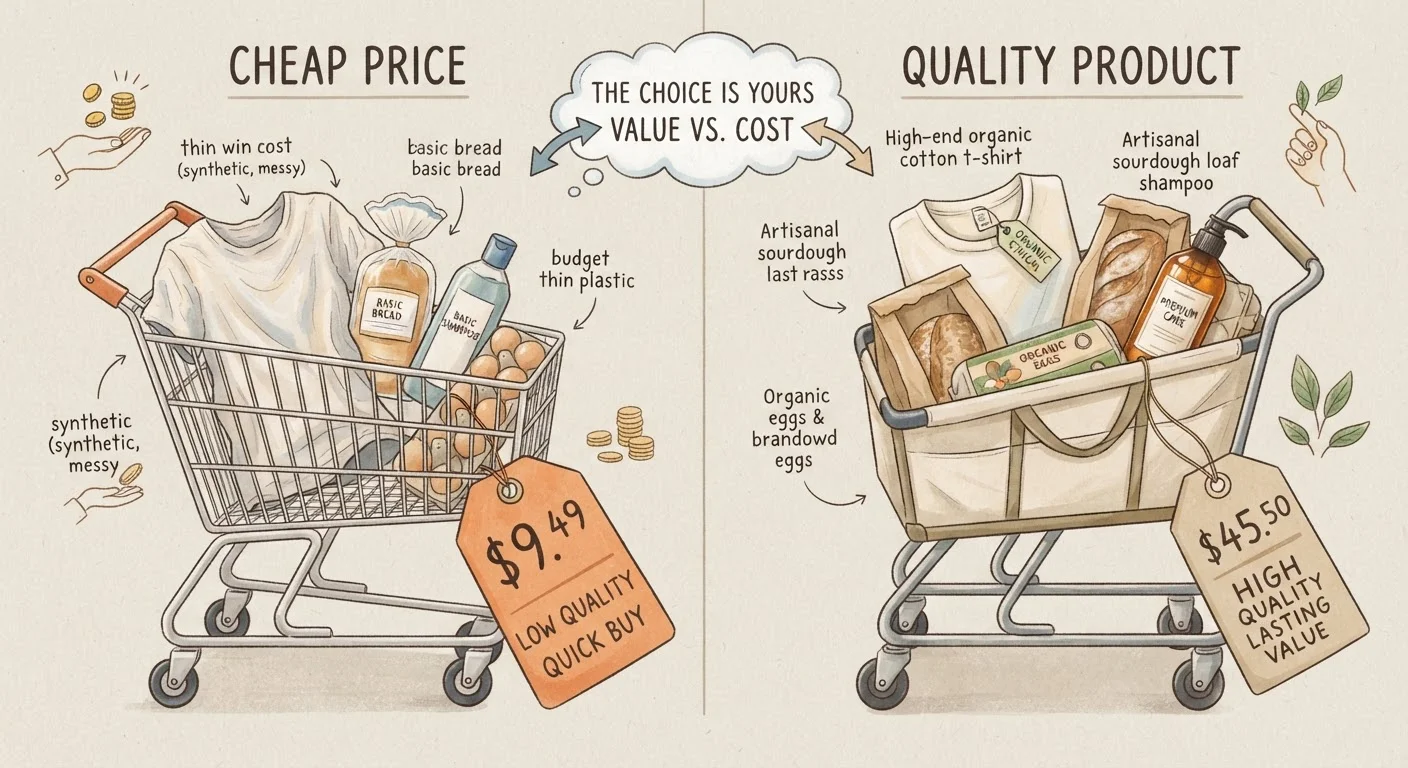
Photo credit: ArticlesHaven.net
In this article
Cheapest upfront isn't always cheapest long-term. Explore the hidden factors that price-only comparisons consistently overlook.
Key Takeaways
- Price-only comparisons routinely miss hidden costs like shipping, maintenance, and replacement frequency.
- Product lifespan and warranty terms can make a pricier item significantly cheaper over time.
- Quality signals - materials, build, support - don't always show up in a sticker price.
- A structured pre-purchase checklist helps avoid the traps that price-focused shoppers fall into.
The Instinct to Sort by Price - and Why It Misleads
Sorting products from cheapest to most expensive is the default move for most online shoppers. It's fast, feels rational, and removes the paralysis of too many choices. The problem is that it treats all products as identical except for price - and they rarely are.
When you filter only by cost, you're essentially comparing the tip of the iceberg. The number on the screen doesn't account for how long the product will last, what it costs to maintain, whether returns are easy, or what happens when something goes wrong. Those factors can easily flip which option is actually the better deal.
Understanding the full picture before you buy is worth the extra few minutes. Our pre-comparison checklist outlines exactly what to verify before you start stacking products side by side.
Treating the sticker price as the total cost of ownership.
Why it happens: Buyers focus on what they pay now because future costs feel abstract and uncertain at the moment of purchase.
Ignoring product lifespan and replacement frequency.
Why it happens: A cheaper item seems like a win in the moment, and it's easy to underestimate how quickly lower-quality products wear out or need replacing.
Overlooking return policies and after-sales support.
Why it happens: Shoppers assume returns and customer service are standard across sellers, but policies vary widely - especially with third-party marketplace listings.
Comparing products with meaningfully different specs as if they're equivalent.
Why it happens: When two products share a category name, it's tempting to assume they do the same job - but specs like capacity, material grade, or compatibility can differ significantly.
Letting sale framing distort the perceived value of a lower price.
Why it happens: Markdown labels and "original price" figures trigger a sense of urgency and savings, even when the reference price was inflated or the deal is routine.
The Hidden Costs That Change the Math
A lower sticker price can quietly attract a cluster of additional expenses that buyers don't anticipate. These aren't always obvious at the point of purchase - they surface weeks or months later.
~80%
Shoppers who regret a purchase cite quality issues, not overspending
Consumer research consistently finds that post-purchase regret is more frequently tied to poor quality or misfit than to paying too much for a product.
2-3x
Replacement frequency for lower-tier vs. mid-tier products
Across product categories from appliances to apparel, lower-cost items are often replaced two to three times as often as mid-tier alternatives, eroding the upfront savings.
Shipping, accessories required for basic use, proprietary consumables, and repair costs are among the most common culprits. A product priced $30 less than its competitor might require a $25 accessory to function properly, eliminating the savings immediately. For a deeper look at how this plays out across categories, see when cheap costs more long-term.
Bundle Deals Can Hide the Same Problem
When comparing subscription services or telecom bundles, monthly price is especially misleading. Contract length, included features, and overage penalties are what determine real value. See common bundle comparison mistakes for specific pitfalls to avoid.
The same logic applies well beyond physical goods. In insurance, for example, a low monthly premium can mask high deductibles or narrow coverage - a pattern explored in detail at why cheap premiums lead to expensive surprises. The broader lesson holds across categories: the number you see first is rarely the number that matters most.
Making Smarter Comparisons Going Forward
Shifting away from price-first thinking doesn't mean ignoring cost - it means putting cost in context. A few practical habits make this easier.
Start by defining what you actually need the product to do, and for how long. That sets a baseline for evaluating whether a price difference reflects real value or just a different set of compromises. Tools like cost-per-use calculations - dividing total expected cost by the number of times you'll use the item - can surface surprising results. Standardising your comparisons is especially useful when products come in different sizes, bundle configurations, or feature tiers.
It's also worth building a quick pre-purchase routine. Even five minutes of structured research before clicking buy can reveal meaningful gaps in value. The practical pre-purchase routine outlined in our deals section walks through a reliable process for doing exactly that.
Store Brands Aren't Always the Lower-Quality Option
One common assumption in price comparisons is that a lower-priced store brand is automatically inferior. That's not always true. Research into private-label manufacturing shows many store brands are produced in the same facilities as national brands. Evaluating store vs. name brands fairly requires looking past the label.
Finally, watch out for vague product language that makes cheap items sound equivalent to higher-quality ones. Phrases like "premium construction" or "professional grade" rarely carry any enforceable meaning. Reading product descriptions critically is a skill that pays off repeatedly, especially when comparing across price tiers in categories like consumer electronics.

Author
Articles Haven Editorial Contributor
Articles Haven Editorial Team is the collective byline for our editorial team and contributor network. Articles published under this byline or an editorial pen name are researched, written, and reviewed according to our editorial standards for clarity, consistency, and independence before publication.
View all articles →