
Bundled Services vs. Standalone Plans: Which Costs Less Over Time?
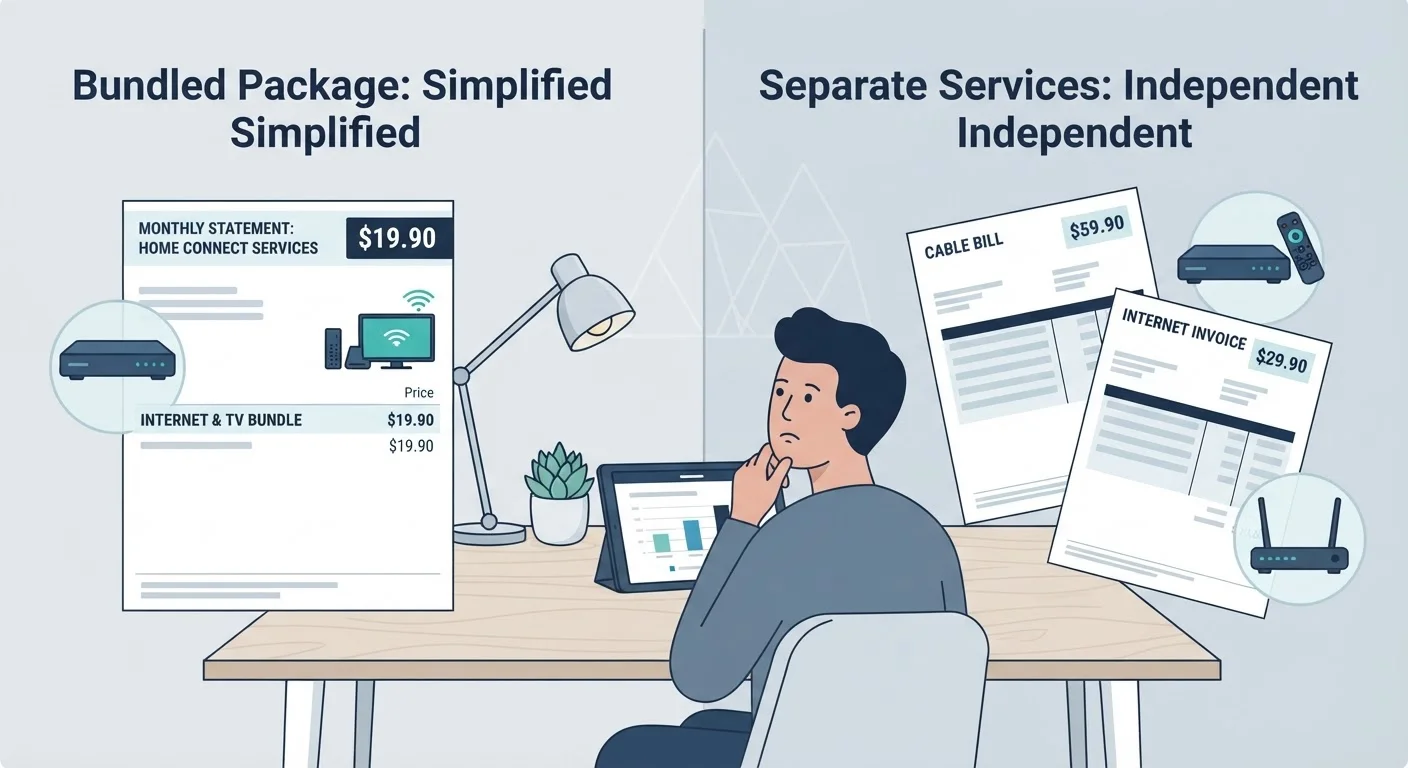
Photo credit: ArticlesHaven.net
In this article
Bundling isn't always cheaper. Explore when combined packages save money and when buying services separately makes more financial sense.
Key Takeaways
- Bundles can reduce your monthly bill, but only if you actively use every included service.
- Promotional pricing on bundles often resets after 12-24 months, raising the true long-term cost.
- Standalone plans offer flexibility to switch providers and avoid paying for unused services.
- The break-even point between bundling and going standalone depends on your household's actual usage pattern.
- Contract terms and early termination fees are critical factors that affect the real cost of any bundle.
How Bundles Are Priced - and Why the Intro Rate Matters
Telecom providers design bundle packages around a simple pitch: pay for multiple services together and get a discount versus buying each one separately. On paper, this math often holds up - especially during an introductory period. The problem is that most bundle promotions are structured around 12- or 24-month price locks. After that window closes, rates commonly step up, sometimes by $20-$50 per month or more.
This means the true cost of a bundle isn't the headline price. It's the average monthly cost across the full period you'll actually remain a customer. If you're comparing options, avoid the common mistake of evaluating bundles solely on their advertised monthly rate without factoring in what happens after the promo expires.
12-24 months
Typical telecom bundle promotional period
Most bundled service promotions are structured as introductory rates that step up after one to two years, according to general industry practice.
$100-$200+
Potential equipment rental cost over two years
Monthly modem and router rental fees from providers can add up significantly over the life of a bundled contract.
Standalone plans, by contrast, tend to carry less promotional complexity. You pay a set rate for one service, and price changes - while still possible - are typically more transparent and easier to anticipate.
When Bundling Actually Saves Money
Bundling delivers genuine savings under a specific set of conditions. First, your household needs to make regular use of every service in the package. A triple-play bundle (internet, TV, and phone) only justifies its price if you're actively using all three. Paying for a landline phone you never pick up isn't a discount - it's an expense dressed up as one.
Second, the math tends to favor bundles when you compare like-for-like tiers. If standalone internet at a comparable speed plus a streaming-capable TV package would cost more than a bundled equivalent, the bundle wins - at least in the short term. Dropping TV from a bundle can seem like savings but may shift costs toward multiple streaming subscriptions that add up quickly.
Audit Your Usage Before Comparing Plans
Before running any price comparison, spend a month tracking which services you actually use. Note how often you watch live TV versus streaming, whether you use a landline, and your typical internet demands. This usage audit will tell you which bundle tiers - if any - actually match your household's needs, and prevent you from paying for services that add nothing to your daily life.
Third, bundling simplifies billing. One provider, one invoice, one point of contact for troubleshooting. For households that value simplicity, that has real, if indirect, value.
When Standalone Plans Come Out Ahead
The case for standalone plans is strongest when your usage is narrow. If you only need internet - which describes a growing share of households - paying for a bundle's TV and phone tiers is pure cost with no return. Standalone internet-only plans from most providers are priced lower than comparable bundle tiers, and you can pair them with whichever streaming services you actually want.
Standalone also wins on flexibility. You're not locked into a single provider across all services, which means you can switch internet providers without worrying about disrupting a bundled TV or phone contract. As noted in our look at month-to-month versus annual structures, no-contract arrangements trade a lower rate for the ability to leave without penalty - which has real financial value if your circumstances change.
| Bundled Plan | Standalone Plan | |
|---|---|---|
| Monthly cost (intro period) | Often lower per service | Varies; no promo discount |
| Monthly cost (after promo) | Can rise significantly | Generally more stable |
| Flexibility to switch providers | Limited; contract penalties may apply | High; easier to change services independently |
| Billing simplicity | One bill, one provider | Multiple bills for multiple services |
| Best fit for usage pattern | High-use households (TV + internet + phone) | Internet-only or selective service users |
| Equipment fees | Often includes monthly rental | Own equipment to avoid ongoing fees |
| Early termination risk | Fees common on annual contracts | Minimal on month-to-month plans |
There's also a hidden cost dynamic worth watching. Low advertised prices don't always mean lower total spending - especially when bundles layer in equipment rental fees, service charges, or taxes that inflate the final bill.
The Long-Term Math: Running the Numbers for Your Household
To make a fair comparison, calculate a 24-month total cost for each scenario rather than comparing monthly rates. For bundles, use the post-promotional rate (or the average of promotional and standard rates if you plan to renegotiate). For standalone plans, add up the individual services you'd actually subscribe to - internet, any streaming services, and phone if needed.
Don't forget to include equipment costs. Many bundle providers charge monthly modem or router rental fees. Standalone customers who own their own compatible equipment avoid this ongoing charge. Over two years, equipment rental can add $100-$200 or more to a bundle's total cost.
Don't Ignore Post-Promotional Rate Increases
Providers are not always upfront about what your bill will look like after the introductory period ends. Before committing to a bundle, ask specifically what the standard rate is after the promotion expires and get it in writing. A bundle that saves $30 per month for year one but costs $40 more per month in years two and three is not a bargain over a two-year contract.
Early termination fees are another factor. Bundled contracts often impose fees of $10-$20 per remaining month if you cancel early. If there's any chance you'll move, downsize, or switch providers before the contract ends, that potential penalty belongs in your calculation. For a deeper look at evaluating service add-ons, see when adding a service is actually worth the extra cost.
This article is for general informational purposes only. Service pricing, availability, contract terms, and promotional offers vary by provider and region. Always review the full terms of any plan before signing up, and contact providers directly for current pricing details.

Author
Articles Haven Editorial Contributor
Articles Haven Editorial Team is the collective byline for our editorial team and contributor network. Articles published under this byline or an editorial pen name are researched, written, and reviewed according to our editorial standards for clarity, consistency, and independence before publication.
View all articles →