
Smart Speakers vs. Bluetooth Speakers: What's Actually Different Under the Hood
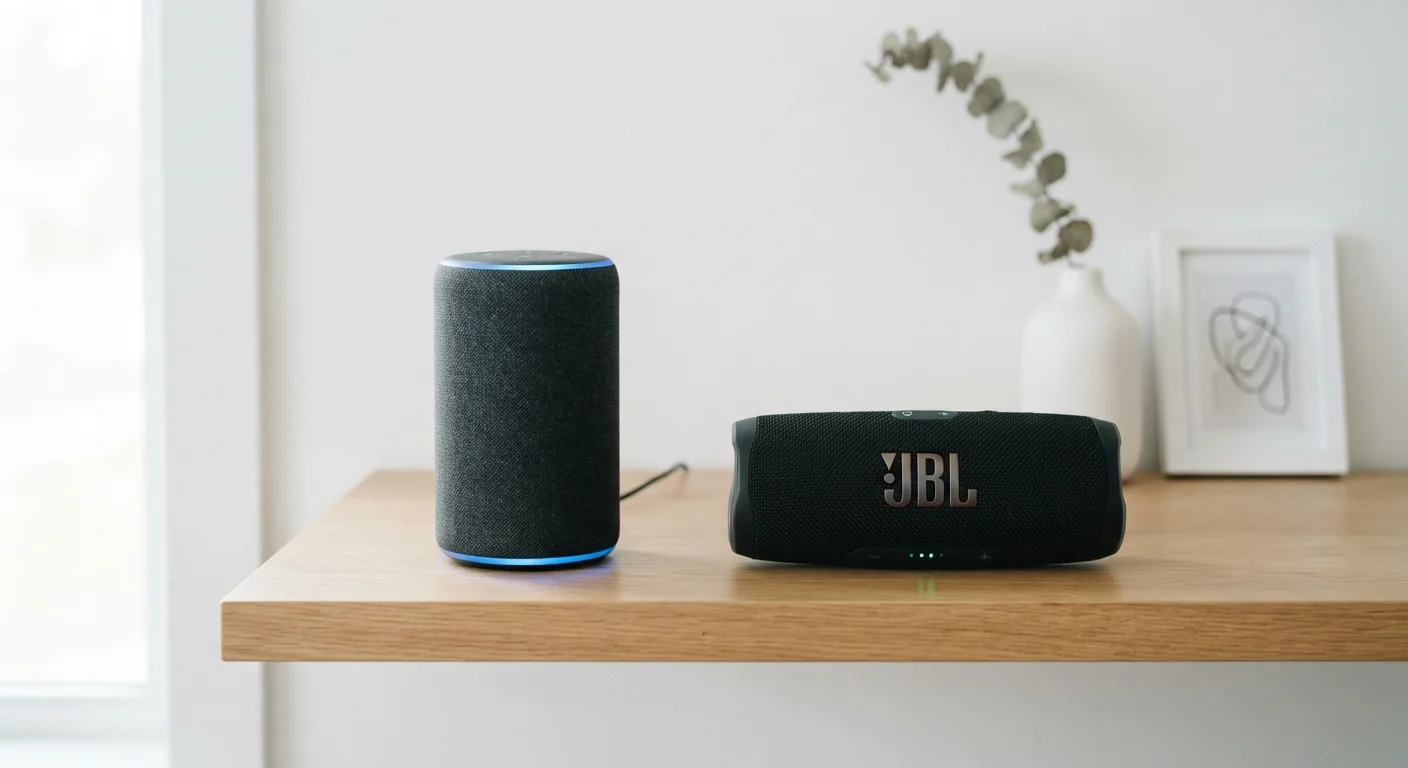
Photo credit: ArticlesHaven.net
In this article
Voice assistants, streaming protocols, and sound profiles differ between smart and Bluetooth speakers. Here's how to think through the choice.
Key Takeaways
- Smart speakers depend on Wi-Fi and cloud servers; Bluetooth speakers pair directly with your device.
- Smart speakers include built-in voice assistants; Bluetooth speakers typically do not.
- Bluetooth speakers generally offer more portability and work without an internet connection.
- Sound quality varies widely within both categories and is not determined by type alone.
- Smart speakers raise more privacy considerations due to always-on microphones and cloud connectivity.
- Your choice depends mainly on whether voice control and smart home integration matter to you.
How Each Type Actually Connects
The fundamental difference between smart speakers and Bluetooth speakers isn't the sound - it's the connection architecture. A Bluetooth speaker creates a direct, short-range radio link between itself and whatever device you're playing audio from. No internet required, no account needed. It receives the audio signal from your phone or laptop and amplifies it.
A smart speaker operates differently. It connects to your home Wi-Fi network and communicates with cloud servers to handle voice commands, fetch music streams, and integrate with other smart devices. When you ask it to play a song, it isn't pulling audio from your phone - it's fetching a stream directly from a music service's servers. That distinction matters: if your internet goes down, most smart speaker functions stop working. A Bluetooth speaker keeps playing.
This is also why smart speakers require setup through an app and a cloud account, while Bluetooth speakers are largely plug-and-play. For more on how connectivity shapes electronics decisions, see our guide to wired vs. wireless earbuds, which walks through similar trade-offs in a personal audio context.
| Criterion | Smart Speakers | Bluetooth Speakers |
|---|---|---|
| Connection method | Wi-Fi + cloud servers | Direct Bluetooth pairing |
| Internet required | Yes, for most functions | No |
| Voice assistant | Built-in (Alexa, Google, Siri) | Rarely included |
| Portability | Mostly stationary, plug-in | Battery-powered, portable |
| Smart home integration | Strong native support | Not applicable |
| Privacy considerations | Always-on mic, cloud-connected | No persistent mic or cloud link |
| Account/app required | Yes | No |
| Audio streaming source | Directly from music service | From your paired device |
Voice Assistants and Smart Home Integration
Smart speakers are built around a voice assistant - Amazon Alexa, Google Assistant, or Apple Siri, depending on the ecosystem. The microphone array inside is always listening for a wake word, which lets you control music, set timers, ask questions, and manage compatible smart home devices entirely hands-free.
Bluetooth speakers don't include persistent microphones or assistants by default (though some higher-end models have added basic voice passthrough to your phone's assistant). If you want to skip a song on a Bluetooth speaker, you'll need to pick up your phone.
The Wake Word and Always-On Microphone
Smart speakers listen continuously for a wake word (like "Hey Alexa" or "OK Google") using an on-device processor before any data is sent to the cloud. Most devices include a hardware mute button that physically disconnects the microphone. If you're concerned about passive listening, using the mute button when the speaker isn't needed is a straightforward mitigation. Reviewing your account's voice history settings in the companion app is also recommended.
For homes already using smart plugs, lights, or thermostats, the smart speaker's integration value is hard to overstate - it serves as a central controller for the whole ecosystem. If your home has none of those devices, however, you're paying for assistant capabilities you may rarely use. Understanding what you actually gain at each price tier helps here; our breakdown of electronics price tiers is worth a read before committing.
Sound Quality: Clearing Up the Myths
A common misconception is that smart speakers automatically sound worse because they're designed for voice interaction, or that Bluetooth speakers always compress audio quality. Neither is categorically true.
Smart speakers stream over Wi-Fi, which can actually support higher-quality audio formats than older Bluetooth versions. However, the speaker hardware inside many smart speakers is optimized for voice clarity in a room rather than deep bass or audiophile-grade stereo imaging. Bluetooth speakers, by contrast, often prioritize audio output because that's their sole job - and some deliver excellent sound at a range of price points.
~330 ft
Max practical Bluetooth 5.0 range
Bluetooth 5.0 specification allows up to roughly 330 feet line-of-sight, though walls and interference reduce real-world range considerably.
2-3×
Wi-Fi bandwidth vs. Bluetooth for audio
Wi-Fi connections used by smart speakers can support significantly higher data throughput than Bluetooth, enabling lossless or high-res audio formats on compatible devices.
40%+
US households with a smart speaker
Various industry surveys conducted in recent years consistently estimate that over 40% of US households own at least one smart speaker.
The real driver of sound quality is hardware investment - driver size, amplifier quality, and cabinet tuning - not the connection type. As you move up price tiers within either category, you generally gain better components. That said, a mid-range Bluetooth speaker frequently outperforms an entry-level smart speaker on raw audio performance. See shopping smarter strategies for frameworks on evaluating specs against your real-world needs.
Privacy, Portability, and the Right Fit
Smart speakers raise legitimate privacy questions that Bluetooth speakers don't. The always-on microphone is a real consideration - most manufacturers have published privacy controls and mute options, but the microphone is still present and connected to cloud infrastructure. Bluetooth speakers, by nature, have no microphone listening in the background and don't transmit usage data to external servers during normal operation.
On portability, Bluetooth speakers win clearly. Most are battery-powered and designed to travel. Smart speakers are almost all designed to sit on a countertop, tethered to a power outlet. A few hybrid models exist but are the exception.
If you're evaluating a broader home entertainment setup - for instance, whether adding a smart speaker duplicates something a streaming device already does - our streaming sticks vs. smart TVs comparison addresses that overlap directly. And for those focused on headphone choices that share some of the same trade-offs around modes and contexts, noise-canceling vs. ambient sound headphones covers similar decision logic.
The short version: smart speakers make the most sense in a stable home environment where voice control and smart home integration genuinely improve your day. Bluetooth speakers make the most sense when you need audio that follows you - no network, no account, no strings.

Author
Articles Haven Editorial Contributor
Articles Haven Editorial Team is the collective byline for our editorial team and contributor network. Articles published under this byline or an editorial pen name are researched, written, and reviewed according to our editorial standards for clarity, consistency, and independence before publication.
View all articles →