
Noise-Canceling vs. Ambient Sound Headphones: Picking the Right Mode for the Moment
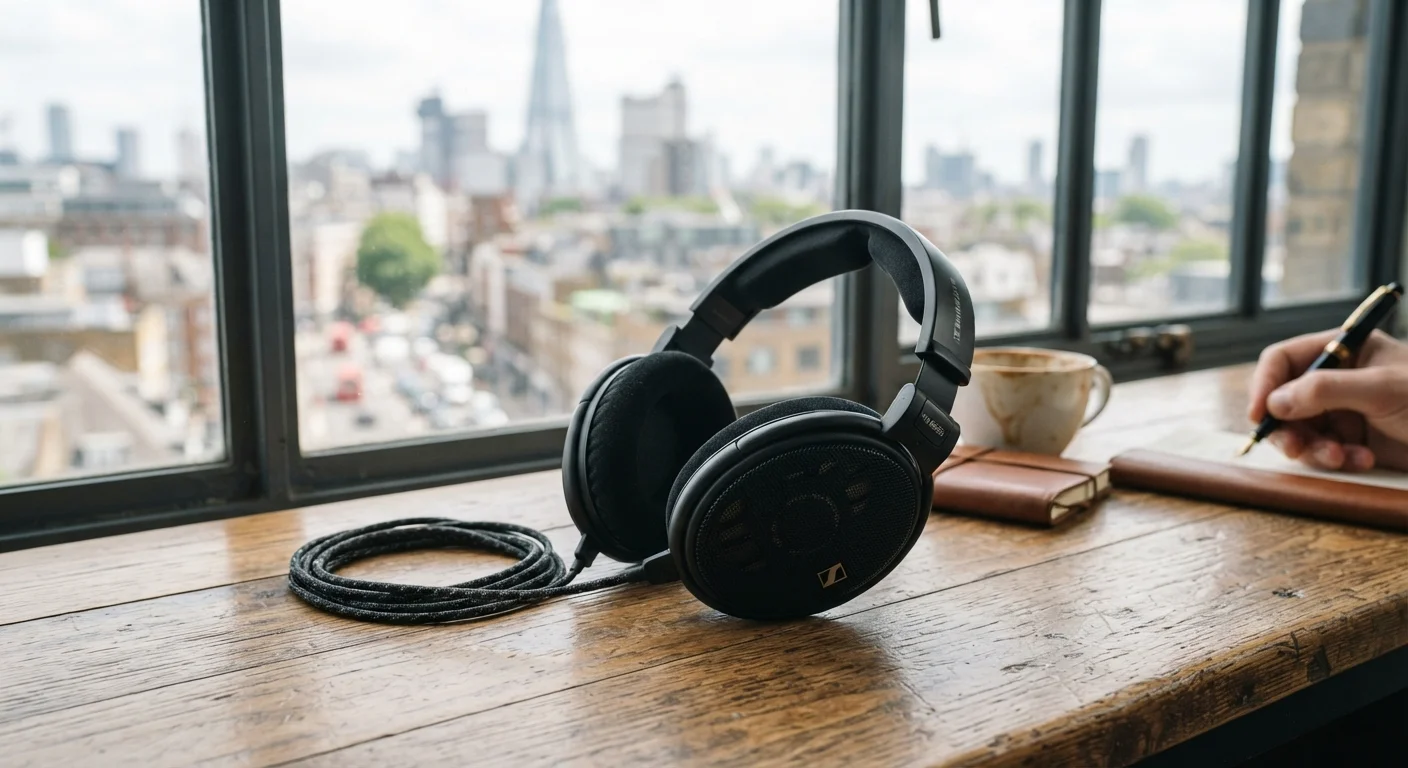
Photo credit: ArticlesHaven.net
In this article
Blocking the world out versus staying aware of it—understand when each headphone mode makes sense and what the tech actually does.
Key Takeaways
- Active noise cancellation uses microphones and processing to counteract external sound waves - it's not just physical blocking.
- Ambient sound mode amplifies environmental audio through the headphones, letting outside sounds mix with your content.
- Neither mode is universally superior - the right choice depends on your specific location and activity.
- Using ANC in safety-critical situations (crossing streets, cycling) is genuinely risky and worth taking seriously.
- Many modern headphones let you toggle between both modes and fine-tune the intensity via a companion app.
What Each Mode Actually Does
The terms get used loosely in marketing, so it helps to understand what's happening under the hood. Active noise cancellation (ANC) works by using built-in microphones to sample incoming sound and then producing an inverted audio signal - effectively a mirror-image wave - that cancels the external noise before it reaches your ears. It's most effective on predictable, low-frequency sounds like engine drone and HVAC rumble, and less effective on sudden, sharp sounds like voices or a slamming door.
Ambient sound mode - sometimes called transparency mode - does the opposite. The headphones' external microphones pick up surrounding audio and pipe it into your ears, blending it with whatever you're listening to. The goal is to make it feel as though you're not wearing headphones at all, or at least to keep you aware of your environment. On better implementations, this sounds remarkably natural; on cheaper hardware, it can sound slightly tinny or introduce a processing delay.
Both modes rely on active electronics, which is why they drain battery faster than simply listening in passive mode. If battery life is a priority, it's worth checking a headphone's rated life with ANC enabled, not just the headline figure.
| Criterion | Noise-Canceling (ANC) | Ambient Sound Mode |
|---|---|---|
| Core function | Blocks external sound electronically | Pipes external sound inward |
| Best at handling | Steady, low-frequency noise (engines, HVAC) | Voices, alerts, and environmental cues |
| Safety outdoors | Reduced situational awareness - a real risk | Maintains awareness of traffic and hazards |
| Battery impact | Higher drain than passive listening | Higher drain than passive listening |
| Comfort (long sessions) | Some users notice ear pressure sensation | Generally feels more open and natural |
| Ideal setting | Flights, trains, focused office work | Outdoor exercise, cafés, public transit |
| Social usability | Low - isolates you from conversation | High - you can hear people around you |
When ANC Is the Clearer Choice
Noise cancellation earns its place in a few recurring situations. Long-haul flights are the textbook example: the constant low-frequency roar of jet engines is precisely what ANC targets, and the difference in fatigue over a multi-hour flight can be significant. The same logic applies to commuting by subway or train, where background noise is constant and predictable.
Focused work is another strong use case. Open-plan offices are full of conversational chatter, keyboard clicks, and ventilation noise - all of which ANC can attenuate meaningfully. Rather than raising volume to mask noise (which risks hearing fatigue), ANC lowers the ambient floor so you can listen at safer levels. If concentration and mental recovery matter to you, the relationship between focus and environment is worth understanding separately.
~25 dB
Typical ANC noise reduction in decibels
Consumer ANC headphones commonly reduce ambient noise by around 20-30 dB, with the effect most pronounced on steady low-frequency sounds.
15-30%
Typical battery reduction with ANC active
Running ANC or transparency mode generally reduces battery life by a meaningful margin compared to passive listening, though this varies significantly by model.
1 in 3
ANC users who report ear pressure sensation
Anecdotal reports and informal surveys suggest a notable minority of ANC users experience an uncomfortable pressure or 'plugged' sensation during extended sessions.
One caution: ANC is not the right mode when you need situational awareness. Walking near traffic, navigating a crowded station, or any context where you might need to react to your surroundings quickly are situations where full noise cancellation is a genuine safety concern, not just a preference issue.
When Ambient Mode Makes More Sense
Ambient sound mode was initially a niche feature but has become mainstream partly because of safety advocacy around pedestrian and cyclist audio use. The core value is simple: you can keep listening without disconnecting from your surroundings. Hearing a car horn, a cyclist's bell, or a person calling your name isn't optional in many contexts - it's necessary.
Beyond safety, transparency mode is genuinely useful in social situations. Waiting in a café, traveling through an airport, or working somewhere you might be interrupted all benefit from a mode that doesn't force you to choose between audio and communication. Many people find they wear their headphones more comfortably and for longer when they're not cut off from the world.
It's also worth noting that some listeners find prolonged ANC use causes a subtle pressure sensation or feelings of disorientation - a well-documented experience that varies by individual and by headphone model. Transparency mode sidesteps this entirely. If you're exploring how sound environments affect mental state, grounding techniques offer an interesting adjacent perspective on sensory awareness.
Transparency Mode Isn't Perfect Either
While ambient sound mode improves safety awareness, it doesn't fully replicate unassisted hearing. Processing latency and microphone quality vary between products, and some implementations sound noticeably artificial or amplify wind noise significantly. Testing transparency mode in the conditions you actually use it - not just indoors in a quiet store - gives you a more accurate picture of real-world performance.
Making a Practical Decision
Most mid-to-premium headphones now include both modes, and the real question is less "which type should I buy?" and more "which mode should I default to for my typical use case?" If the majority of your listening happens on transit or in loud workplaces, ANC will serve you well most of the time. If you're often outdoors, in mixed social settings, or simply dislike the enclosed sensation of full noise cancellation, ambient mode should be your starting point.
The best approach is to match the mode to the moment - toggle between them rather than locking into one. Many headphones make this a single button press or a tap gesture. Spending time in a store or library (if available) to test both modes before committing to a purchase is genuinely worthwhile, since the quality of both ANC and transparency varies considerably by hardware.
For related audio decisions, see our comparison of wired vs. wireless earbuds for a look at how the physical connection affects sound and convenience trade-offs. If you're also weighing speaker options, smart vs. Bluetooth speakers covers similar mode-and-feature territory for home listening. More frameworks for making confident purchasing decisions are available through our Shopping Smarter hub.

Author
Articles Haven Editorial Contributor
Articles Haven Editorial Team is the collective byline for our editorial team and contributor network. Articles published under this byline or an editorial pen name are researched, written, and reviewed according to our editorial standards for clarity, consistency, and independence before publication.
View all articles →