
Understanding Price Tiers in Consumer Electronics: What You Gain—and Lose—at Each Level
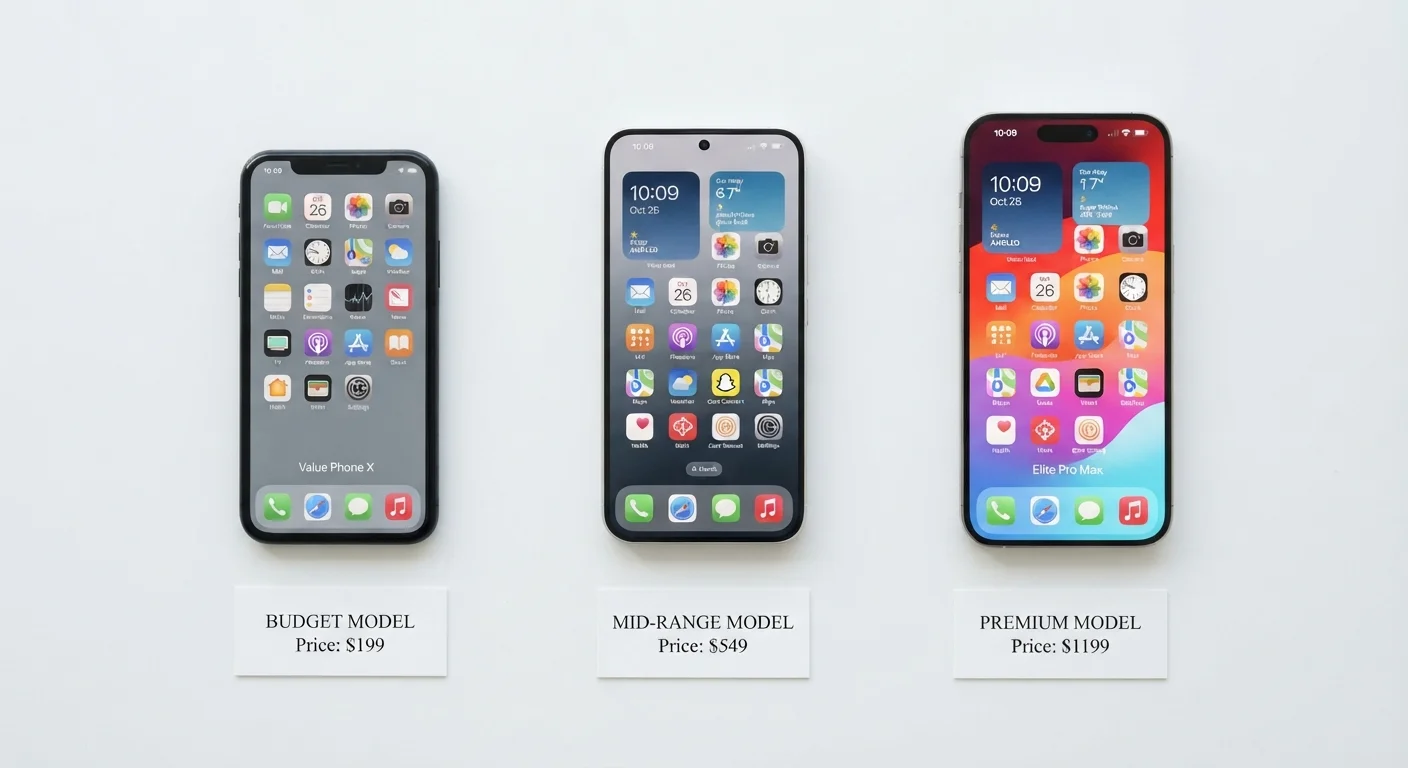
Photo credit: ArticlesHaven.net
In this article
Spending more on electronics doesn't always mean proportional improvement. Learn what actually changes across budget, mid-range, and premium.
Key Takeaways
- Budget electronics often meet everyday needs but may sacrifice build quality and longevity.
- The mid-range tier frequently offers the strongest value-to-cost ratio for most consumers.
- Premium pricing often reflects brand positioning and design as much as raw performance.
- Moving between tiers brings diminishing returns - each dollar spent buys less marginal improvement.
- Your actual use case, not spec sheets, should determine which tier is worth it for you.
Why Price Tiers Exist - and What They're Really Measuring
Consumer electronics aren't priced arbitrarily. Manufacturers segment their product lines to serve different buyers - and to capture spending from buyers who are willing to pay more for incremental gains. The result is a tiered market that can look deceptively simple from the outside: cheap, middle, expensive. But what's actually changing at each step is more nuanced than it first appears.
Price differences between tiers often reflect a combination of component quality, manufacturing tolerances, software support commitment, and brand positioning. That last factor matters more than many shoppers realize. As one industry observer put it, a significant portion of a premium device's price can represent the logo on the box rather than anything measurable in day-to-day use.
It's also worth noting that tier boundaries aren't fixed. Component costs fall over time, which means yesterday's premium feature often shows up in today's mid-range product. Headline specs can be especially misleading in this context - a higher number doesn't always mean a better experience.
~30%
Typical price gap between mid-range and premium tiers
Industry analysts generally observe a 25-35% price gap between mid-range and flagship consumer electronics within the same product family.
2-3 years
Average software support for budget Android devices
Consumer research and manufacturer documentation consistently show budget Android devices receiving fewer years of OS updates compared to mid-range or premium counterparts.
60-70%
Consumers in the mid-range segment
Market data across smartphone, laptop, and audio categories routinely shows the mid-range tier capturing the largest share of consumer unit sales.
The Budget Tier: What You Get, What You Give Up
Budget electronics - typically the lowest 20-30% of a product category's price range - are more capable than they were a decade ago. For straightforward, low-intensity tasks, many budget devices perform adequately. The trade-offs tend to show up in less visible areas: chassis rigidity, display uniformity, thermal management, and long-term software support.
The durability gap is real. Budget devices more often use plastic construction, smaller batteries, and lower-grade connectors that wear faster with regular use. Software support windows are also shorter on average, meaning a budget phone or tablet may stop receiving security updates sooner - a consideration that affects both security and resale value.
The financial picture isn't always as simple as "spend less upfront." Cheap products can carry hidden long-term costs when you factor in earlier replacement cycles or accessories needed to compensate for missing features.
Check Software Support Windows Before Buying Budget
When evaluating a budget device, look up how many years of software or security updates the manufacturer commits to. A device that goes unsupported after two years may need replacing sooner than expected - narrowing the actual savings over time.
The Mid-Range Sweet Spot - and Its Limits
The mid-range tier is where most electronics categories see the sharpest improvement in value per dollar. Manufacturers concentrate their competitive energy here, and it shows: mid-range products typically offer most of the core functionality of premium models at meaningfully lower prices.
Common mid-range gains over budget include better display panels, faster processors with more thermal headroom, improved cameras (though not necessarily flagship-level), and longer manufacturer support commitments. The experience gap between mid-range and budget is often more noticeable in daily use than the gap between mid-range and premium.
The limits of the mid-range are usually felt by power users: professionals editing video on a laptop, audiophiles who can genuinely hear nuanced audio differences, or anyone who keeps devices for five or more years and values extended software support. For those use cases, premium may be justifiable. For most others, it's worth examining whether the step up is for features you'll actually use.
Premium Tier: Real Gains and Real Premiums
Premium electronics deliver genuinely better experiences in several areas - but the gains are increasingly concentrated in ways that only specific users will notice. Build quality (metal and glass over plastic), display calibration, peak brightness and color accuracy, and extended software support timelines are among the most defensible premium advantages.
What premium often doesn't deliver is proportional performance improvement. The jump from budget to mid-range in raw computing speed or camera output is typically larger than the jump from mid-range to premium. Diminishing returns are real and well-documented in electronics categories from smartphones to laptops to audio equipment.
Brand value and ecosystem lock-in also play a role in premium pricing. Some premium devices command higher prices partly because they integrate tightly with a software and accessories ecosystem, not because the hardware alone justifies the cost. Price-only comparisons miss these dynamics entirely.
“The best device is the one that does what you need it to do reliably, for as long as you need it to do it. Anything beyond that is a premium you're paying for someone else's use case.”
— Consumer electronics industry analyst, Technology market researcher and consumer advocate
Matching Your Tier Choice to Your Actual Use
The most practical framework for choosing a tier isn't about prestige or specs - it's about matching device capability to how you'll actually use it and how long you expect to keep it. A device used lightly for two to three years has different requirements than one used heavily for five or more.
Consider: Is the feature that differs between tiers something you'll use daily, occasionally, or never? If the premium camera upgrade matters only to occasional photographers, the use case may not support the cost. If you're buying a laptop for professional work that demands sustained processing power, the mid-range thermal ceiling may be a genuine constraint.
Before purchasing, a structured comparison process helps. A practical pre-purchase routine can surface the differences that actually matter for your situation. And if you're choosing between tiers in a different product category - like mobile service plans - the same logic applies: understanding what moves between plan tiers helps you avoid paying for headroom you won't use.
Tier Labels Vary by Category
What counts as 'budget' or 'premium' differs significantly between product categories. A $200 laptop is entry-level; a $200 pair of headphones may be solidly mid-range. Always benchmark price tiers within a specific product category rather than applying a fixed dollar threshold across all electronics.
Frequently Asked Questions

Author
Articles Haven Editorial Contributor
Articles Haven Editorial Team is the collective byline for our editorial team and contributor network. Articles published under this byline or an editorial pen name are researched, written, and reviewed according to our editorial standards for clarity, consistency, and independence before publication.
View all articles →