
Digital Coupons vs. Paper Coupons: What's Still Worth Clipping
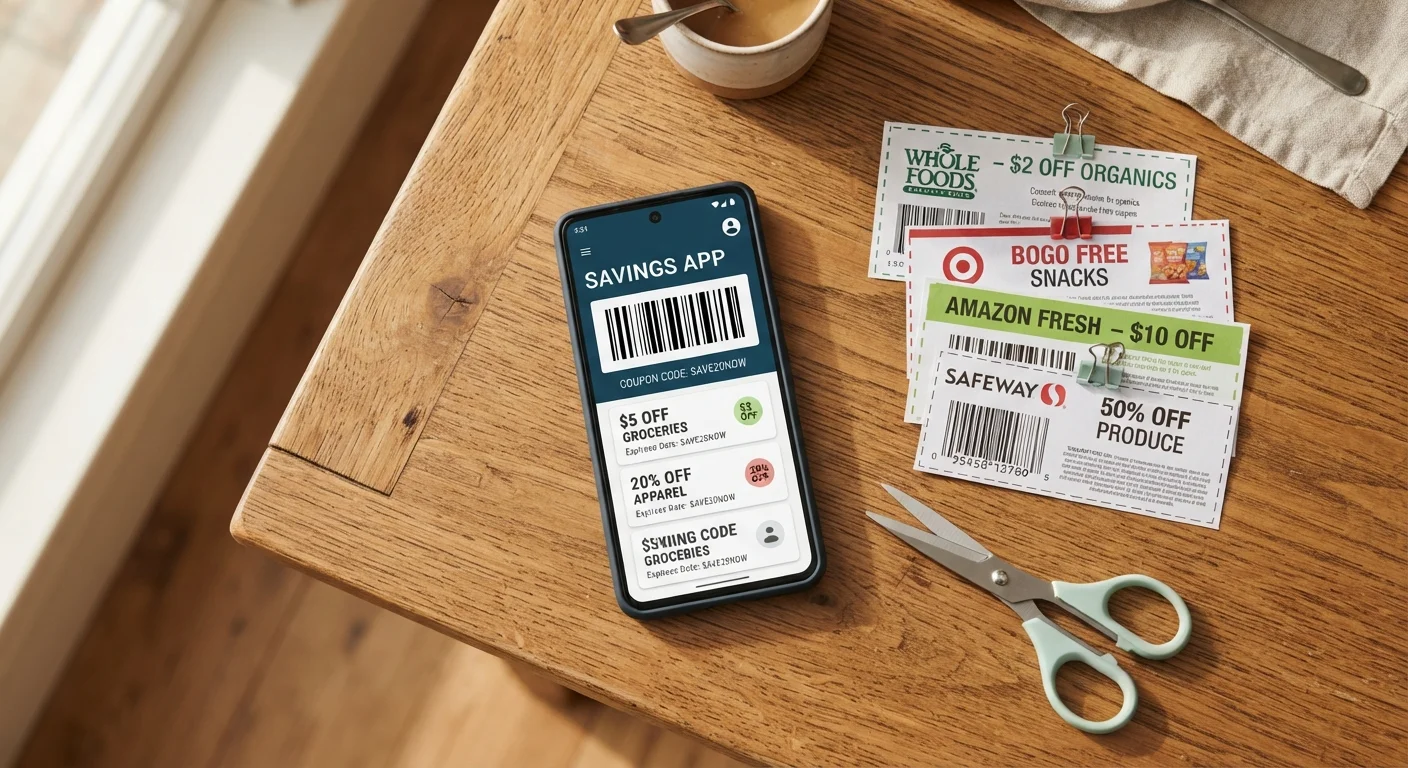
Photo credit: ArticlesHaven.net
In this article
Paper coupons aren't dead, but digital ones have largely taken over. See how both formats compare in reach, ease, and value.
Key Takeaways
- Digital coupons have largely overtaken paper in availability, especially for grocery and retail loyalty programs.
- Paper coupons still appear in Sunday inserts, direct mail, and product packaging and can offer higher face values.
- Digital formats are easier to redeem but may require sharing personal data or creating store accounts.
- Paper coupons involve physical effort but carry no login requirements or tracking concerns.
- Many shoppers use both formats strategically depending on the store and product category.
How Each Format Actually Works
Digital coupons are distributed through retailer apps, loyalty program portals, email lists, and third-party coupon websites. Shoppers typically "clip" them by tapping a button within an app, and the discount applies automatically when the linked loyalty card or account is scanned at checkout. Some digital coupons work through browser extensions or promo codes entered at online checkout - a process worth understanding before you rely on it.
Paper coupons are printed on newsprint inserts, included in product packaging, mailed directly to households, or printed at the register after a purchase. To use one, you hand it to the cashier or insert it into a self-checkout scanner. No account needed. No battery required.
For a broader look at how coupons fit alongside cashback and promo codes, see this plain-language breakdown of common savings tools.
| Criterion | Digital Coupons | Paper Coupons |
|---|---|---|
| Convenience | High - clip and apply from phone | Lower - physical handling required |
| Account required | Usually yes | No |
| Data privacy | Purchase tracking likely | No tracking |
| Retailer acceptance | Store-specific or platform-locked | Broadly accepted where coupons honored |
| Availability | Wide - apps, email, websites | Narrowing - inserts, mail, packaging |
| Stackability | Often stackable with loyalty rewards | Varies by store policy |
| Face value potential | Typically moderate | Can be higher on name brands |
Reach, Availability, and Where Each Format Thrives
Digital coupons now dominate the grocery sector. Major supermarket chains have largely shifted their promotional budgets toward app-based offers tied to loyalty accounts. That means the best in-store deals often require you to have the store's app installed and a registered account. Without it, you may be paying the non-member price even when a discount is technically available.
Paper coupons haven't vanished, but their distribution has narrowed. Sunday newspaper inserts - historically the biggest source of manufacturer coupons - have declined in circulation as print readership has dropped. However, direct mail campaigns and on-package coupons (sometimes called "peel and save") remain active, particularly for packaged food and household products. Some retailers also print coupons on receipts for future visits.
91%
US shoppers who use digital coupons
According to Statista consumer research, a significant majority of US shoppers have used digital coupons in some form.
~2.6B
Paper coupons redeemed annually in the US
Industry tracking from Inmar Intelligence has reported multi-billion paper coupon redemptions, though figures have declined from peak years.
One practical reality: paper coupons are universally accepted across retailers that honor coupons, while digital coupons may be store-specific or platform-locked. A digital coupon clipped in one chain's app won't transfer to a competitor's register.
Trade-offs Worth Knowing Before You Choose
Digital coupons are undeniably convenient, but that convenience comes with some strings. Most require you to create an account, which means providing your email address and often your purchase history becomes trackable. Retailers use that data to target future promotions - which can actually work in your favor if the offers are relevant, but is worth knowing upfront.
A Note on Coupon Stacking Policies
Not all retailers allow combining a digital coupon with a paper manufacturer coupon on the same item. Policies vary significantly between stores and even between individual locations. Before assuming you can stack, check the retailer's printed coupon policy - often posted at the customer service desk or on the store's website. When in doubt, ask a cashier before checkout rather than after.
Paper coupons sidestep the data issue entirely. Hand over the coupon, get the discount, leave no digital trail. For shoppers who prioritize privacy or simply dislike managing multiple store apps, paper remains appealing.
On the savings side, paper manufacturer coupons can sometimes carry higher dollar-off values - particularly on brand-name products trying to compete with store generics. Digital coupons, however, are easier to stack with loyalty points and cashback apps, which can compound into meaningful savings over time. For a realistic view of everyday savings without going to extremes, this practical guide is worth a read.
One common frustration with digital coupons: codes shared on aggregator sites are often expired or unverified. Here's why that happens and how to avoid wasting time on dead codes.
Making Both Formats Work Together
There's no rule saying you have to pick one. Many consistent savers use both formats depending on the store and the product. For a grocery run, they'll clip digital coupons through the store app in advance, then supplement with any paper manufacturer coupons they've clipped for the same brands. Where both apply to the same item, they can often be combined - though stacking policies vary by retailer, so it's worth checking the store's coupon policy before assuming.
The effort-to-reward equation matters here. Paper coupons require browsing inserts, cutting, organizing, and remembering to bring them to the store. Digital coupons require app management and occasional account maintenance. Neither is entirely passive. Sustainable coupon habits tend to focus on the formats that fit naturally into how you already shop - not systems that create more friction than savings.
If you do most of your shopping online, digital is the clear path. If you split time between in-store and online, understanding how mobile apps and desktop shopping differ in pricing and perks can also sharpen your strategy.

Author
Articles Haven Editorial Contributor
Articles Haven Editorial Team is the collective byline for our editorial team and contributor network. Articles published under this byline or an editorial pen name are researched, written, and reviewed according to our editorial standards for clarity, consistency, and independence before publication.
View all articles →