
Cashback, Coupons, and Promo Codes: Understanding the Savings Landscape
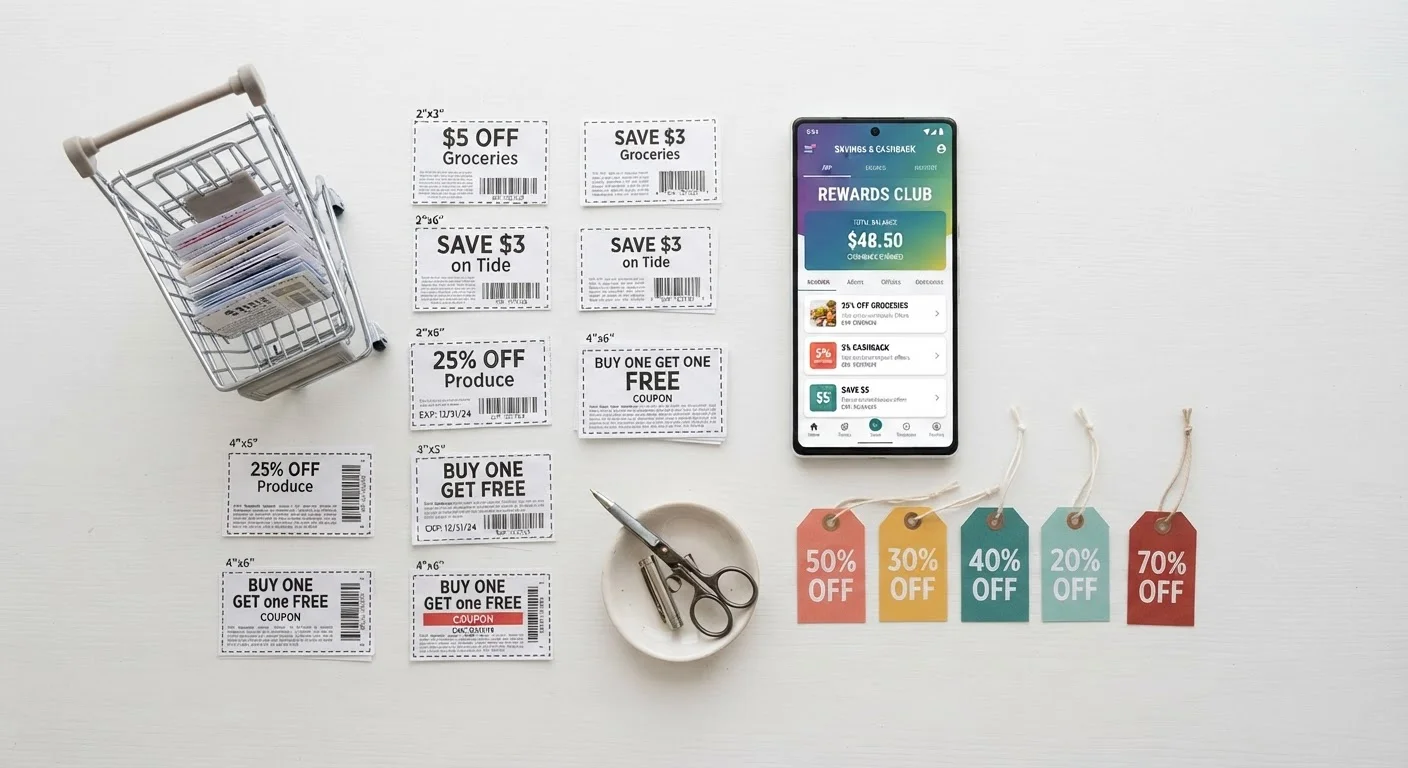
Photo credit: ArticlesHaven.net
In this article
A plain-language breakdown of the most common savings tools available to US shoppers and how each one actually works.
Three Tools, Three Mechanics
When US shoppers talk about saving money, three terms come up constantly: cashback, coupons, and promo codes. They're often lumped together, but they operate on fundamentally different mechanics - and understanding those differences helps you use each one more deliberately.
Coupons are one of the oldest savings instruments around. A coupon - whether paper or digital - reduces the price of a specific item at the point of sale. The reduction is typically funded by the manufacturer (a manufacturer coupon) or the retailer (a store coupon). Digital coupons loaded onto a store loyalty card work the same way; the discount fires automatically at checkout when you buy the qualifying product.
Promo codes (also called discount codes or coupon codes) are alphanumeric strings entered during online checkout. They're retailer-issued and usually tied to a specific campaign: a seasonal sale, an email sign-up reward, or a partnership promotion. The discount - whether a flat dollar amount or a percentage off - applies instantly to your cart total, subject to any listed conditions like a minimum order or excluded categories.
Cashback works after the sale. Instead of reducing what you pay at checkout, a cashback program returns a portion of your spending to you later - typically as account credit, a check, or points. The delay and the conditions attached to redemption are what set cashback apart from upfront discounts. For a deeper dive into the mechanics, see how cashback actually works.
Where Each Tool Tends to Have an Edge
None of these tools is universally superior - each fits certain situations better than others.
Manufacturer coupon
A discount issued and funded by the product's brand, redeemable at most retailers that accept coupons. The retailer is reimbursed by the manufacturer after the coupon is redeemed.
Store coupon
A discount issued and funded directly by a specific retailer. It is typically only valid at that retailer's locations or website.
Promo code
An alphanumeric code entered during online checkout that applies a discount to a qualifying order. Codes are issued by retailers and tied to specific promotional campaigns with defined terms.
Cashback
A rebate mechanism that returns a percentage of a qualifying purchase to the buyer after the transaction clears. The return is typically issued as account credit, a check, or points with a defined cash value.
Coupon stacking
The practice of applying more than one coupon to a single item or order - for example, using a manufacturer coupon alongside a store coupon. Whether stacking is permitted depends on each retailer's coupon policy.
Minimum redemption threshold
The minimum earned balance a cashback account holder must accumulate before withdrawing funds. Thresholds vary by program and can range from a few dollars to $20 or more.
Coupons shine for groceries and household staples. Manufacturer coupons, in particular, are tied to specific products and pack sizes, making them most useful for planned, routine purchases where you already know what you want. Stacking a manufacturer coupon with a store coupon on the same item - where allowed - can push savings higher, though store policies on stacking vary considerably.
Promo codes are strongest for online discretionary purchases. Because they're campaign-driven, they tend to surface around major retail events, seasonal transitions, and shopping holidays. A common strategy is to search for a promo code before finalizing any online cart. Browser extensions can automate this step - here's what those tools actually do behind the scenes.
Cashback rewards patient and habitual shoppers. Because the return comes later and often requires hitting a payout threshold, cashback suits people making purchases they'd make anyway. It's particularly effective when layered with a retailer's own loyalty program. The trade-offs between cashback apps and store loyalty programs are worth comparing closely if you shop at the same places repeatedly - see cashback apps vs. store loyalty programs for that comparison.
~$3B+
Annual US digital coupon redemptions (estimated market scale)
Industry analyses have consistently placed annual US digital coupon activity in the multi-billion-dollar range, reflecting mainstream adoption among everyday shoppers.
1%-5%
Typical cashback rate range for consumer purchases
Most general cashback programs and credit cards return between 1% and 5% on everyday spending categories; promotional rates may be higher for limited periods.
~$20
Common minimum payout threshold for cashback apps
Many popular cashback platforms require users to accumulate a minimum balance before funds can be withdrawn or transferred, with $20 being a frequently cited benchmark.
If you want a broader, more sustainable savings approach that doesn't involve hunting codes or clipping coupons obsessively, the everyday savings without extreme couponing framework is worth reviewing.
Common Pitfalls and Things to Verify
Each savings tool comes with conditions that can erode or eliminate the benefit if overlooked.
Stacking Isn't Always Allowed - Check First
Many shoppers assume that using a promo code on top of a sale price or layering a store coupon with a manufacturer coupon is always permitted. In practice, retailers set their own stacking rules, and these vary widely. Before building a savings strategy around combining discounts, read the retailer's coupon policy page or ask at checkout. Stacking that worked once at one store may not apply elsewhere.
With coupons: Check the expiration date, the specific product size or variant required, and whether your retailer accepts manufacturer coupons. Digital coupons often require a loyalty account to activate and may only apply once per account per promotional period.
With promo codes: Read the terms before adding items to your cart. Common restrictions include minimum order thresholds, excluded brands or sale items, single-use-per-customer rules, and codes that apply only to full-price merchandise. A code that saves 15% on eligible items is worth less if half your cart is excluded.
With cashback: The payout conditions matter most. Confirm the minimum withdrawal amount, whether the cashback is confirmed immediately or after a return window closes, and which payment methods or purchase paths qualify. Some cashback offers exclude purchases made through certain browsers or require you to click through the cashback portal's specific link to track the transaction. For broader context on how savings strategies differ across product types and service categories, saving on services vs. products covers the distinctions clearly.
Timing is also a legitimate variable. Retail discounting follows predictable seasonal rhythms - knowing when categories typically see their deepest markdowns lets you decide whether to wait or use a promo code now. The month-by-month guide to US retail cycles maps those patterns.

Author
Articles Haven Editorial Contributor
Articles Haven Editorial Team is the collective byline for our editorial team and contributor network. Articles published under this byline or an editorial pen name are researched, written, and reviewed according to our editorial standards for clarity, consistency, and independence before publication.
View all articles →