
Deal Fatigue: Why Too Many Discounts Make It Harder to Save
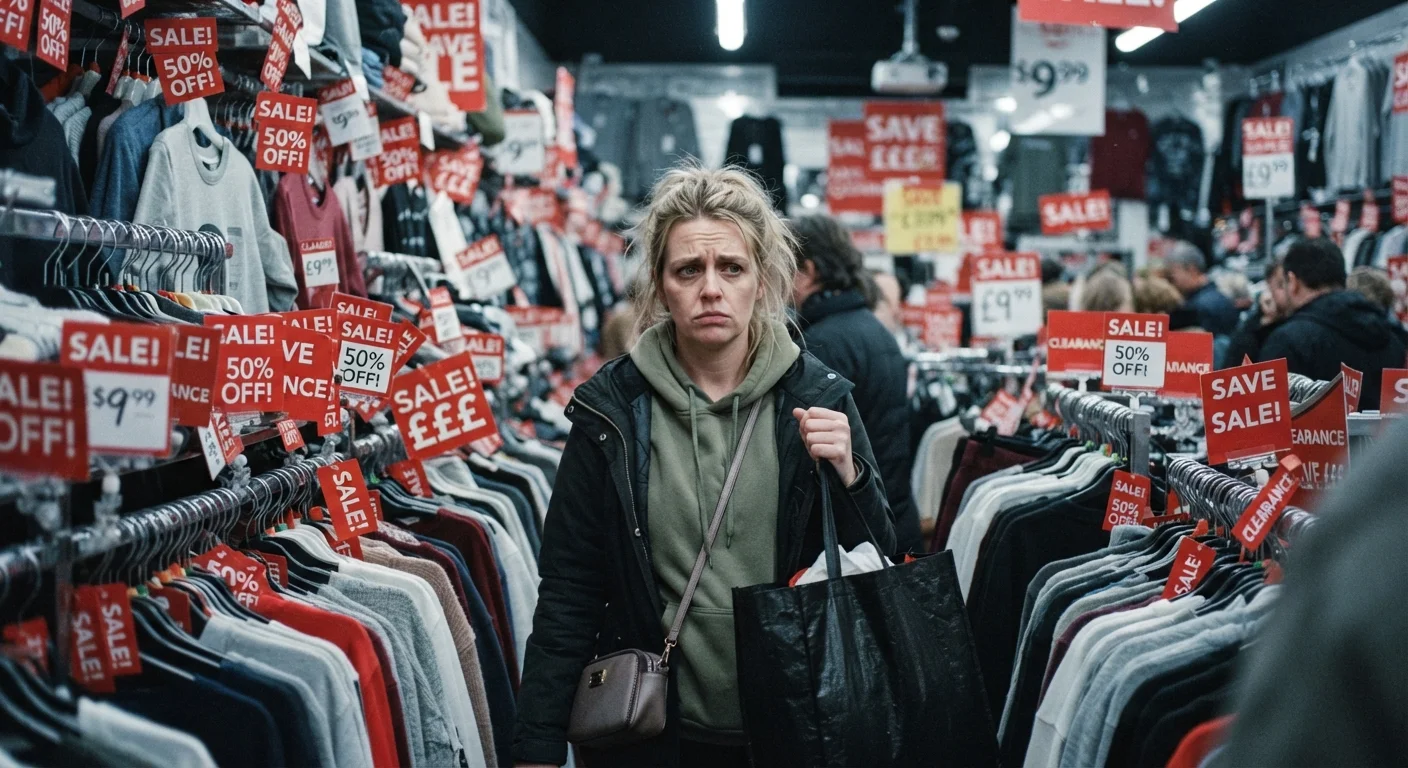
Photo credit: ArticlesHaven.net
In this article
When everything is always on sale, knowing what's a real deal becomes genuinely difficult. Here's how to filter out the noise.
Key Takeaways
- Constant promotions erode the reference price a shopper uses to judge whether a deal is real.
- Decision fatigue from too many offers can lead to impulse buys or decision paralysis.
- Price history tools are one of the most practical ways to verify whether a discount is genuine.
- Narrowing which categories you actively track deals in reduces cognitive load significantly.
- Scarcity and urgency signals often amplify deal fatigue by forcing rushed decisions.
When "On Sale" Stops Meaning Anything
At some point, most regular shoppers have noticed that certain retailers seem to be holding a sale every single week. Furniture stores with "limited-time" events. Clothing outlets where items are perpetually marked 40% off. Online marketplaces where a price badge reads "was $89, now $54" - though it has never actually sold for $89.
This is the environment that produces deal fatigue. When promotional pricing is the default, consumers lose the mental anchor they need to evaluate whether an offer is genuine. The word "discount" becomes background noise rather than useful signal.
The problem isn't just annoyance. It has a measurable effect on decision quality. Research in behavioral economics consistently shows that when people are forced to evaluate too many options or face repeated choices, their judgment deteriorates - a phenomenon known as decision fatigue. Apply that to deal-hunting and the result is predictable: either impulse purchases driven by the appearance of savings, or paralysis where no decision gets made at all.
82%
Shoppers who feel overwhelmed by too many promotions
A consumer sentiment survey by the National Retail Federation found a substantial majority of shoppers report difficulty distinguishing genuine deals from routine promotions.
3x
More sale events run by major retailers vs. a decade ago
Retail industry analyses have documented a significant increase in the frequency of promotional events across both online and brick-and-mortar retail over the past decade.
64%
Purchases made without verifying original price
According to consumer behavior research, most shoppers accept a retailer's stated reference price without independently confirming it reflects an actual prior selling price.
How Retailers Manufacture the Illusion of Savings
Understanding deal fatigue requires a quick look at how promotional pricing actually works. Many retailers use a tactic called reference price inflation - setting an artificially high "original" price specifically so the discounted price looks more dramatic. The "60% off" tag becomes nearly meaningless if the baseline was never a real selling price.
Seasonal sale events compound this. Major retail calendar events - end-of-year sales, midsummer clearances, back-to-school promotions - train consumers to wait for discounts. Retailers have adapted by running more frequent, shorter-duration events that maintain urgency without actually lowering net prices meaningfully over time.
Scarcity signals like countdown timers and low-stock warnings amplify deal fatigue by forcing faster decisions. The faster a shopper decides, the less time they have to verify whether the deal is real. That's not an accident.
“The more choices we have, the less satisfied we are with whatever we pick. Abundance, paradoxically, can leave us feeling worse off than scarcity.”
— Barry Schwartz, Psychologist and author of 'The Paradox of Choice'
Practical Ways to Cut Through the Noise
The antidote to deal fatigue isn't avoiding sales altogether - it's building a few habits that let you evaluate offers without burning mental energy on every one.
- Use price history tools. Browser extensions that show historical pricing data let you see whether a "sale" price is genuinely low or just the item's regular going rate dressed up with a badge. This single habit eliminates most reference-price deception.
- Set your price before you shop. Decide in advance what you're willing to pay for a category of item. If you're looking for a kitchen appliance, know your ceiling before you open any retailer's site. It's much harder for a promotion to override a pre-committed number.
- Narrow your deal-tracking inputs. Following dozens of deal newsletters and social communities multiplies the cognitive load without proportionally increasing real savings. Social media deal culture in particular can blur the line between genuine finds and spending encouragement.
- Watch out for hidden costs. A discounted price can look compelling until shipping, handling, or subscription fees erode it. Hidden fees that quietly undo a good deal are one of the most consistent ways that apparent savings evaporate.
Focus Your Deal Energy on Repeat Purchases
Deal fatigue hits hardest when you're trying to evaluate promotions across every product category at once. A more sustainable approach is to track prices actively only for items you buy regularly - groceries, household staples, electronics you already have a use for. For everything else, a simple price-history check at the time of need is enough.
What Actually Defines a Real Deal
Stepping back from any individual promotion, it helps to have a working definition of value that doesn't depend on a retailer's framing. A genuine deal is one where you're paying meaningfully below the verified, sustained market price for something you had already decided you needed or wanted - not something a sale made you want.
That last part matters. Deal fatigue is partly a symptom of shopping in reverse: encountering the offer before the need. When discounts arrive unsolicited through emails, apps, and social feeds, the sequence gets inverted. You see the price cut first and construct the justification afterward.
Understanding what actually makes something worth buying requires separating the discount from the purchase decision. Similarly, clearance pricing carries its own set of assumptions that don't always hold up under scrutiny. In both cases, the framework is the same: verify the real price, confirm the need, then evaluate the offer - in that order.
Coupon Codes Add Another Layer of Noise
Third-party coupon aggregator sites frequently display outdated or non-functional codes, which adds effort without delivering savings. If you rely on coupon codes, understanding why coupon code sites often get it wrong can save you the frustration of failed checkouts and false expectations.
Frequently Asked Questions

Author
Articles Haven Editorial Contributor
Articles Haven Editorial Team is the collective byline for our editorial team and contributor network. Articles published under this byline or an editorial pen name are researched, written, and reviewed according to our editorial standards for clarity, consistency, and independence before publication.
View all articles →