
Clearance Doesn't Always Mean a Good Deal: The Myths Around Marked-Down Merchandise
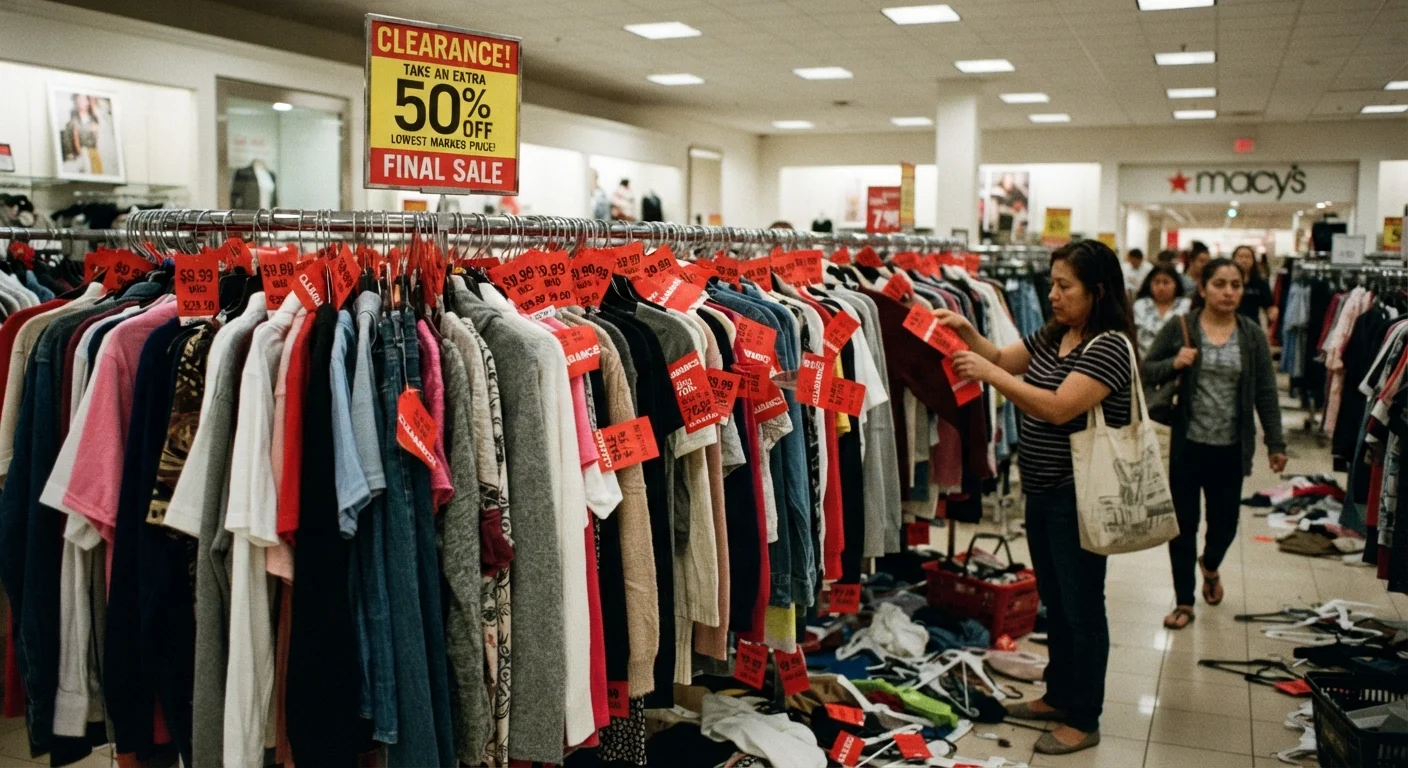
Photo credit: ArticlesHaven.net
Clearance items carry assumptions about value that often don't hold. Separate the genuine opportunities from the misleading markdown myths.
Key Takeaways
- Clearance pricing doesn't guarantee a discount from a fair original price.
- Restocking limits and final-sale policies can eliminate what makes clearance appealing.
- Comparing clearance prices to current market rates is the most reliable way to judge value.
- Some clearance items are lower quality versions made specifically for markdown environments.
- Scarcity pressure at clearance racks often manufactures urgency that isn't genuinely there.
Why Clearance Signals Can Mislead
Clearance sections are built on an appealing premise: items priced below what they used to cost, still in-store, available now. That premise is real - but it's incomplete. The gap between what clearance implies and what it delivers is where most shopping mistakes happen.
Many shoppers treat a red clearance tag the same way they'd treat a trusted recommendation. The tag signals that someone - the retailer - has already done the value work. In reality, clearance pricing reflects inventory management goals, not necessarily a fair transfer of value to the buyer. Understanding that distinction is the starting point for shopping clearance sections without getting misled.
For a broader look at how common shopping assumptions create real financial costs, see shopping myths that cost consumers real money.
Myth
Clearance means the item was dramatically reduced from its real, everyday price.
Fact
Original prices on clearance items are sometimes inflated from the start, making the discount smaller than it appears.
Retailers set reference prices - the 'was' figure - and those numbers aren't always anchored to what the item actually sold for at scale. If a sweater was listed at $80 but moved mostly at $60 during periodic sales, its clearance price of $45 may represent a much smaller real-world reduction than the tag implies. Checking the item's price history through browser extensions or third-party trackers can reveal whether the markdown is meaningful. The difference between retail, sale, and true value matters more than the percentage shown on the tag.
Myth
You can always return a clearance item if it doesn't work out.
Fact
Most clearance items are sold as final sale, with no returns or exchanges accepted.
This is one of the most financially consequential clearance assumptions to get wrong. Many stores mark clearance items as non-returnable - sometimes with small-print signage at the rack, sometimes only at the register. Buying a clearance appliance, piece of clothing, or piece of furniture without confirming the return policy means you may be stuck with it regardless of condition or fit. Always ask before purchasing, especially on higher-ticket clearance finds.
Myth
Clearance items are regular products that just didn't sell - same quality, lower price.
Fact
Some clearance sections include items made specifically for markdown or outlet channels, built to lower specifications.
Retailers and manufacturers sometimes produce goods exclusively for outlet and clearance formats. These items may share a product name and visual design with a standard model but differ in materials, construction, or components. This practice is documented across categories including electronics, apparel, and housewares. Before buying, check the model number against the manufacturer's website to confirm you're looking at the same specification as the full-price version - not a clearance-channel variant. The distinction between clearance, closeout, and liquidation can also signal how the item ended up on the rack.
Myth
If it's on clearance, you should grab it fast before it's gone.
Fact
Artificial scarcity is a common retail tactic, and clearance urgency is often overstated.
The sight of a near-empty clearance rack or a 'limited quantities' sign is designed to trigger loss aversion - the fear of missing out on a deal. In practice, many clearance items persist for weeks, and stores routinely receive new clearance stock as inventory cycles. Rushing a purchase without confirming fit, functionality, or comparative pricing is how clearance sections generate buyer's remorse. Understanding how scarcity tactics work helps you slow down and evaluate rather than react.
Myth
A deep discount percentage always means significant savings.
Fact
The percentage off is only meaningful relative to a fair baseline price - which clearance tags rarely establish.
Seventy percent off sounds like a strong deal. But 70% off an inflated reference price may still leave you paying more than the item's genuine market value. The more useful calculation is comparing the clearance price to what the same or equivalent item costs at other retailers right now. A quick search on a smartphone before committing to a clearance purchase is one of the most effective tools available to shoppers. What makes a discount genuinely worth it comes down to the true market value, not the tag math.
How to Evaluate a Clearance Item on Its Own Merits
The most reliable clearance shoppers apply the same evaluation process regardless of the markdown. That process has three components: confirm the current market price, verify the return policy before purchase, and check the product specification matches what you'd expect at full price.
~33%
Shoppers who check prices before buying clearance
Consumer behavior research consistently shows a minority of shoppers compare clearance prices to current market rates before purchasing, leaving many exposed to inflated reference prices.
Final Sale
Return policy on most clearance merchandise
Industry retail practice widely treats clearance items as non-returnable; policies vary by retailer and should always be confirmed at point of purchase.
Clearance can represent genuine value - particularly for seasonal goods at end-of-cycle, or for items where brand and model are clearly identifiable. The goal isn't to avoid clearance sections but to engage with them on accurate terms. Evaluating what actually makes something worth buying gives you a framework that applies to clearance and standard pricing alike.
Check the Return Policy Before You Commit
Final-sale terms on clearance items are frequently not prominently displayed. Ask a staff member directly before purchasing anything you might need to return. This is especially important for electronics, footwear, and apparel where fit and function can only be confirmed after the fact.
When everything seems to be perpetually marked down, it also becomes harder to know what a real discount looks like. Deal fatigue is a genuine phenomenon worth understanding before your next clearance run.
Clearance Is Not a Guarantee of Value
A markdown tag tells you the price was reduced - it says nothing about whether the original price was fair, whether the item is worth buying, or whether you couldn't find it cheaper elsewhere at full price. Treat clearance as a signal to investigate further, not as confirmation of a good deal.

Author
Articles Haven Editorial Contributor
Articles Haven Editorial Team is the collective byline for our editorial team and contributor network. Articles published under this byline or an editorial pen name are researched, written, and reviewed according to our editorial standards for clarity, consistency, and independence before publication.
View all articles →