
Social Media Deal Culture: Useful Signal or Spending Trap
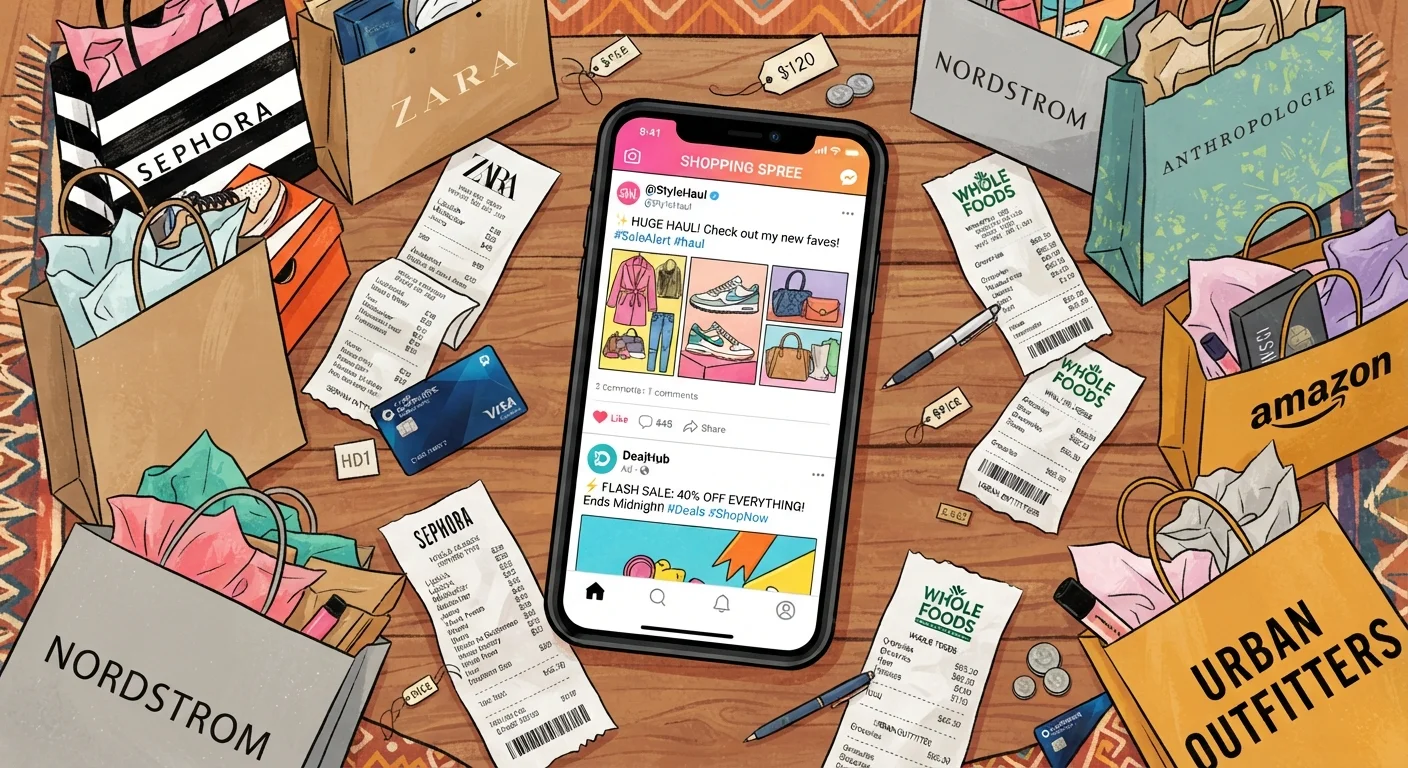
Photo credit: ArticlesHaven.net
In this article
Deal communities and influencer hauls make spending feel social and exciting. Here's how to extract genuine value without being swept along.
Key Takeaways
- Social deal communities can surface genuinely useful price intelligence you'd miss on your own.
- Emotional contagion in these spaces often drives purchases that weren't planned or needed.
- The format rewards urgency and volume, which works against deliberate, budget-conscious buying.
- Extracting value requires filtering community enthusiasm from actual personal utility.
- A deal only saves money if you would have bought the item anyway at full price.
Crowdsourced price intelligence across many retailers
Active deal communities aggregate offers from dozens of stores simultaneously, often surfacing price drops faster than any single person could track. This is genuinely difficult to replicate alone.
Real user feedback reduces purchase regret
Unlike manufacturer descriptions, community posts often include candid quality assessments, size notes, and durability reports - the kind of detail that helps you decide whether a discount item is actually worth owning.
Exposes price history and manipulation
Savvy community members frequently flag when a "sale" is off an inflated anchor price, helping others recognize misleading markdowns. This kind of collective scrutiny is harder to game than individual shoppers acting alone.
Introduces products and categories you had genuine need for
Occasionally, a community post surfaces something in a category you were already researching, at a price and timing that aligns with your budget - that's the deal culture working as intended.
Urgency framing manufactures artificial pressure
Posts consistently use countdown language and stock warnings that prime impulsive decisions. That pressure is a feature of the format, not a reliable signal about actual scarcity.
Social validation substitutes for personal utility
High upvote counts and enthusiastic comments create a sense that an item is objectively good - even if it has no relevance to your life, budget, or needs. Peer approval and personal usefulness are not the same thing.
Volume of content normalizes constant spending
Regular exposure to hundreds of deals per week shifts baseline expectations: buying something starts to feel like the default activity, and not buying feels like missing out. This is a documented pattern in deal-fatigue research. See also: how deal fatigue affects your savings.
Influencer hauls often blur promotion and editorial content
Many high-profile haul creators have undisclosed or loosely disclosed affiliate arrangements, meaning their enthusiasm is financially incentivized. The FTC has guidelines on this, but enforcement is inconsistent and disclosures are often buried.
Category drift pulls you outside your actual budget priorities
Deal feeds rarely respect your personal spending plan. A compelling offer in a category you weren't targeting can redirect money earmarked for something more important.
What Social Deal Culture Actually Is
Social deal culture spans Reddit communities, TikTok haul videos, Facebook group alerts, and dedicated deal-aggregator accounts on Instagram. The common thread: shopping information is filtered and amplified through social mechanics - upvotes, shares, comments, and emotional reactions - rather than delivered through a neutral channel.
That social layer is both the feature and the flaw. It makes information spread faster and feel more trustworthy, but it also means the deals you see are the ones optimized for engagement, not necessarily the ones best suited to your budget or needs. Understanding that distinction is the starting point for using these spaces well. For a grounding framework on what actually makes a discount worth taking, see what makes a discount actually worth it.
The Real Advantages: When the Community Works For You
Used deliberately, deal communities offer something genuinely hard to replicate solo: distributed price surveillance. Members across the country spot regional promotions, clearance markdowns, and limited stock reductions in real time.
Crowdsourced price intelligence across many retailers
Active deal communities aggregate offers from dozens of stores simultaneously, often surfacing price drops faster than any single person could track. This is genuinely difficult to replicate alone.
Real user feedback reduces purchase regret
Unlike manufacturer descriptions, community posts often include candid quality assessments, size notes, and durability reports - the kind of detail that helps you decide whether a discount item is actually worth owning.
Exposes price history and manipulation
Savvy community members frequently flag when a "sale" is off an inflated anchor price, helping others recognize misleading markdowns. This kind of collective scrutiny is harder to game than individual shoppers acting alone.
Introduces products and categories you had genuine need for
Occasionally, a community post surfaces something in a category you were already researching, at a price and timing that aligns with your budget - that's the deal culture working as intended.
The aggregation effect is real. If you're already planning to buy something - say, a specific appliance or a particular type of outdoor gear - checking the relevant community before completing that purchase is low-effort due diligence that sometimes pays off. That's the signal worth extracting.
The Hidden Costs: How the Format Works Against You
The same mechanics that make deal communities fast and engaging are structurally misaligned with careful spending. Posts are written to drive action, comments reinforce enthusiasm, and the feed is continuous - there's no natural stopping point.
Urgency framing manufactures artificial pressure
Posts consistently use countdown language and stock warnings that prime impulsive decisions. That pressure is a feature of the format, not a reliable signal about actual scarcity.
Social validation substitutes for personal utility
High upvote counts and enthusiastic comments create a sense that an item is objectively good - even if it has no relevance to your life, budget, or needs. Peer approval and personal usefulness are not the same thing.
Volume of content normalizes constant spending
Regular exposure to hundreds of deals per week shifts baseline expectations: buying something starts to feel like the default activity, and not buying feels like missing out. This is a documented pattern in deal-fatigue research. See also: how deal fatigue affects your savings.
Influencer hauls often blur promotion and editorial content
Many high-profile haul creators have undisclosed or loosely disclosed affiliate arrangements, meaning their enthusiasm is financially incentivized. The FTC has guidelines on this, but enforcement is inconsistent and disclosures are often buried.
Category drift pulls you outside your actual budget priorities
Deal feeds rarely respect your personal spending plan. A compelling offer in a category you weren't targeting can redirect money earmarked for something more important.
Disclosure Rules Don't Always Protect You
The FTC requires creators to disclose paid partnerships and affiliate relationships clearly and conspicuously. In practice, small text tags or vague phrases like 'collab' are common and easy to miss. When you see a glowing product recommendation, it's worth checking the account's bio or post description for affiliate disclosures before treating the enthusiasm as independent opinion.
None of this means deal communities are designed to exploit you - most participants are genuine. But the platform format shapes behavior in ways that are worth recognizing. Common deal-hunting myths compound the problem: the belief that acting fast is always smart, or that saving a percentage is always worth spending the dollar.
How to Extract Value Without Getting Swept Along
The practical approach isn't to avoid deal communities entirely - it's to change your relationship with them. A few principles help:
- Enter with a list. Check communities for items you've already decided you need, rather than browsing to discover what you might want.
- Ignore the vote count as a quality signal. Popularity reflects what's exciting to many people, not what's right for your situation.
- Apply a waiting window. If a deal feels urgent, set a 24-hour reminder. Many deals recur; the ones that don't usually weren't as scarce as they appeared.
- Audit your category drift. If you notice yourself consistently buying from categories outside your budget priorities, the feed is doing its job - just not yours.
49%
Social media users who made unplanned purchases after seeing posts
A survey by Bankrate found nearly half of social media users reported making an impulse purchase directly influenced by social content.
3 in 5
Online shoppers influenced by community reviews or ratings
According to Pew Research data on online shopping behavior, a majority of US online shoppers consult community feedback before purchasing.
For a more structured approach to evaluating whether any individual deal is worth acting on, core frameworks for deciding if a purchase delivers real value offers a useful decision model. The Shopping Smarter hub covers the broader range of consumer decision-making tools worth having in your toolkit.

Author
Articles Haven Editorial Contributor
Articles Haven Editorial Team is the collective byline for our editorial team and contributor network. Articles published under this byline or an editorial pen name are researched, written, and reviewed according to our editorial standards for clarity, consistency, and independence before publication.
View all articles →