
Scarcity Tactics in Retail: Separating Genuine Urgency from Marketing Pressure
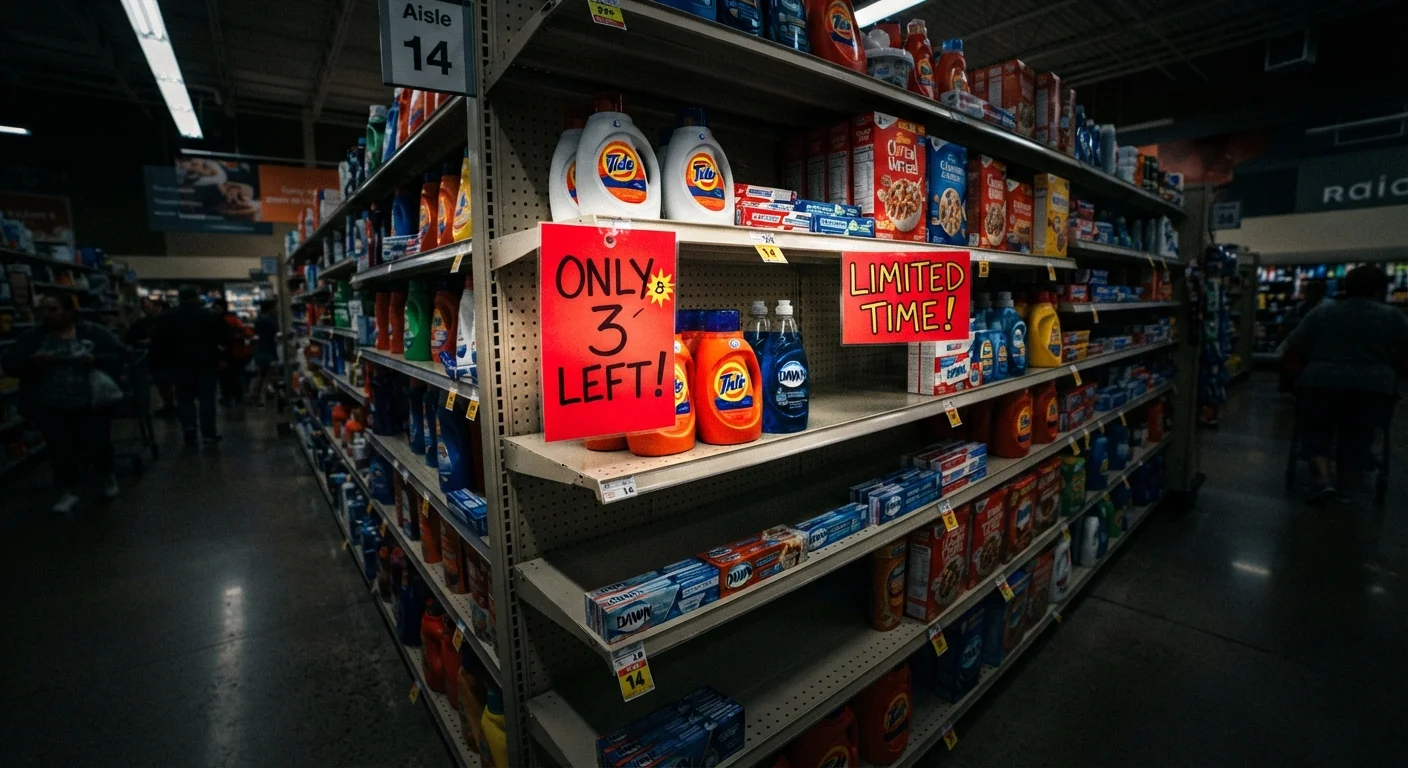
Photo credit: ArticlesHaven.net
In this article
"Only 3 left!" and countdown timers are common retail tools. Understand how artificial scarcity works and when urgency signals are real versus manufactured.
Key Takeaways
- Not all urgency signals in retail reflect real supply constraints - many are deliberate design choices.
- Countdown timers and low-stock warnings are among the most common artificial scarcity tools online.
- Genuine scarcity can usually be verified through external sources, price history tools, or simple observation over time.
- A brief pause before buying non-essential items is one of the most effective defenses against manufactured urgency.
- Understanding the mechanics of scarcity tactics helps shoppers make decisions based on need rather than pressure.
Why Scarcity Works on Almost Everyone
Retailers didn't invent urgency - they refined it. The psychological principle underneath scarcity marketing is straightforward: people assign higher value to things that appear rare or time-limited. When a product looks like it might disappear, the decision calculus shifts from "do I actually want this?" to "can I afford to miss it?"
This isn't a flaw in the way a small group of impulsive shoppers think. Research in behavioral economics consistently shows that loss aversion affects decision-making broadly, regardless of income, education, or shopping experience. Retailers know this, and the design of urgency cues - from flashing countdown timers to orange "Only 2 left!" banners - is deliberately calibrated to trigger it.
Understanding that these responses are normal, not embarrassing, is actually the first step toward managing them. The goal isn't to be unmoved by all urgency signals. It's to distinguish the ones that reflect reality from the ones manufactured to compress your decision window.
“Scarcity cues don't just create urgency - they change what the product means to us. An item we might have passed over becomes desirable simply because it appears less available.”
— Cialdini, Robert B., Author, 'Influence: The Psychology of Persuasion'
The Most Common Artificial Scarcity Tactics
Knowing the specific formats that artificial scarcity takes makes them easier to spot in the moment. A few appear across nearly every retail category:
- Countdown timers: These suggest a hard deadline on a price or offer. Many reset when you reload the page - a quick test that reveals whether the timer is tied to any actual constraint.
- Low-stock indicators: "Only 3 left in stock" is compelling language, but the number is frequently set by an algorithm, not warehouse reality. If the count never changes over multiple visits, that's telling.
- Viewer counts: "47 people are looking at this right now" creates social proof pressure alongside scarcity. These figures are often simulated or pulled from aggregate data that bears little relationship to genuine competition for the item.
- Flash sale labels: Time-limited price frames are legitimate marketing tools, but many "sale" prices reflect the item's ordinary selling price with an inflated original attached for contrast.
For a closer look at the decision-making research behind these tools, the article on urgency tactics in online sales covers the relevant psychology in detail.
~60%
Online shoppers influenced by low-stock warnings
A Baymard Institute study found a majority of shoppers reported that low-stock messages meaningfully affected their purchase timing decisions.
2-3×
Conversion lift from countdown timers
E-commerce case studies across multiple retail categories have reported conversion rate increases of two to three times when countdown timers are added to product pages, regardless of whether the deadline is real.
70%+
Consumers who later regret urgency-driven purchases
Consumer behavior surveys have consistently found that a majority of shoppers who bought under time pressure reported wishing they had taken more time to decide.
When Urgency Is Genuine
Artificial scarcity gets most of the attention, but real scarcity does exist - and it's worth recognizing so you don't dismiss every time pressure signal as a manipulation. Genuine urgency tends to share a few characteristics:
- The supply constraint is independently verifiable (a discontinued product, an event with fixed seating, a seasonal item at end-of-season).
- The deadline is tied to an external event rather than a page visit - a warehouse clearance date, a manufacturer cutoff, or a shipping window before a holiday.
- The item isn't widely restocked by multiple competing sellers.
Clearance merchandise can represent genuine limited availability, though the discount itself deserves scrutiny. As discussed in the article on clearance pricing myths, a marked-down price doesn't automatically mean a good deal - the original price point matters.
Quick Test for Genuine Scarcity
Before acting on any urgency signal, spend 60 seconds checking the same product on two or three other retailers. If availability is plentiful elsewhere, the scarcity framing at one store is a marketing choice, not a supply reality. This single step catches the majority of manufactured urgency claims.
Practical Tools for Evaluating Urgency Claims
A few habits make it substantially easier to evaluate urgency claims in the moment without requiring deep research every time:
- Use price history extensions. Browser tools that track a product's price history over time show whether today's "sale price" is genuinely lower than the item normally sells for, or just labeled as a deal.
- Test the timer. Reload the page or return the next day. If the countdown resets, the deadline is manufactured.
- Search the item elsewhere. If a product is genuinely scarce at one retailer but freely available at three others, scarcity isn't the issue - framing is.
- Apply a waiting period. A structured pause before non-essential purchases cuts through artificial urgency almost entirely. The item is nearly always available later. How to structure an effective waiting period is a practical starting point if this is a habit you want to build.
Impulse purchases driven by scarcity signals are a well-documented pattern, and the costs add up faster than most shoppers realize. The article on the real cost of impulse buying breaks down what that spending actually looks like across sale seasons.
Urgency Isn't Always Deceptive
Some retailers use urgency language that reflects genuinely time-sensitive situations - end-of-season closeouts, limited print runs, or vendor-constrained inventory. The issue isn't urgency itself but whether the signal is honest. Developing a habit of verification rather than blanket skepticism helps you respond appropriately in both cases.
Deal Fatigue Can Amplify Scarcity Effects
Shoppers who have been exposed to repeated discount messaging often become more susceptible to scarcity tactics because they've already been primed to expect deals to disappear. If you've been shopping sale events frequently, it's worth reading about deal fatigue and how it distorts value perception.
Frequently Asked Questions

Author
Articles Haven Editorial Contributor
Articles Haven Editorial Team is the collective byline for our editorial team and contributor network. Articles published under this byline or an editorial pen name are researched, written, and reviewed according to our editorial standards for clarity, consistency, and independence before publication.
View all articles →