
What Is a Symmetrical Internet Plan — and Who Actually Benefits From One?
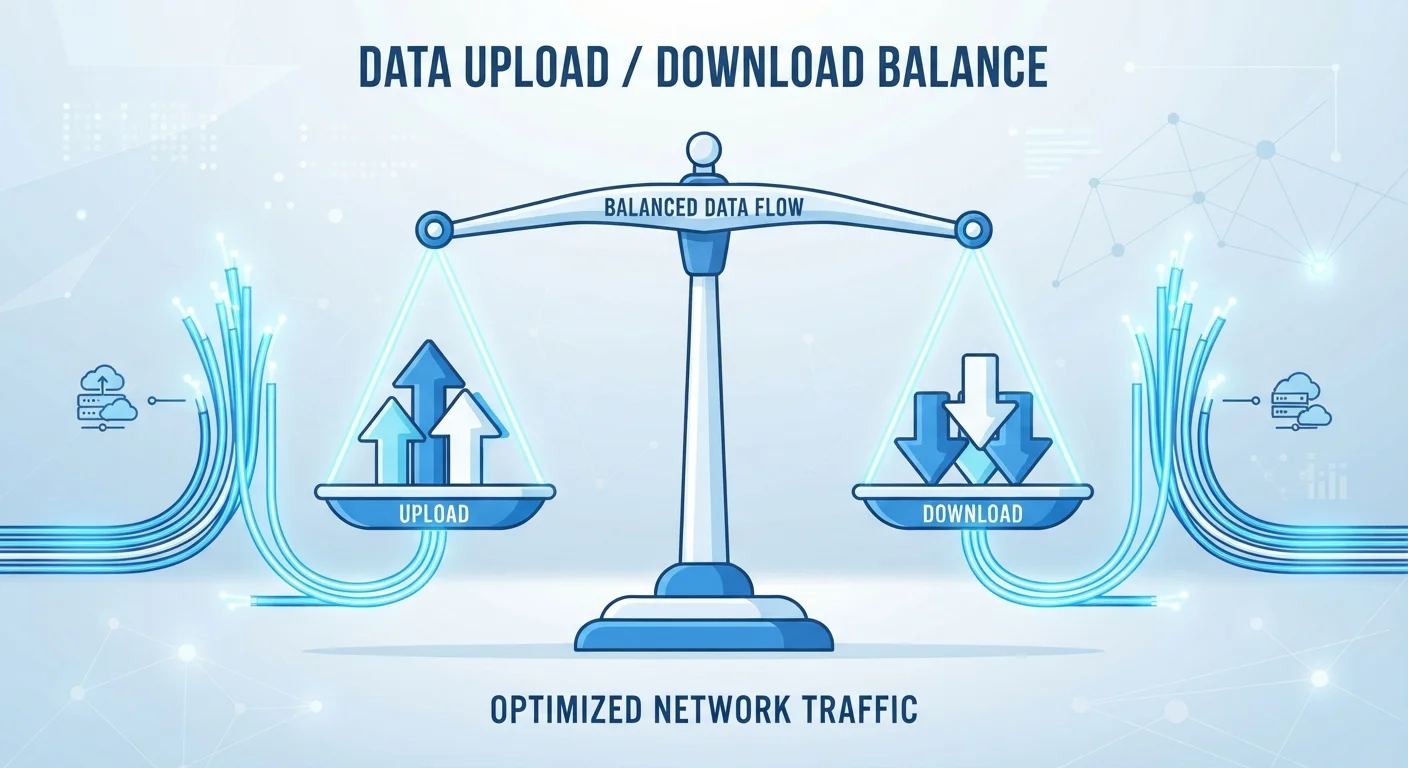
Photo credit: ArticlesHaven.net
In this article
Symmetrical plans offer equal upload and download speeds. Here's when that balance matters and when it doesn't change much day-to-day.
Key Takeaways
- Symmetrical plans match upload and download speeds - most standard plans do not.
- Fiber-optic connections are the most common way to get symmetrical service at home.
- Heavy uploaders - remote workers, streamers, and cloud backup users - benefit most.
- Casual users who mainly browse, stream video, or game rarely need symmetrical speeds.
- Price premiums for symmetrical plans vary; compare the upload speed gap before deciding.
The Asymmetry Built Into Most Home Plans
If you have looked at an internet plan recently, you may have noticed that providers advertise download speed prominently - and print the upload speed in much smaller text, if at all. That gap is intentional. Most residential plans are designed around the assumption that households consume far more data than they send.
A typical cable internet plan might offer 500 Mbps download paired with only 20-50 Mbps upload. That asymmetrical split works fine for households that stream video, browse social media, and download files - activities that pull data toward you. See our plain-language breakdown of speed tiers for more on how those numbers translate to real use.
Symmetrical plans flip that assumption. They provide the same ceiling in both directions, which changes the math for households that send as much as they receive.
~10-20 Mbps
Typical upload speed on standard cable plans
Many cable internet plans in the US advertise high download speeds but limit upload to a fraction of that - a structural characteristic of DOCSIS technology.
~1 Gbps
Common symmetrical speed tier offered by fiber providers
Fiber-to-the-home providers frequently offer gigabit symmetrical tiers, delivering 1,000 Mbps upload and download, where infrastructure is available.
3-5 Mbps
Minimum upload speed for stable HD video calling
Major video conferencing platforms generally recommend at least 3-5 Mbps upload for reliable HD video calls; multi-participant sessions multiply this requirement.
What Drives the Need for Upload Speed
Upload speed is the often-overlooked half of the bandwidth equation. When you join a video call, your camera feed travels upstream. When you back up photos to a cloud service, every file goes out through your upload channel. When a content creator sends a finished video file to a hosting platform, that's an upload task that can take minutes or hours depending on available bandwidth.
For a deeper look at how these two directions affect everyday tasks differently, our upload vs. download speed guide walks through specific use cases.
Check Your Current Upload Speed First
Before assuming you need a symmetrical plan, run an internet speed test during your busiest usage period and note the upload result. If your existing upload speed comfortably exceeds what your household's highest-demand tasks require, a symmetrical upgrade may offer diminishing returns.
The practical impact of a slow upload pipe shows up most clearly in two scenarios: multiple people on video calls simultaneously from the same household, and regular large-file transfers such as RAW photo batches, video project exports, or nightly cloud backups.
Who Actually Benefits - and Who Probably Doesn't
Symmetrical service is genuinely useful for a specific slice of users. It's less relevant for the majority of residential households.
Users who benefit most
- Remote and hybrid workers who spend hours daily on video conferencing platforms where both their audio and video stream continuously upstream.
- Live streamers and content creators who regularly upload large media files or broadcast live to platforms that require sustained upload throughput.
- Households with multiple simultaneous video calls - a common scenario where the upload channel becomes a bottleneck during peak hours.
- Heavy cloud storage users who rely on real-time syncing of large file libraries.
Users who see limited benefit
- Households that primarily stream on-demand video, which is almost entirely a download activity.
- Casual gamers - latency and packet consistency matter far more than upload bandwidth for most online games.
- General browsing and social media users, who generate minimal upload traffic.
For guidance on matching plans to household size and usage patterns, see our plan comparison by household type.
Technology, Availability, and What to Check Before You Switch
Symmetrical plans are most commonly delivered over fiber-optic infrastructure, which handles bidirectional traffic without the structural speed imbalance built into older cable and DSL technologies. If symmetrical service isn't available in your area, that's typically a reflection of what infrastructure your provider has laid - not something a plan upgrade can fix.
Before deciding whether a symmetrical plan is worth pursuing, it helps to check a few things. First, run a speed test at different times of day and pay attention to the upload number - not just download. Real-world upload speeds on your current plan may already exceed what your household actually uses. Keep in mind that advertised speeds and real-world performance don't always match.
Second, consider whether your connection type affects consistency. On shared infrastructure like cable, upload speeds can degrade during peak hours. Fiber-based symmetrical service tends to be more consistent - a point worth understanding through our overview of shared versus dedicated connections.
Availability Depends on Local Infrastructure
Symmetrical plans are only as available as the fiber network in your area. Many parts of the US still rely primarily on cable or DSL infrastructure, where true symmetrical speeds aren't offered regardless of the plan tier you select. Check what connection type underlies any plan you're evaluating, not just the advertised speed figures.
If symmetrical service is available and your upload usage is high, the value is clear. If your upload demands are modest, the marginal benefit may not justify a higher monthly cost - especially in markets where symmetrical plans carry a meaningful price premium.
Frequently Asked Questions

Author
Articles Haven Editorial Contributor
Articles Haven Editorial Team is the collective byline for our editorial team and contributor network. Articles published under this byline or an editorial pen name are researched, written, and reviewed according to our editorial standards for clarity, consistency, and independence before publication.
View all articles →