
Understanding Your Evidence of Insurance: What the Document Does and Doesn't Prove
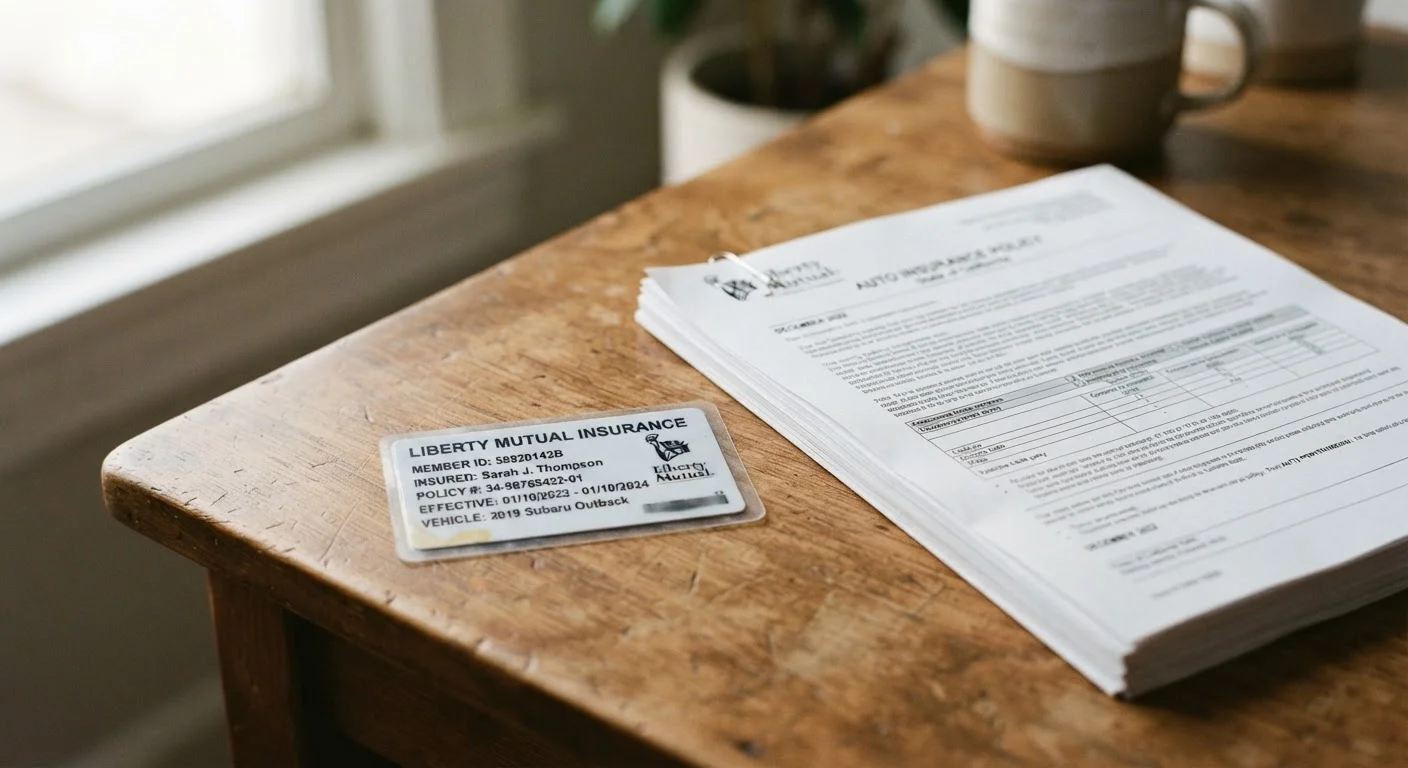
Photo credit: ArticlesHaven.net
In this article
An insurance ID card or certificate proves you have coverage—but it's not the policy itself. Learn what these documents do and don't confirm.
Key Takeaways
- An insurance ID card proves a policy exists but does not describe its coverage terms or limits.
- The actual contract - the policy document - is the only authoritative source for what is and isn't covered.
- Expired or outdated ID cards can misrepresent your current coverage status.
- A certificate of insurance (COI) serves the same confirming purpose in commercial settings.
- Always verify coverage details in the declarations page or full policy, not the ID card.
What an Insurance ID Card Actually Is
When you buy an insurance policy, your insurer typically issues a small document - a card or printable page - that serves as quick proof you're covered. For auto insurance, you're likely familiar with the card you keep in your glove box or pull up on your phone during a traffic stop. For renters or health insurance, the equivalent might be a member ID card or a certificate.
What all of these have in common: they are summary documents, not contracts. They exist to satisfy a simple, practical need - confirming to a third party (a police officer, a lender, a property manager) that a policy is in force right now. They are not intended to explain what your coverage actually includes.
Understanding this distinction matters. Many consumers assume their ID card reflects their full coverage situation. It doesn't - and acting on that assumption can lead to surprises when a claim arises. For a broader foundation on what insurance documents actually mean, see what an insurance policy really is.
What the Document Does - and Doesn't - Confirm
An evidence of insurance document reliably confirms a few specific things:
- A policy with the named insurer was active as of the dates shown
- The named individual or entity is the policyholder
- A policy number exists that can be used to look up the full account
That's essentially it. Here is what the card cannot tell you:
- Your coverage limits (how much the insurer will pay)
- Your deductible (what you owe before coverage kicks in)
- Specific exclusions (situations the policy won't cover)
- Whether you have optional add-ons like roadside assistance or rental reimbursement
- Whether the policy has been modified or endorsed since the card was printed
This gap is significant. Two drivers could hand police the same-looking ID card and have vastly different coverage underneath it. One might carry state-minimum liability only; the other might have comprehensive coverage with high limits. The card reveals none of this.
For auto policies specifically, the declarations page is far more informative - it lists your actual limits, covered vehicles, and premium breakdown in one place.
Certificates of Insurance in Commercial Contexts
In business settings, the equivalent document is a certificate of insurance (COI). A landlord leasing commercial space might require a COI from a tenant. A general contractor might require one from every subcontractor on a job site. The logic is the same: it's a quick, standardized way to verify that coverage exists without handing over the full policy.
The most widely used form in the U.S. is the ACORD 25, a standardized certificate template. It lists the insurer, policy types, policy numbers, limits, and the certificate holder. Importantly, most COIs include explicit language stating that the certificate does not amend, extend, or alter the coverage described in the underlying policies.
If you're evaluating coverage across policy types or trying to compare what different plans actually offer, the place to look is the full policy document - not the certificate. See how to navigate a full policy document for a practical walkthrough of each section.
Common Misunderstandings to Avoid
A few situations where relying solely on an ID card can create real problems:
Outdated cards
If your policy was renewed, upgraded, or cancelled and you're still carrying an old card, that card no longer accurately reflects your coverage. Some insurers don't automatically send updated cards; you may need to request or download a new one.
Assuming the card equals full coverage
Having an active card only means a policy exists - not that it covers your specific situation. If you recently added a driver, changed vehicles, or your insurer issued an endorsement, those changes live in the policy, not the card.
Treating limits on the card as meaningful
Some ID cards list a coverage type (e.g., "liability") but no dollar amounts. Even when limits appear, they may be abbreviated or reflect minimums, not your actual elected coverage.
The practical takeaway: use your ID card for what it's designed for - quick proof of existence - and rely on your declarations page and full policy contract for everything else. It's also worth thinking about whether having coverage is the same as having enough coverage; the difference between being insured and being adequately insured is a genuinely important distinction.
This article provides general information about insurance documents and is not personalized insurance or legal advice. Coverage terms, requirements, and regulations vary by provider and state. Always review your actual policy documents and consult a licensed insurance professional for guidance specific to your situation.
Frequently Asked Questions

Author
Articles Haven Editorial Contributor
Articles Haven Editorial Team is the collective byline for our editorial team and contributor network. Articles published under this byline or an editorial pen name are researched, written, and reviewed according to our editorial standards for clarity, consistency, and independence before publication.
View all articles →