
The Difference Between Being Insured and Being Adequately Insured
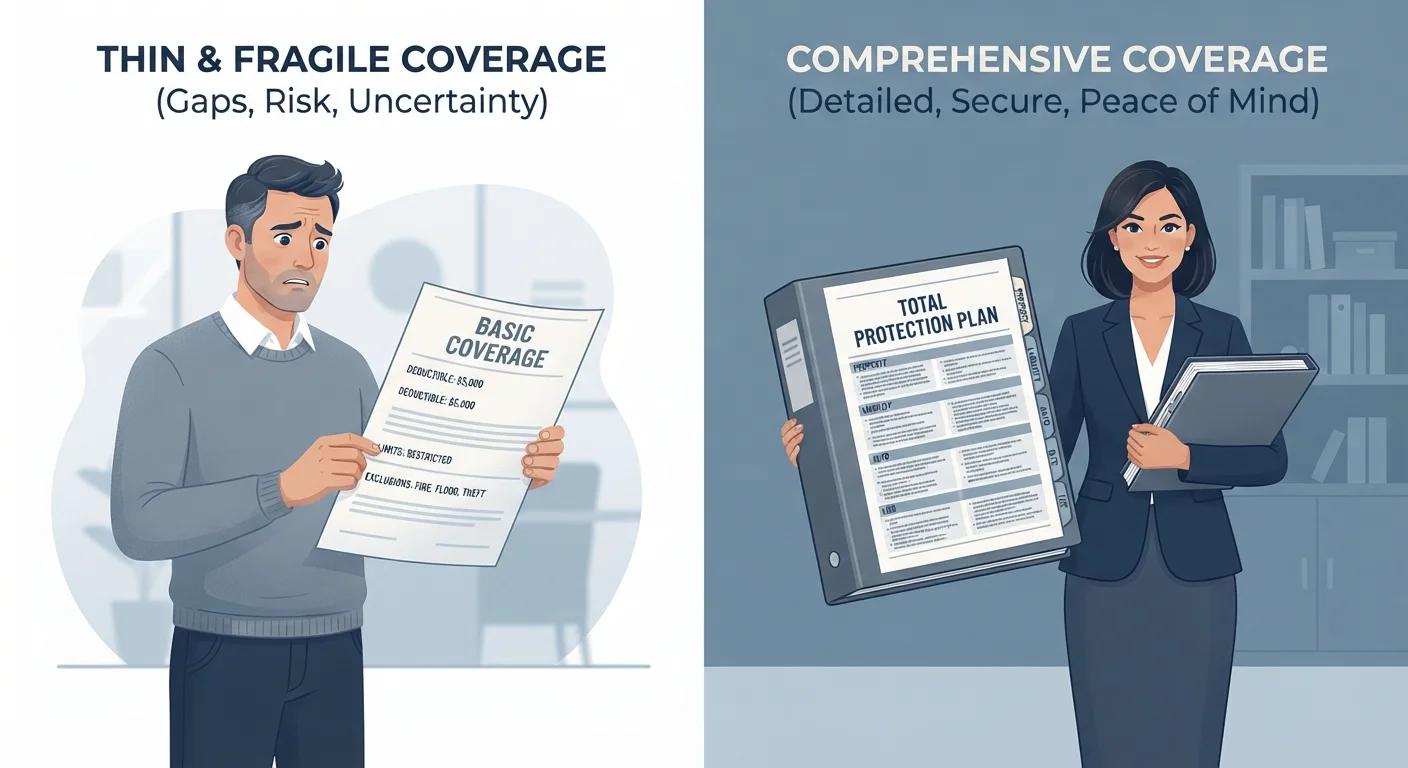
Photo credit: ArticlesHaven.net
In this article
Having a policy doesn't mean you're fully protected. This article explains underinsurance, coverage gaps, and how to spot them in your own plan.
Key Takeaways
- Holding an active policy does not guarantee you'll be fully compensated after a loss.
- Underinsurance happens when coverage limits, deductibles, or exclusions leave meaningful financial gaps.
- Coverage needs are tied to your specific assets, risks, and life circumstances - not a neighbor's policy.
- Regularly reviewing your policy limits against current costs helps prevent silent coverage erosion.
- A licensed agent or broker can help identify gaps before a claim reveals them.
Why the Distinction Matters
Most people equate having insurance with being protected. That's understandable - paying a premium and receiving a policy card feels like the job is done. But insurance is a contract with specific terms, and the protection it actually delivers depends entirely on whether those terms match your real-world exposure.
The concept of underinsurance describes the space between what a policy pays and what a loss actually costs. It's not a fringe scenario - it affects homeowners whose rebuild costs have outpaced their dwelling limits, drivers carrying state-minimum liability who cause a serious accident, and renters who never inventoried what their belongings are actually worth.
Understanding this distinction is the foundation for making coverage decisions that hold up when they're tested. For a broader look at what policies actually cover versus what they exclude, see what insurance actually covers and what it doesn't.
Underinsurance Isn't Always Obvious
Most policyholders only discover they're underinsured at the moment of a claim - when it's too late to adjust. Because policies are renewed automatically and limits don't change unless you request it, coverage can quietly fall behind actual exposure over months or years. The absence of a problem isn't confirmation that coverage is adequate.
The Three Main Ways Underinsurance Develops
Coverage gaps don't usually result from carelessness. They develop in predictable ways that are worth knowing:
- Limits set at purchase and never updated. A homeowner who insured a house a decade ago at its then-replacement cost may now face a rebuild cost that's substantially higher due to inflation in materials and labor. The policy limit stayed flat; the exposure didn't.
- Deductibles set too high to actually absorb. A policy with a $5,000 deductible isn't providing the same practical protection as one with a $1,000 deductible - especially if the policyholder doesn't have liquid savings to bridge that gap.
- Exclusions for foreseeable risks. Standard homeowners policies typically exclude flood and earthquake damage. Standard auto policies don't cover a rideshare driver's liability while a passenger is in the car. These exclusions are disclosed in policy documents but are easy to miss at the point of purchase.
For a deeper look at how these gaps play out across policy types, common coverage gaps that catch people off guard walks through the most frequently overlooked exposures.
Review Your Limits After Major Life Changes
Any significant change - a home renovation, a new vehicle, inherited valuables, or a shift to remote work - can alter your coverage needs without automatically updating your policy. Treating a policy as a set-and-forget document is one of the most reliable paths to underinsurance. Schedule a brief annual review to compare your limits against your current situation.
Coverage Limits vs. Actual Exposure
The single most actionable comparison a policyholder can make is between their current coverage limits and what a realistic loss would actually cost.
~65%
US homes estimated to be underinsured
Industry research has repeatedly suggested a large majority of insured homes carry dwelling coverage below their actual rebuild cost, though estimates vary by methodology and region.
$25,000
Typical state minimum auto liability per person
Many states set per-person bodily injury minimums at $25,000 - a figure that may cover minor injuries but is often insufficient in serious accident scenarios involving hospitalization.
For property coverage, the relevant number is replacement cost - what it would cost to rebuild or replace the item at today's prices - not its market value or what you originally paid. These figures often differ significantly. A home in a high-labor-cost metro area may carry a market value lower than its rebuild cost; a home in a declining market could face the opposite.
For liability coverage, the relevant benchmark is your net worth and future earning potential. Liability claims can pursue wages and assets beyond the policy limit if the damages exceed what the insurer pays. State minimum auto liability limits, for instance, may cover a fender bender but fall well short of a serious injury claim.
The most common ways people underestimate how much coverage they need covers the specific decisions - low liability limits, skipped riders, outdated valuations - that create these gaps in practice.
How to Approach a Coverage Review
Reviewing your coverage doesn't require expertise, but it does require honesty about your current situation. A few starting points:
- Compare limits against current costs. For home insurance, get a rough rebuild estimate. For auto, verify that liability limits exceed your net worth. For renters or personal property coverage, list what you own and assign realistic replacement values.
- Read exclusions, not just coverage summaries. Policy declarations pages summarize what's covered. The full policy document details what's excluded. Those exclusions define the edges of your protection.
- Check deductibles for affordability. If a covered loss occurred tomorrow, could you actually pay the deductible out of pocket without financial hardship? If not, the deductible level is creating practical underinsurance even when the policy is technically in force.
- Account for life changes. Marriage, a home renovation, a new business operated from home, or significant asset accumulation can all change your coverage needs without triggering automatic policy updates.
If you're unsure how to evaluate your own exposure, understanding the difference between an insurance agent and a broker can help you choose the right kind of professional guidance. For foundational context on what policies are and how they're structured, insurance policies explained is a useful starting point.
“The purpose of insurance is to restore you to the financial position you were in before a loss - not to partially offset it. When limits don't match exposure, the policy provides the feeling of protection without the substance.”
— Insurance consumer education principle, Widely cited framing in policyholder literacy guidance
This article is for general informational purposes only and does not constitute insurance, financial, or legal advice. Coverage terms, limits, and exclusions vary by provider and state. Consult a licensed insurance professional for guidance specific to your situation.
Frequently Asked Questions

Author
Articles Haven Editorial Contributor
Articles Haven Editorial Team is the collective byline for our editorial team and contributor network. Articles published under this byline or an editorial pen name are researched, written, and reviewed according to our editorial standards for clarity, consistency, and independence before publication.
View all articles →