
From Declarations to Definitions to Exclusions: Navigating a Policy Document
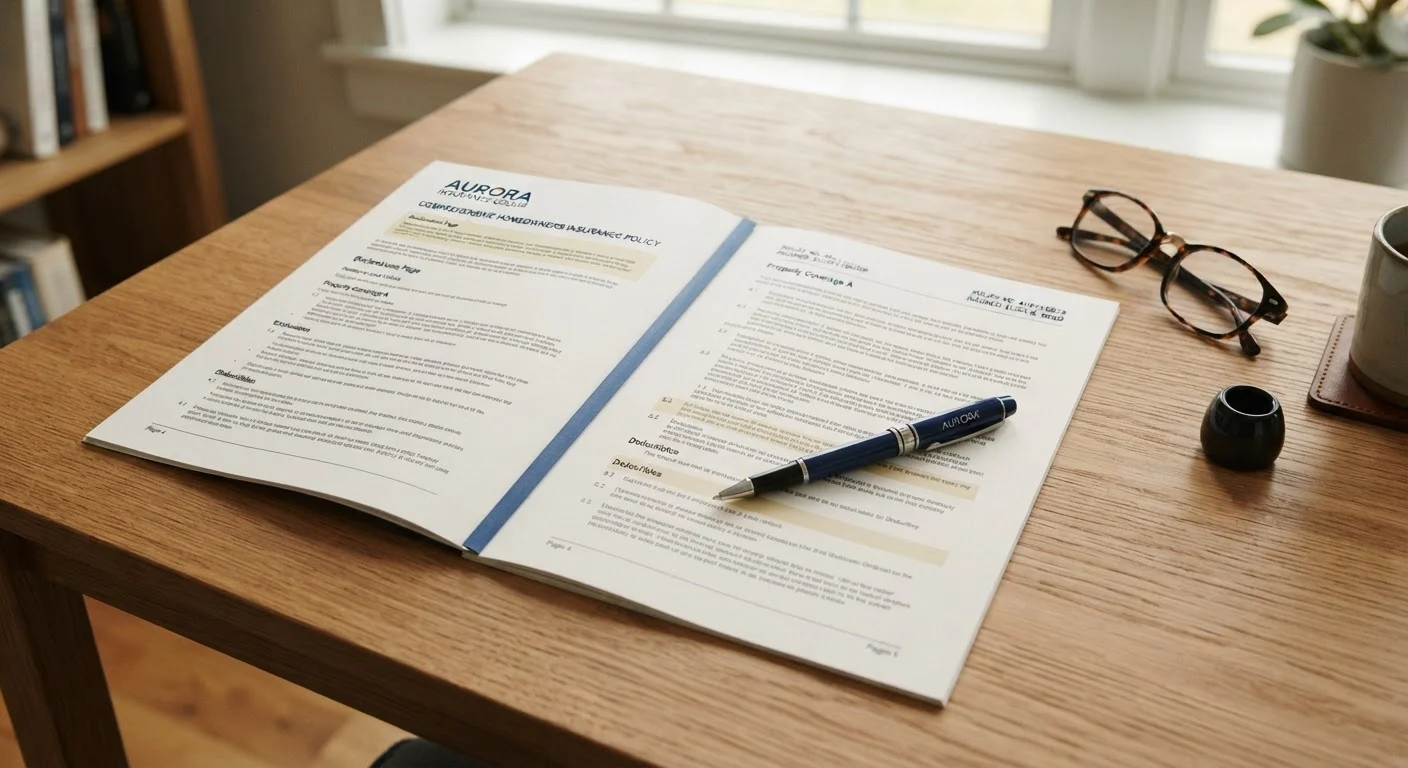
Photo credit: ArticlesHaven.net
In this article
Most people never read their full policy. This guide walks through each section of a standard insurance document and explains what to look for.
Key Takeaways
- Every insurance policy is divided into distinct sections, each with a specific legal purpose.
- The Declarations page summarizes your coverage at a glance but doesn't tell the full story.
- Definitions sections control how every other part of the policy is interpreted - read them first.
- Exclusions limit what your insurer will pay and are often the source of claim surprises.
- Endorsements and riders can expand or restrict base coverage; always check for attached forms.
- Comparing policies means reading the same sections side by side, not just comparing premiums.
Why the Full Document Matters
An insurance policy is a legal contract. The summary card in your wallet or the email confirmation you received only proves a policy exists - it doesn't tell you what's actually covered. As explained in our guide on what your evidence of insurance does and doesn't prove, that document is a credential, not a contract.
The full policy document is where the real terms live. Most policies across auto, home, health, and renters insurance share a predictable structure. Once you understand the anatomy, you can navigate any policy faster - and compare coverage options with more confidence.
What you will need
The Standard Sections of an Insurance Policy
While formatting varies by insurer and policy type, most standard US insurance policies contain these core sections in roughly this order:
- Declarations (Dec) Page - Your policy's snapshot: named insured, policy period, coverage types, limits, deductibles, and premium.
- Definitions - A glossary that controls how specific words are interpreted throughout the rest of the document.
- Insuring Agreement - The insurer's core promise: what they agree to pay for, in general terms.
- Conditions - Your obligations and the insurer's obligations, including how to file a claim, cooperate with investigations, and pay premiums.
- Exclusions - The list of what is specifically not covered.
- Endorsements / Riders - Attached forms that modify the base policy, either adding or removing coverage.
For a broader orientation to these documents, see what an insurance policy is and what you're actually buying.
Definitions Drive Everything
Before you evaluate any coverage claim, check how the policy defines the key terms involved. A definition that narrows what counts as 'property damage' or 'insured premises' can determine whether a loss is covered - regardless of what the Insuring Agreement appears to promise. Reading definitions first saves time and prevents misplaced confidence in your coverage.
Step-by-Step: How to Work Through a Policy Document
Use the following steps to read any policy document methodically rather than randomly scanning for familiar words. This approach helps you spot gaps before you need to file a claim.
Start with the Declarations Page
Read the Declarations (Dec) page first - not because it's the most important section, but because it gives you a map. Note the named insured(s), policy effective and expiration dates, each listed coverage, its limit, and your deductible. Confirm all personal details are accurate. Errors here - a misspelled name, a wrong vehicle VIN, a missing lienholder - can create problems at claim time.
Read the Definitions Section Before Anything Else
This is the step most people skip - and it's the most consequential one. Insurers define terms precisely, and those definitions control how every other section is interpreted. Words like "occurrence," "property damage," "bodily injury," and "insured" may have narrower meanings than you'd assume. Read every definition that applies to a coverage type you care about before you assess whether that coverage protects you.
Review the Insuring Agreement
The Insuring Agreement states what the insurer promises to pay for - usually in broad, positive language. Read it carefully, but understand it's written at a high level. The real scope of coverage only becomes clear after you layer in the Definitions, Conditions, and - critically - the Exclusions. Think of the Insuring Agreement as a ceiling, not a guarantee.
Work Through the Exclusions Carefully
The Exclusions section is where most claim disputes originate. It itemizes what the policy will not cover, regardless of what the Insuring Agreement says. Common exclusion categories include: flood and earthquake (in many property policies), intentional acts, business activities on a personal policy, and wear and tear. Make a list of any exclusion that applies to a risk you actually face. For each one, ask: Is this risk covered by another policy I have, or is it simply uninsured?
Check the Conditions
The Conditions section spells out what both you and the insurer must do to keep the contract valid. Key conditions to flag: how quickly you must report a claim, what documentation you must provide, your duty to cooperate with investigations, and how disputes are handled (arbitration vs. litigation). Missing a condition - like late claim reporting - can give an insurer grounds to deny a claim even when the loss is otherwise covered.
Locate and Read All Endorsements
Endorsements (sometimes called riders) are attached forms that amend the base policy. They appear at the back of the document and are listed on the Dec page by form number. Some endorsements add valuable coverage - scheduled personal property, water backup, equipment breakdown. Others restrict coverage that's otherwise implied. Cross-reference every endorsement number on your Dec page against the actual attached form to make sure nothing is missing.
This article is for general informational purposes only and does not constitute insurance, legal, or financial advice. Policy terms, coverage, and exclusions vary by provider and state. Always read your actual policy documents and consult a licensed insurance agent or adviser for guidance specific to your situation.
Comparing Two Policies Side by Side
When you're evaluating options, resist the temptation to compare only the premium and the headline coverage limit. Two policies with identical premiums can have meaningfully different exclusions, sublimits, and conditions.
A practical comparison framework:
| Section | What to Compare |
|---|---|
| Declarations | Coverage limits, deductibles, policy period |
| Definitions | How key terms like "occurrence," "damage," or "insured" are defined |
| Exclusions | What each policy refuses to cover - look for differences |
| Conditions | Claim filing deadlines, cooperation requirements, dispute resolution |
| Endorsements | What's been added or removed from each base policy |
If coverage categories or policy structures feel unfamiliar, exploring the main insurance types can help you orient before diving into document comparisons.
Sublimits Can Drastically Reduce a Payout
A policy may advertise a $300,000 coverage limit, but individual categories - jewelry, electronics, cash, or temporary living expenses - are often subject to much lower sublimits buried in the policy body. When comparing policies, check the sublimits for any category where you have significant exposure. These figures rarely appear on the Declarations page.
For a parallel walkthrough focused on common pitfalls, our article on what to look for before you sign covers the sections that catch policyholders off guard most often.

Author
Articles Haven Editorial Contributor
Articles Haven Editorial Team is the collective byline for our editorial team and contributor network. Articles published under this byline or an editorial pen name are researched, written, and reviewed according to our editorial standards for clarity, consistency, and independence before publication.
View all articles →