
Comprehensive vs. Collision Coverage: Understanding the Distinction
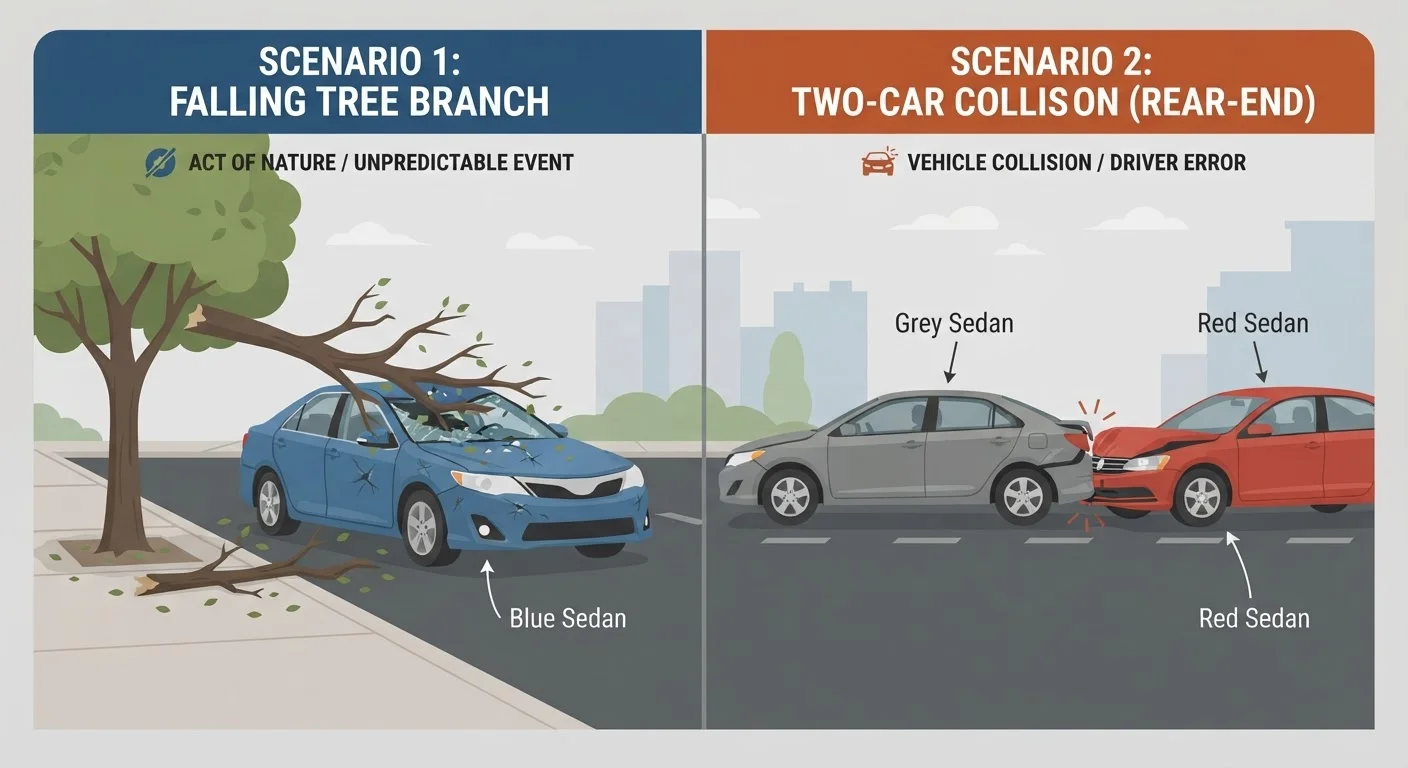
Photo credit: ArticlesHaven.net
In this article
These two coverage types are often confused. Here's a clear explanation of what each covers and when each one pays out.
Key Takeaways
- Comprehensive covers non-collision damage: theft, weather, fire, falling objects, and animal strikes.
- Collision covers damage from your vehicle physically impacting another object or vehicle.
- Neither coverage is legally required in any US state, but lenders typically require both.
- Each coverage carries its own deductible, which you pay before the insurer pays the remainder.
- Dropping either coverage on an older, lower-value vehicle may make financial sense - consult your insurer.
What Each Coverage Actually Does
Comprehensive and collision are both physical damage coverages - they pay to repair or replace your own vehicle when it's damaged. That shared purpose is where the similarity ends. The critical distinction is what causes the damage.
Comprehensive coverage applies when your vehicle is damaged by something other than a collision. Think of it as covering events that happen to your car rather than events your car participates in. Common triggers include theft, vandalism, fire, flooding, hail, falling objects (a tree limb, for example), and collisions with animals such as deer. Because many of these events are unpredictable and entirely outside the driver's control, this coverage is sometimes called "other than collision" in policy documents.
Collision coverage applies when your vehicle makes physical contact with another object. That means accidents with other cars, hitting a guardrail, striking a pothole hard enough to damage the vehicle, or rolling the car. Fault is generally not a factor - collision coverage responds whether you caused the accident or not, though it does not pay the other party's damages (that's what liability coverage handles).
For a broader look at where these two coverages fit within the full auto insurance picture, see the complete guide to auto insurance coverage types.
| Criterion | Comprehensive Coverage | Collision Coverage |
|---|---|---|
| What triggers a claim | Non-collision events (theft, weather, fire, animals) | Vehicle impacts another object or vehicle |
| Fault relevance | Not applicable | Pays regardless of fault |
| Legally required | No | No |
| Required by lenders | Typically yes | Typically yes |
| Has a deductible | Yes (set independently) | Yes (set independently) |
| Covers deer strike | Yes | No |
| Covers hitting a guardrail | No | Yes |
| Covers theft | Yes | No |
| Payout basis | Actual cash value minus deductible | Actual cash value minus deductible |
Deductibles, Payouts, and How Claims Work
Both coverages are sold with a deductible - the amount you pay out of pocket before the insurer covers the rest. Deductibles are set independently for each coverage, so you might carry a $500 deductible on collision and a $250 deductible on comprehensive. Common deductible ranges run from $250 to $1,500. Choosing a higher deductible lowers your premium but increases what you pay after a claim.
When you file a claim, the insurer calculates the vehicle's actual cash value (ACV) - roughly, what the car was worth on the open market immediately before the damage occurred. Depreciation is factored in, which means a payout on a six-year-old vehicle will reflect its used-market value, not the original purchase price. Understanding how ACV works is essential context; the comparison of ACV, stated value, and replacement cost explains the differences in detail.
~$192
Average annual comprehensive premium (US)
According to the National Association of Insurance Commissioners (NAIC), the average US expenditure on comprehensive coverage has historically been well below collision.
~$363
Average annual collision premium (US)
NAIC data consistently shows collision as the costlier of the two physical damage coverages, reflecting higher claim frequency.
1 in 67
Odds of a vehicle theft claim per year
The Insurance Information Institute estimates roughly one in 67 insured vehicles files a theft-related claim annually - a risk comprehensive addresses.
If repairs exceed the vehicle's ACV, the insurer will typically declare the car a total loss and pay out the ACV minus your deductible rather than covering the repair bill.
When Lenders Require Both - and When You Might Drop One
Neither comprehensive nor collision coverage is mandated by state law in the US. Every state requires some form of liability coverage, but physical damage coverage on your own vehicle remains optional - unless a lender or leasing company steps in.
If you're financing or leasing a vehicle, the lienholder almost always requires you to carry both comprehensive and collision for the duration of the loan or lease. Their interest in the vehicle's value is the reason. Once the loan is paid off, the decision reverts entirely to you.
Gap Insurance and Loan Payoff Situations
If you owe more on your vehicle loan than the car is currently worth, a comprehensive or collision payout may not cover the full loan balance. Gap insurance (Guaranteed Asset Protection) is a separate product designed to cover that difference. It is typically available through lenders, dealers, or insurers - and is worth considering on newer vehicles where depreciation outpaces loan payoff in the early years.
A common rule of thumb: if a vehicle's market value is low enough that the annual premium cost plus your deductible approaches or exceeds what you'd receive in a total-loss payout, dropping one or both coverages may make financial sense. That's a personal calculation, not a universal recommendation - your risk tolerance, savings cushion, and local hazard profile all matter. For context on how this decision fits within broader coverage choices, see liability-only vs. full coverage auto insurance.
Common Misconceptions Worth Clearing Up
A deer strike is one of the most frequently misunderstood claim scenarios. Drivers often assume it would fall under collision because the car physically hit something. Insurers classify it under comprehensive, because the animal is considered an unpredictable external hazard rather than a collision event. The same logic applies to a bird or rodent causing damage.
Another common confusion: comprehensive does not cover mechanical breakdown, normal wear and tear, or damage from poor maintenance. It covers sudden, external events - not gradual deterioration. For those gaps, a separate vehicle service contract or warranty product would apply.
It's also worth noting that comprehensive and collision coverages do not pay for injuries to you or other people involved in an accident. Medical payments coverage, personal injury protection (PIP), and uninsured motorist coverage handle that side of a claim. See how liability coverage works for more on the injury-side of an auto policy.
This article provides general insurance education and is not personalized insurance or financial advice. Coverage terms, exclusions, and requirements vary by provider and state. Read your actual policy documents and consult a licensed insurance agent before making coverage decisions.

Author
Articles Haven Editorial Contributor
Articles Haven Editorial Team is the collective byline for our editorial team and contributor network. Articles published under this byline or an editorial pen name are researched, written, and reviewed according to our editorial standards for clarity, consistency, and independence before publication.
View all articles →