
Landscaping That Works With Your Home's Drainage, Not Against It
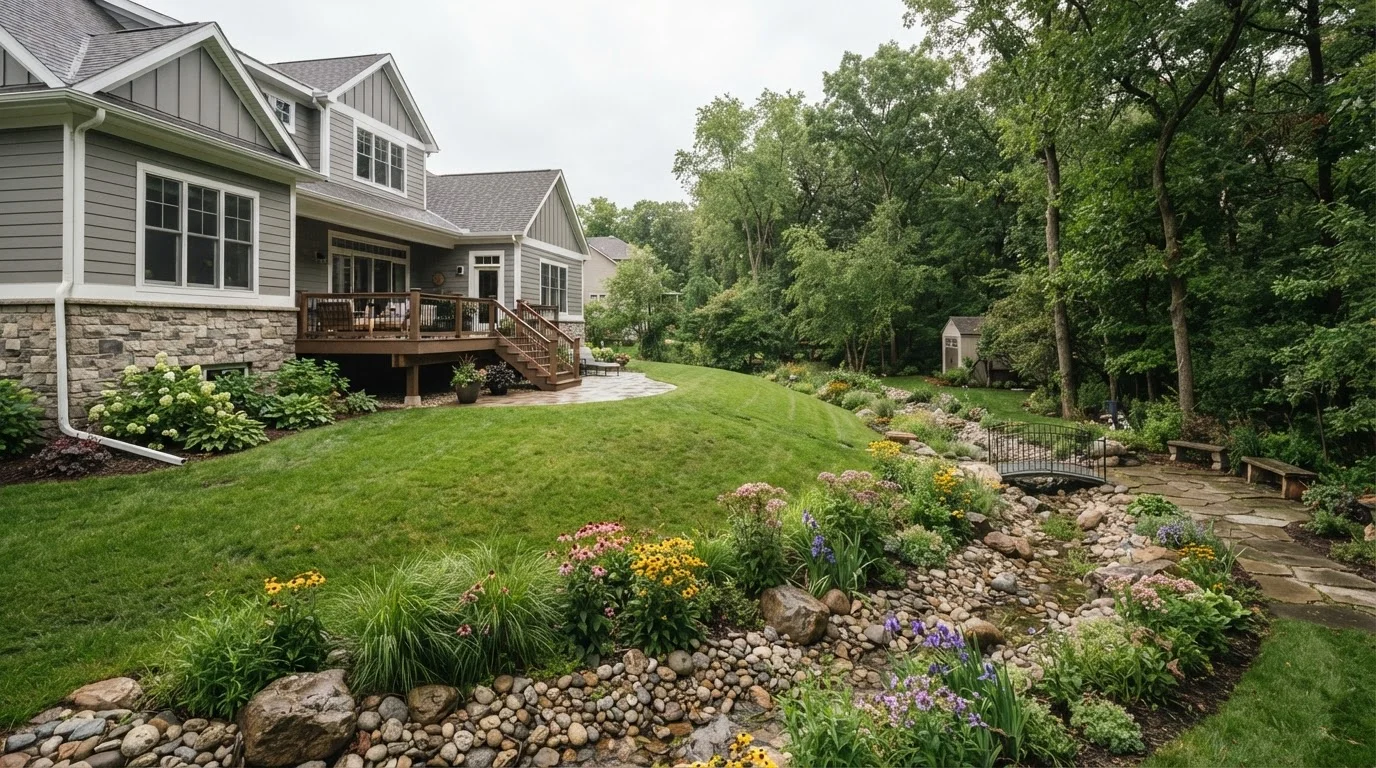
Photo credit: ArticlesHaven.net
In this article
Poor grading and landscaping decisions can direct water toward your foundation. Learn how drainage and slope factor into outdoor improvement planning.
Key Takeaways
- The ground around your home should slope away from the foundation at roughly 6 inches over the first 10 feet.
- Common landscaping choices - mulch beds, patios, and dense plantings - can accidentally redirect water toward the house.
- Rain gardens and swales are cost-effective tools for capturing and redirecting runoff on your property.
- Grading corrections and underground drainage work typically require a licensed professional, not a weekend DIY project.
- Soil type significantly influences how quickly water moves through your yard and where it collects.
Why Drainage Should Drive Landscaping Decisions
Most homeowners plan their landscaping around appearance: which plants look attractive, where to add a patio, how to frame the front entry. Drainage rarely enters the conversation until water shows up in the basement or erodes a slope after a heavy rain. By then, the fix is usually more expensive than prevention would have been.
Water follows grade - meaning it moves downhill along whatever path the ground gives it. When landscaping decisions accidentally create low spots near the foundation, block natural flow channels, or add impermeable surfaces that concentrate runoff, the consequences can include foundation saturation, soil erosion, and persistent soggy patches. Understanding how your yard's drainage actually works is the starting point for any outdoor improvement. For a deeper look at how underground moisture problems compound these issues, see basement waterproofing approaches that address what happens when surface drainage fails.
Maintain a minimum 6-inch drop in grade over the first 10 feet from your foundation
This slope - often called positive grading - ensures rainwater and snowmelt move away from the house rather than pooling against the foundation wall. Without it, soil stays saturated next to the structure, which accelerates moisture intrusion and can cause long-term settling.
Avoid raising mulch or soil beds flush against the foundation
Thick mulch beds that touch the house wall trap moisture against wood, siding, and the foundation itself. They also create conditions for pest activity. Keeping a clear gap prevents both water retention and material degradation.
Redirect downspouts well away from the foundation using extensions or underground pipes
Downspouts that discharge within a few feet of the house concentrate large volumes of roof runoff right where you least want it. Even proper grading can be overwhelmed if a downspout dumps water at the base of the wall.
Incorporate a rain garden or vegetated swale to capture and infiltrate runoff
These designed low points collect stormwater and allow it to soak into the ground gradually rather than running across impermeable surfaces or concentrating in unplanned areas. They also support native plantings that improve long-term soil permeability.
Limit impermeable hardscape coverage and choose permeable alternatives where possible
Concrete patios, solid pavers, and asphalt prevent water from soaking in and push it onto adjacent areas. Permeable pavers, gravel, or decomposed granite allow infiltration and reduce total runoff volume from a given storm event.
Have significant grading or drainage corrections assessed by a licensed professional
Re-grading soil close to the foundation, installing French drains, or correcting drainage that affects neighboring properties involves both technical complexity and, in many areas, permit requirements. Incorrect work can make drainage worse or create liability issues.
Drainage-Smart Landscaping Practices
The practices below address the most common ways landscaping either helps or harms a home's drainage. Some are genuine DIY tasks; others warrant professional assessment. The DIY vs. professional landscaping guide offers a realistic framework for drawing that line.
Soil, Plants, and How They Affect Water Movement
Drainage isn't just about slope - it's also about what's in the ground. Clay soils absorb water slowly and hold it for long periods, making them prone to pooling. Sandy soils drain quickly but may not retain enough moisture for plant health. Loamy soils generally strike the best balance. How soil structure affects drainage and plant health covers this in practical detail.
Clay Soil Requires Extra Attention
If your property has heavy clay soil, standard grading corrections may not be enough on their own. Clay's low permeability means water moves across the surface rather than absorbing, making slope and channel design especially critical. In clay-heavy yards, professional drainage assessment is often worthwhile before investing in significant landscaping work.
Plant selection also matters. Deep-rooted native plants improve soil permeability over time by creating channels that allow water to penetrate rather than run off. Shallow-rooted turf grass, by contrast, can compact soil with foot traffic and equipment, reducing infiltration. If you're weighing raised beds as part of a drainage-conscious garden layout, raised beds vs. in-ground planting explains how each option handles soil and moisture differently.
“The single most effective thing a homeowner can do to protect their foundation is to make sure the ground slopes away from the house - everything else is secondary to getting that basic grading right.”
— A licensed landscape architect speaking on residential site drainage, Licensed Landscape Architect, residential site design
Water-efficient landscaping and drainage-smart landscaping often go hand in hand: plants chosen for drought tolerance tend to have the deep root systems that also improve soil infiltration. Drought-tolerant landscaping principles explores those plant strategies in detail.
This article provides general home and garden information only. For drainage work involving grading, structural proximity to your foundation, or permitted excavation, consult a licensed contractor and verify local code requirements before proceeding.

Author
Articles Haven Editorial Contributor
Articles Haven Editorial Team is the collective byline for our editorial team and contributor network. Articles published under this byline or an editorial pen name are researched, written, and reviewed according to our editorial standards for clarity, consistency, and independence before publication.
View all articles →