
Interior vs. Exterior Home Painting: Why They're More Different Than They Seem
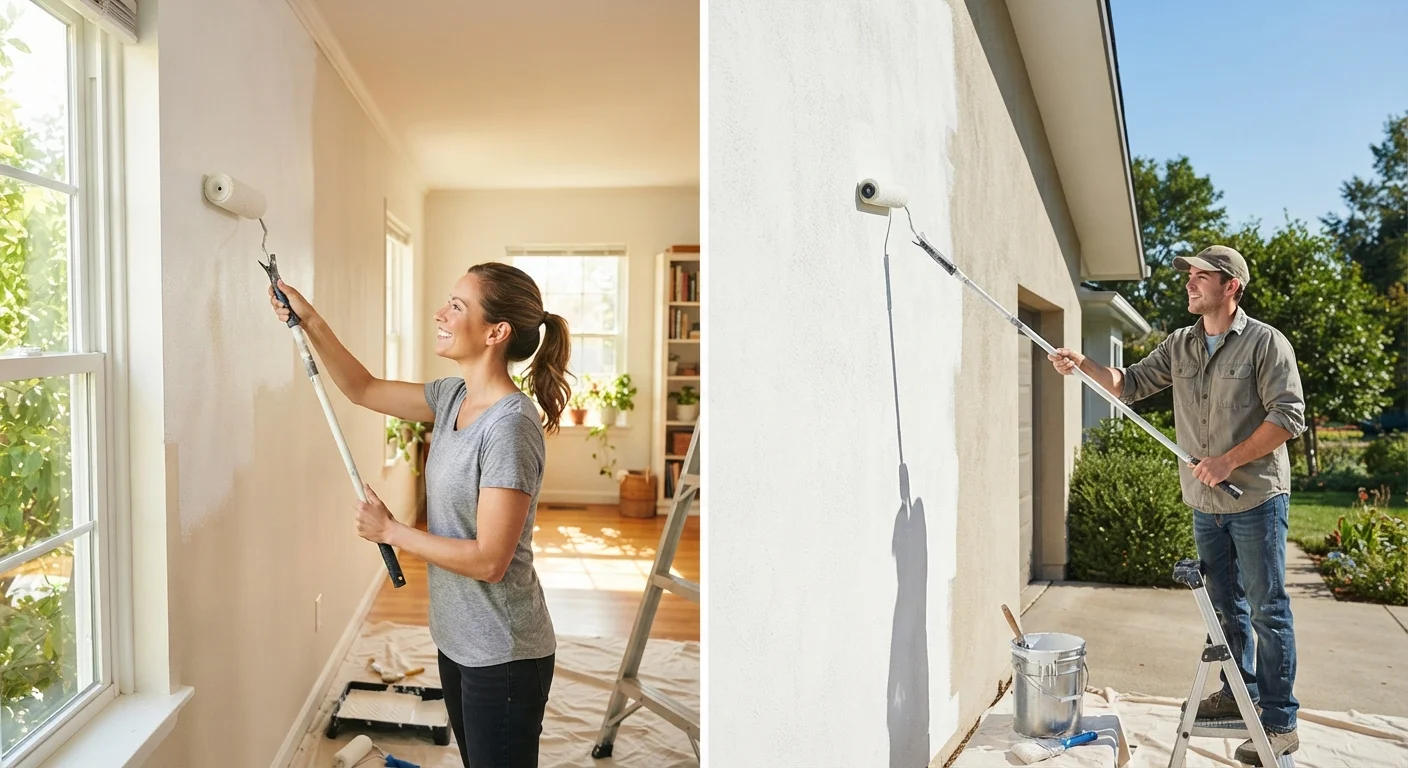
Photo credit: ArticlesHaven.net
In this article
Paint formulas, surface prep, and weather timing all differ between indoor and outdoor jobs. Understand what each project actually involves.
Key Takeaways
- Interior and exterior paints use different resin formulas - they are not interchangeable.
- Exterior painting requires weather monitoring; humidity, temperature, and rain all affect adhesion and curing.
- Surface prep is more demanding outdoors, often involving power washing, scraping, and priming bare wood.
- Interior paints prioritize low VOCs and washability; exterior paints prioritize flexibility and weather resistance.
- DIY exterior jobs carry more risk of costly failure than interior ones - prep shortcuts show up fast.
- Knowing the difference helps you budget, plan timelines, and decide when professional help makes sense.
Why the Paint Itself Is Fundamentally Different
Many homeowners assume paint is paint - that a can of leftover interior wall paint could touch up a porch, or that exterior paint could work inside a bathroom. Neither substitution is a good idea, and understanding why reveals a lot about what each product is actually engineered to do.
Interior paints are formulated with resins that cure hard, resist scrubbing, and release minimal volatile organic compounds (VOCs) - the chemicals responsible for paint fumes. The priority is a smooth, cleanable finish that holds up to daily contact, not outdoor stress. Using interior paint outside means a coating that becomes brittle, cracks under temperature swings, and fails to repel moisture.
Exterior paints use more flexible resins - typically acrylic latex or oil-based formulas - that expand and contract with temperature changes without cracking. They also contain additives that resist UV degradation, mildew, and moisture penetration. These same additives (and generally higher VOC levels) make exterior paints unsuitable and potentially unsafe in enclosed indoor spaces. See our guide to why paint jobs fail for how the wrong formula contributes to early peeling.
| Criterion | Interior Painting | Exterior Painting |
|---|---|---|
| Paint formula | Hard-curing resin, low VOC | Flexible resin, UV and mildew resistant |
| VOC levels | Low to zero VOC standard | Generally higher VOC |
| Surface prep complexity | Moderate - clean, fill, sand, prime | High - wash, scrape, prime, caulk |
| Weather dependency | None | High - temperature, humidity, rain |
| Typical lifespan | 5-10 years | 7-10 years (prep-dependent) |
| DIY accessibility | High | Moderate - height and prep are limiting factors |
| Primary performance goal | Washability, smooth finish | Moisture and UV protection |
Surface Prep: Where the Real Work Happens
Both interior and exterior jobs require prep, but the scale and stakes are very different outdoors.
For interior walls, prep typically means cleaning surfaces, filling holes, sanding rough spots, and applying primer where needed - particularly over new drywall, stains, or dramatic color changes. It's labor-intensive but manageable in a weekend.
Exterior prep is a different category. Siding must be power-washed, then given time to fully dry. Any peeling or flaking paint has to be scraped and sanded back to a sound surface. Bare wood requires primer before topcoat - skipping this step is one of the most common reasons exterior paint fails within a year or two. Caulking around windows and trim also needs inspection and replacement where cracked. If your siding material affects how paint adheres, understanding your siding type is a useful first step.
50°F-90°F
Ideal surface temp range for exterior paint
Most exterior paint manufacturers specify this application window to ensure proper adhesion and curing.
7-10 years
Exterior paint lifespan with proper prep
Industry guidance generally suggests well-prepped exterior paint jobs on sound surfaces can last up to a decade before recoating.
48 hrs
Minimum dry weather window after exterior painting
Many exterior paint products require at least 48 hours without rain for the film to cure and bond correctly.
For DIYers weighing how much of this prep work is realistic to take on, this comparison of DIY versus contractor work lays out a practical framework.
Timing, Weather, and Application Conditions
Interior painting is largely weather-independent. You need reasonable ventilation - open windows, a fan - but you can paint in January or July without worrying about the forecast.
Exterior painting is the opposite. Most exterior paints require surface temperatures between roughly 50°F and 90°F, low humidity, and a dry forecast for at least 24-48 hours after application. Painting in direct hot sun causes the paint to dry too fast, leading to lap marks and poor adhesion. Painting when moisture is present - whether from dew, recent rain, or high humidity - can trap water under the film and cause bubbling or peeling.
Checking Conditions Before You Start
Before beginning any exterior painting session, check both the current temperature and the forecast for the next two days. Even if conditions are ideal at 8 a.m., afternoon thunderstorms or a sudden temperature drop can compromise a freshly painted surface. Most paint manufacturers publish specific application conditions in their product data sheets - these are worth reading, not skimming.
Application method also matters outdoors. Sprayers cover large areas quickly but require careful masking and can lose efficiency on windy days. Brushes and rollers offer more control on detailed trim and textured surfaces. Comparing spray versus brush-on application can help you match the method to the surface.
Cost, Longevity, and When to Call a Professional
Interior paint jobs, on average, cost less in both materials and labor than exterior ones, and a well-done interior job can look fresh for 5-10 years with normal care. Exterior paint longevity is more variable - quality products on properly prepped surfaces may last 7-10 years, but poor prep or an unsuitable formula can mean visible failure in 2-3 years.
The cost of an exterior job also scales with house size, story count, and surface condition in ways interior jobs generally don't. Two-story homes require ladders or scaffolding, which raises both the cost and the safety considerations significantly. If ladders, heights, or extensive scraping are involved, getting a professional estimate is worth the time - the prep alone on a neglected exterior can be more work than the painting itself.
Interior painting remains one of the more DIY-friendly home improvement projects at any skill level. Exterior painting can be done DIY on single-story homes with sound surfaces, but the margin for error is smaller and the consequences of rushing prep are more expensive to correct later.
This article provides general home improvement information for educational purposes. Always verify local requirements for permits, safety, and licensed trades before beginning any project.

Author
Articles Haven Editorial Contributor
Articles Haven Editorial Team is the collective byline for our editorial team and contributor network. Articles published under this byline or an editorial pen name are researched, written, and reviewed according to our editorial standards for clarity, consistency, and independence before publication.
View all articles →