
Spray Paint vs. Brush-On Paint for Home Projects: When Each Application Method Wins
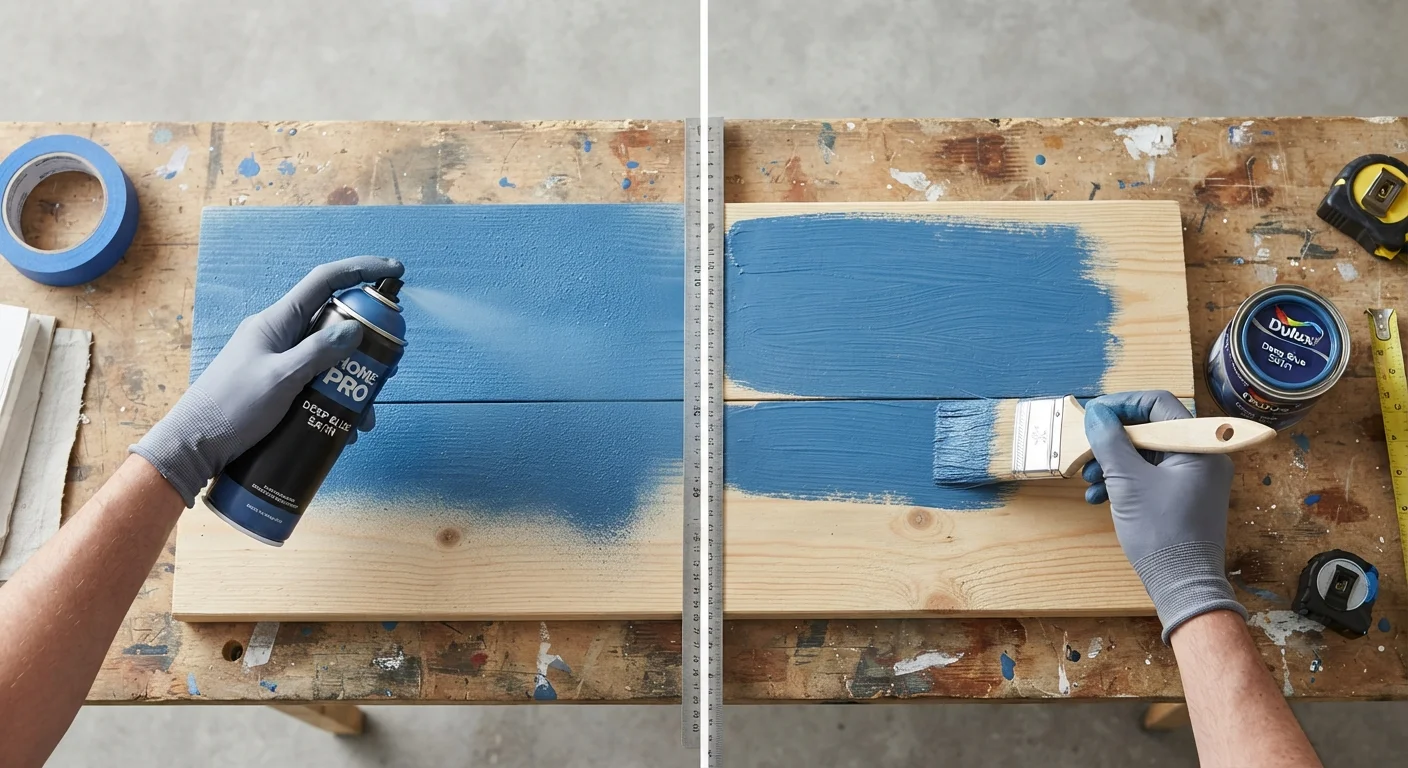
Photo credit: ArticlesHaven.net
In this article
Spray and brush-on paint each have surfaces and conditions where they excel. Compare both on finish quality, prep time, and waste.
Key Takeaways
- Spray paint covers irregular surfaces and intricate shapes faster than brush-on methods.
- Brush-on paint offers better control, less overspray waste, and stronger adhesion on porous surfaces.
- Setup and cleanup time often determine which method is actually faster for a given project.
- Environmental conditions - wind, temperature, humidity - affect spray paint far more than brush application.
- Neither method is universally superior; the surface type and project scale should drive the decision.
What You're Actually Choosing Between
When most people think about spray paint versus brush-on paint, they imagine speed versus precision. That framing is partially correct but incomplete. The real differences come down to surface compatibility, project scale, prep burden, and how much material you're willing to lose to overspray or brush marks.
Spray paint - whether from an aerosol can or an airless sprayer - atomizes the paint into fine droplets, depositing a thin, even coat. Brush-on paint is applied with a brush or roller, pushing paint directly into the surface with manual pressure. Both methods can produce excellent results. Both can also fail badly on the wrong surface or under the wrong conditions. Understanding where each approach has a real advantage helps you avoid re-dos. For a broader look at how paint choices affect indoor versus outdoor projects, see interior vs. exterior painting differences.
Where Spray Paint Has a Clear Edge
Spray application is well-suited to surfaces that are textured, irregular, or hard to reach with a brush - think wrought iron railings, wicker furniture, louvered shutters, or intricate trim details. A brush struggles to get into every groove; spray paint coats all sides simultaneously without bristle marks.
Speed is another real advantage on smaller items. Once masking is in place, a few passes with a spray can finish a chair or cabinet frame in minutes. The finish tends to be smoother because there are no brush strokes to sand out afterward.
Match Your Primer to the Method
If you're using spray paint, choose a spray primer designed for the same surface material. A brush-applied primer under spray topcoat can create adhesion inconsistencies. Similarly, brush-on topcoats adhere most reliably over brush-applied primer. Keeping the application method consistent through all layers reduces the chance of peeling or cracking over time.
Spray paint also bonds well to metal and plastic when the appropriate primer is used - surfaces where brush application can leave uneven coverage or lifting edges.
The trade-off: overspray drifts. Anything not masked off will likely catch some paint. Wind outdoors makes control difficult, and working indoors requires serious ventilation and protective covering of surrounding surfaces. Aerosol cans also produce more waste per square foot covered than brush-on methods because a significant percentage of atomized paint never reaches the target surface.
Where Brush-On Paint Performs Better
For large, flat areas - interior walls, exterior siding, wood floors, concrete - brush and roller application is generally more efficient and controllable. A roller can cover a wall evenly without the overspray risk that would require masking off an entire room. Material waste is lower because paint goes where the applicator contacts the surface.
Brush-on paint also performs better on porous surfaces like bare wood or masonry, where the mechanical action of the brush works paint into grain and texture rather than just coating the surface. This improves adhesion over time. If you're dealing with paint that keeps peeling, application method and surface prep are often linked - see why paint jobs peel and how to fix them.
Precision is easier with a brush on trim, edges, and cut-in lines where spray control is difficult to maintain. There's no ambient drift, no need for heavy masking, and cleanup is contained to the brush or roller itself.
Don't Skip Ventilation With Spray Paint Indoors
Spray paint - aerosol or sprayer - releases volatile organic compounds (VOCs) that can accumulate quickly in enclosed spaces. Adequate cross-ventilation, respirator use, and keeping others out of the work area are not optional precautions. Brush-on latex paints generally have lower VOC levels, but any solvent-based brush paint still warrants proper airflow. Always read the product's safety data sheet before beginning.
Comparing Both Methods Directly
The table below summarizes the key practical differences across the criteria that most often determine which method fits a given project.
| Spray Paint | Brush-On Paint | |
|---|---|---|
| Best surface types | Metal, plastic, irregular shapes | Wood, masonry, large flat surfaces |
| Finish smoothness | Very smooth, no brush marks | Can show brush strokes without technique |
| Application speed (small items) | Fast once masking is done | Slower on intricate surfaces |
| Prep and masking time | High - overspray requires coverage | Low to moderate |
| Material waste | Higher - overspray loss | Lower - direct application |
| Indoor usability | Requires heavy ventilation | Generally straightforward |
| Precision on edges | Difficult to control at borders | High control with brush cut-in |
| Cleanup complexity | Aerosol: none; Sprayer: extensive | Moderate - wash brushes/rollers |
Keep in mind that prep time heavily influences actual total time. Spray paint often requires more masking before you start, which can offset its application speed advantage on larger jobs. If your project involves deciding between DIY application and hiring help, the DIY vs. contractor decision guide is worth a read before you commit.
Practical Decision Points to Consider
A few questions help narrow down the right choice for a specific project:
- Surface complexity: Lots of angles, grooves, or curves favor spray. Flat planes favor brush or roller.
- Location: Indoor projects favor brush-on due to ventilation requirements and overspray containment. Outdoors, wind conditions on the day of painting matter for spray.
- Project scale: Very small items (a picture frame, hardware) can be awkward with a brush and respond well to spray. Large surfaces are faster and more economical by brush.
- Material type: Metal and plastic often take spray primers and paints more cleanly. Wood and masonry generally adhere better with brush application.
- Cleanup expectations: Brush-on cleanup is straightforward. Spray cans leave no cleanup but generate more packaging waste; airless sprayers require thorough flushing.
30-40%
Spray paint lost to overspray
Industry estimates suggest aerosol and spray gun application can lose 30-40% of paint to overspray depending on technique and distance.
2-3x
Faster coverage on flat walls with roller
Painting industry guides generally note that a roller covers flat wall surfaces significantly faster than equivalent spray setups once masking time is included.
Neither method is inherently superior - the surface, environment, and scale of the project determine which approach delivers a better result with less wasted effort and material.

Author
Articles Haven Editorial Contributor
Articles Haven Editorial Team is the collective byline for our editorial team and contributor network. Articles published under this byline or an editorial pen name are researched, written, and reviewed according to our editorial standards for clarity, consistency, and independence before publication.
View all articles →