
Patio and Hardscape Materials: A Practical Comparison
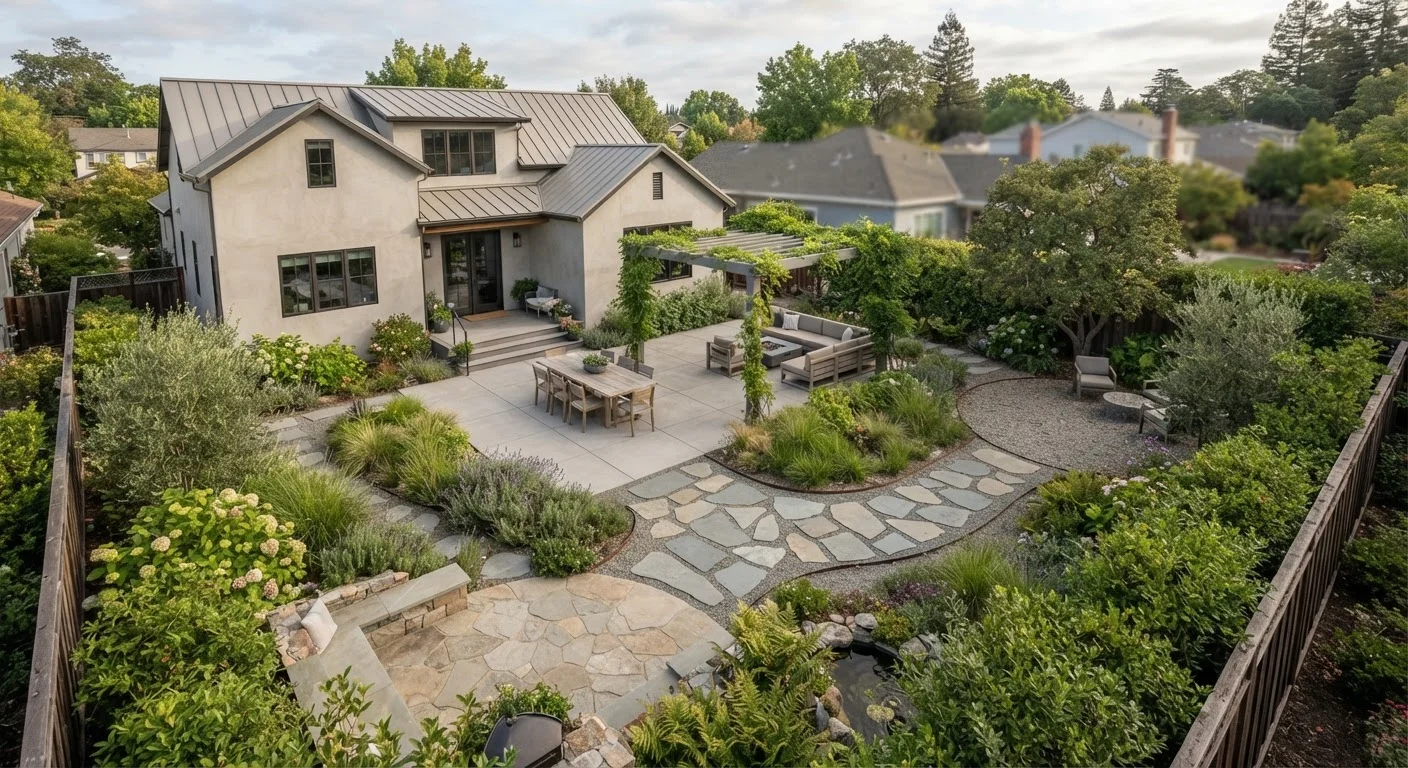
Photo credit: ArticlesHaven.net
In this article
Concrete, pavers, gravel, and natural stone each have distinct trade-offs in cost, durability, and upkeep. Compare them before committing.
Key Takeaways
- Concrete is generally the lowest upfront-cost option but can crack over time and is difficult to repair seamlessly.
- Pavers offer flexibility and repairability but typically cost more to install than poured concrete.
- Gravel is the most affordable and permeable option, though it requires periodic raking and replenishment.
- Natural stone delivers durability and curb appeal but carries the highest material and labor costs.
- Climate, drainage needs, and long-term maintenance tolerance should drive your material choice.
Why Hardscape Material Matters More Than You Might Expect
Picking a patio surface isn't just about looks. The material you choose determines how often you'll be resealing, resetting, or pulling weeds from joints - and how much you'll spend doing it over the next decade. Before committing, it's worth understanding what each option actually costs, how each holds up in freeze-thaw climates or heavy rain, and what realistic upkeep looks like. This comparison focuses on the four most common residential hardscape materials: poured concrete, pavers (concrete or clay), gravel, and natural stone.
If you're also planning garden areas around your hardscape, the decisions don't stop at the patio edge. See how other outdoor material choices stack up in our look at garden fencing options and wood vs. composite decking.
| Poured Concrete | Pavers | Gravel | Natural Stone | |
|---|---|---|---|---|
| Typical installed cost | Low-moderate | Moderate-high | Low | High |
| Durability | Good (cracks over time) | Very good | Moderate (migrates) | Excellent |
| Repairability | Difficult, visible patches | Easy, replace individual units | Simple, add more gravel | Moderate, hard to match stone |
| Drainage/permeability | Low (solid surface) | Moderate (jointed) | High | Low-moderate |
| Routine maintenance | Seal every 2-5 years | Weed joints, reset settled units | Rake and replenish periodically | Seal some stone types; remove moss |
| Freeze-thaw performance | Cracks common | Good if base is correct | Good | Very good |
| DIY friendliness | Moderate | Moderate (base prep critical) | High | Low-moderate |
Poured Concrete: Affordable but Inflexible
Poured concrete is typically the least expensive per square foot to install (labor and materials combined), and it's widely available in virtually every US market. It handles heavy foot traffic well and requires little routine attention beyond occasional cleaning. The drawbacks appear over time: concrete cracks - especially in climates with hard freezes - and a crack in a poured slab is awkward to fix without it being visible. Resurfacing is an option, but it adds cost.
Permits May Be Required for Large Patios
In many US municipalities, patio installations over a certain square footage - or those attached to a structure - require a building permit. Requirements vary widely by jurisdiction. Check with your local building department before breaking ground, as unpermitted work can complicate home sales and may need to be removed or brought up to code at your expense.
Stamped and colored concrete extends the aesthetic range considerably, though it tends to fade and can require periodic sealing every few years to maintain its appearance.
Pavers: Higher Upfront, Easier Long-Term Repairs
Concrete or clay pavers cost more to install than a poured slab - partly because of the labor-intensive base preparation and setting process. However, the modularity of pavers is a real advantage: if one unit cracks or settles, you replace that single piece rather than patching a continuous surface. Pavers also handle drainage better than solid concrete when properly spaced, which can be important in yards with clay-heavy soils.
Get the Base Right Before Surface Material
Regardless of which material you choose, the base preparation - compacted gravel subbase, proper slope for drainage, and adequate depth - determines how long your hardscape performs. A well-installed poured concrete pad on a poor base will fail faster than a paver patio on a correctly compacted foundation. If you're unsure about your soil type or drainage situation, consult a landscaping contractor before purchasing materials.
One maintenance reality worth noting: the joints between pavers invite weeds and ant colonies. Polymeric sand helps significantly, but it isn't a permanent solution and will need reapplication. In freeze-thaw regions, pavers can shift if the base isn't properly compacted - a job that generally warrants professional installation.
Gravel: Low Cost and High Permeability
Crushed gravel or pea gravel is the most permeable option, which makes it particularly useful in areas where stormwater runoff is a concern. It's also by far the most affordable to install. The trade-offs are practical: gravel migrates underfoot, especially on slopes; it needs periodic raking and replenishment; and it's not comfortable for bare feet or furniture with narrow legs.
~50%
Of US patio projects use concrete
Concrete remains the dominant patio surface choice in residential construction, according to industry trade data from the Concrete Network.
10-25 years
Typical paver lifespan with proper installation
Manufacturer and contractor estimates suggest properly installed concrete or clay pavers commonly last two decades or more before major intervention is needed.
Gravel works well in informal settings - meandering garden paths, fire pit surrounds, or side yards where appearance is secondary. For those comparing low-maintenance outdoor surfaces, it's also worth contrasting gravel against artificial turf, which solves the migration problem at a significantly higher cost.
Natural Stone: Premium Performance at a Price
Flagstone, bluestone, slate, and limestone are durable, visually distinctive, and - in most cases - longer-lived than manufactured alternatives. Natural stone won't fade, and individual pieces can outlast the house. The challenge is cost: material prices run significantly higher than concrete or pavers, and cutting and setting irregular stone is skilled labor that adds to the total. Irregular flagstone in particular requires careful base work and experienced installation to avoid rocking or uneven surfaces.
Maintenance varies by stone type. Some, like bluestone, benefit from periodic sealing. Others, like granite, are largely maintenance-free. Moss and algae growth in shaded or damp areas is a common nuisance regardless of stone type.
If you're drawn to high-durability exterior materials more broadly, the same trade-off logic applies to vertical surfaces - see our breakdown of exterior siding materials for a parallel comparison.

Author
Articles Haven Editorial Contributor
Articles Haven Editorial Team is the collective byline for our editorial team and contributor network. Articles published under this byline or an editorial pen name are researched, written, and reviewed according to our editorial standards for clarity, consistency, and independence before publication.
View all articles →