
Deck Building: What Changes When You Choose Wood vs. Composite
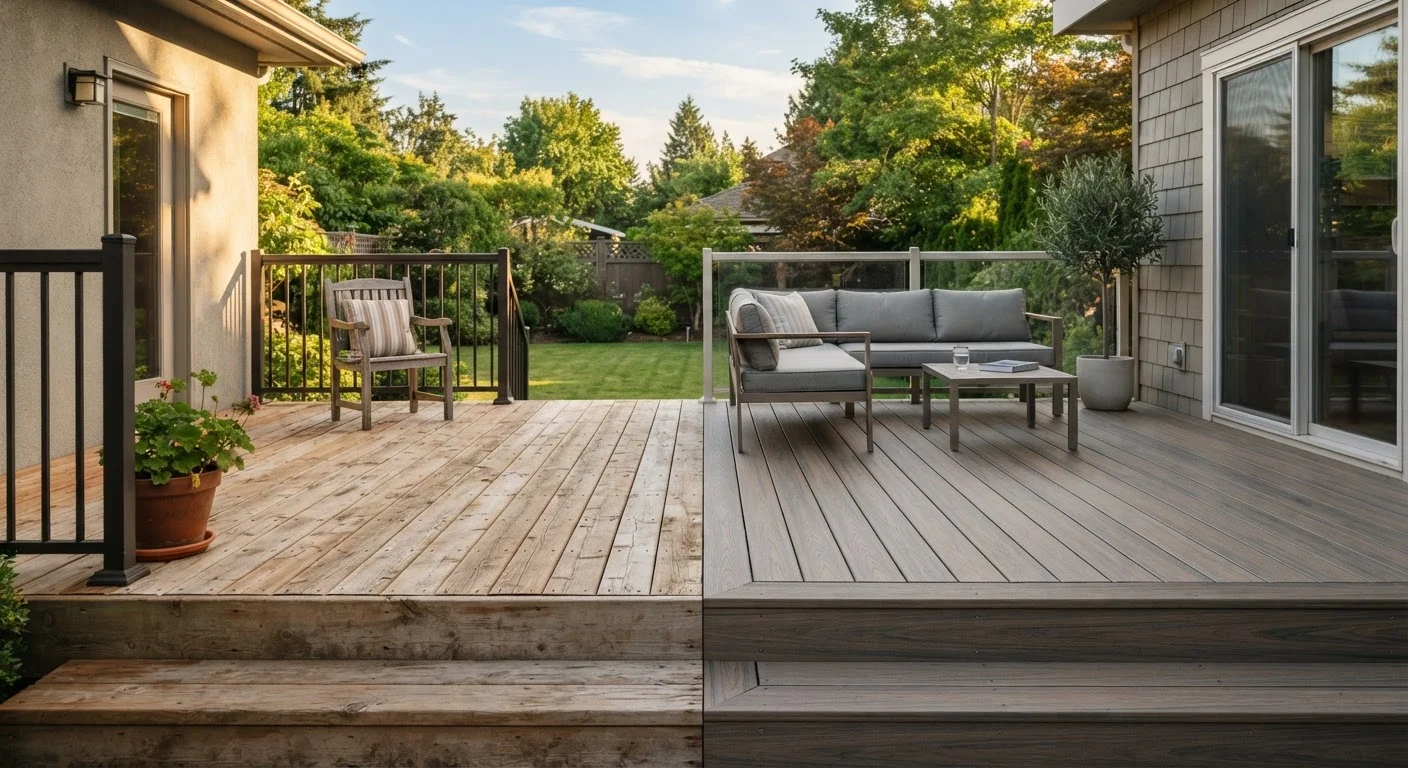
Photo credit: ArticlesHaven.net
In this article
Wood and composite decking involve different upkeep, longevity, and installation considerations. Here's what each choice means long-term.
Key Takeaways
- Composite decking costs more upfront but typically requires far less maintenance than wood.
- Pressure-treated wood is the most affordable entry point but needs regular sealing or staining.
- Natural wood can be refinished and repaired more easily; composite boards are harder to patch.
- Both materials require proper subframe construction - cutting corners there affects both equally.
- Your local climate is a major factor in how each material holds up over a decade or more.
Lower upfront material cost
Pressure-treated wood boards typically cost significantly less per linear foot than composite alternatives, making wood the more accessible starting point for budget-constrained projects.
Easier individual board repairs
Damaged wood boards can be pulled and replaced without affecting adjacent sections, and surface refinishing through sanding is straightforward with most wood species.
Familiar, natural aesthetic
Wood's grain and warmth are difficult to replicate convincingly, and many homeowners find real wood more visually satisfying, particularly for higher-end cedar or hardwood installs.
Composite requires minimal routine maintenance
Unlike wood, quality composite boards don't need annual sealing or staining - a periodic cleaning is typically all that's required to maintain appearance and performance.
Composite holds color and resists fading
Capped composite products are engineered to resist UV-induced color shift far better than painted or stained wood, which can fade noticeably within a season or two.
Composite resists rot, mold, and insects
Because composite boards contain little to no organic material on the surface, they don't provide the moisture and nutrients that promote rot or attract wood-boring insects.
Wood requires regular sealing or staining
Most wood decks need protective coating every one to three years to prevent weathering, cracking, and moisture penetration - an ongoing time and cost commitment.
Wood is vulnerable to rot and insects
Even pressure-treated lumber can develop rot in areas with chronic moisture exposure or where the treatment has degraded, and untreated cuts are particularly vulnerable.
Composite has a higher upfront cost
Quality composite boards can cost two to three times more per linear foot than pressure-treated wood, which creates a significant initial budget gap on larger deck projects.
Composite retains more heat in direct sun
Dark composite boards in sunny climates can reach surface temperatures uncomfortable for bare feet, a practical issue that lighter-colored wood typically avoids.
Composite surface damage is hard to repair
Scratches or gouges in capped composite can't be sanded out, and color-matched replacement boards from discontinued product lines may be unavailable years later.
The Core Trade-Off: Cost Now vs. Cost Over Time
Decking decisions rarely come down to aesthetics alone. The real question is where you'd rather spend - at the lumber yard or on maintenance over the next 15 years.
Pressure-treated lumber typically runs significantly less per linear foot than composite boards, which can cost two to three times more depending on the product tier. But wood's lower sticker price comes with a recurring bill: cleaning, sealing, staining, or painting every one to three years, plus occasional board replacement as individual pieces warp, split, or rot.
Composite products (a mix of wood fiber and plastic) require minimal yearly maintenance - usually just a periodic wash with soap and water. Over a 20-year horizon, the total cost of ownership for both materials tends to converge, though composite holds an advantage for those who hire out their maintenance work.
If you're comparing outdoor surface investments more broadly, the patio and hardscape materials comparison covers how decking stacks up against concrete, pavers, and stone.
Wood Decking: What You're Actually Working With
Wood decking falls into a few distinct categories, each behaving differently outdoors:
- Pressure-treated pine - the most common and affordable option. Treated with preservatives to resist rot and insects, but it still requires surface sealing to prevent weathering.
- Cedar and redwood - naturally rot-resistant and visually appealing, but considerably more expensive than treated pine and increasingly harder to source sustainably.
- Tropical hardwoods (e.g., ipe, teak) - extremely dense and durable, but among the priciest options and often require specialized fasteners and tools.
All wood decks share common vulnerabilities: UV fading, moisture absorption, seasonal expansion and contraction, and susceptibility to mold if not maintained. That said, individual boards can be replaced without redoing an entire section - a meaningful advantage if localized damage occurs.
Lower upfront material cost
Pressure-treated wood boards typically cost significantly less per linear foot than composite alternatives, making wood the more accessible starting point for budget-constrained projects.
Easier individual board repairs
Damaged wood boards can be pulled and replaced without affecting adjacent sections, and surface refinishing through sanding is straightforward with most wood species.
Familiar, natural aesthetic
Wood's grain and warmth are difficult to replicate convincingly, and many homeowners find real wood more visually satisfying, particularly for higher-end cedar or hardwood installs.
Composite requires minimal routine maintenance
Unlike wood, quality composite boards don't need annual sealing or staining - a periodic cleaning is typically all that's required to maintain appearance and performance.
Composite holds color and resists fading
Capped composite products are engineered to resist UV-induced color shift far better than painted or stained wood, which can fade noticeably within a season or two.
Composite resists rot, mold, and insects
Because composite boards contain little to no organic material on the surface, they don't provide the moisture and nutrients that promote rot or attract wood-boring insects.
For a sense of when this type of project makes sense as a DIY effort, see when to DIY vs. hire a contractor.
Composite Decking: Where It Performs and Where It Doesn't
Composite decking has improved substantially over the past decade. Capped composite - where the wood-plastic core is wrapped in a protective polymer shell - resists staining, fading, and moisture better than earlier uncapped products.
Wood requires regular sealing or staining
Most wood decks need protective coating every one to three years to prevent weathering, cracking, and moisture penetration - an ongoing time and cost commitment.
Wood is vulnerable to rot and insects
Even pressure-treated lumber can develop rot in areas with chronic moisture exposure or where the treatment has degraded, and untreated cuts are particularly vulnerable.
Composite has a higher upfront cost
Quality composite boards can cost two to three times more per linear foot than pressure-treated wood, which creates a significant initial budget gap on larger deck projects.
Composite retains more heat in direct sun
Dark composite boards in sunny climates can reach surface temperatures uncomfortable for bare feet, a practical issue that lighter-colored wood typically avoids.
Composite surface damage is hard to repair
Scratches or gouges in capped composite can't be sanded out, and color-matched replacement boards from discontinued product lines may be unavailable years later.
Where composite tends to disappoint is in heat retention. Dark composite boards in direct sun can get noticeably hotter underfoot than wood, which matters in warm climates. Composite also expands and contracts with temperature swings, so proper gapping during installation is critical - a step some DIYers underestimate.
Repairs are the other limitation. Scratches in capped composite can't be sanded out the way wood can, and matching a discontinued board color years later is often impossible. If a section is damaged, you may need to replace a larger run than you'd expect.
25-30 yrs
Typical lifespan of quality composite decking
Many composite manufacturers publish warranty periods in the 25-30 year range for their capped products, compared to roughly 10-15 years for maintained pressure-treated wood.
2-3x
Composite vs. wood upfront material cost difference
Industry cost estimates generally place composite decking materials at two to three times the per-linear-foot price of pressure-treated pine, before installation labor.
Installation and Permitting Considerations
Regardless of material, decks above a certain height - typically 30 inches above grade in most US jurisdictions - require a building permit and inspection. The subframe (joists, beams, ledger board, footings) is governed by the same structural requirements whether you're laying wood or composite on top.
Permits Are Required in Most Cases
Most US municipalities require a building permit for any deck attached to a home or elevated above 30 inches. This applies regardless of the decking material you choose. Skipping the permit process can create problems when selling the home or filing an insurance claim. Always check with your local building department before breaking ground.
Composite boards often use hidden fastener systems rather than face screws, which produces a cleaner look but adds installation time and can complicate future board-level repairs. Wood accepts both surface screwing and hidden fasteners with fewer constraints.
Labor costs for installation are broadly similar between the two materials, though composite's weight and the hidden fastener process can add time. If you're also landscaping around the new structure, choosing the right mulch for the surrounding beds is worth considering separately.
This article provides general home improvement information only. Building codes, permit requirements, and material performance vary by region and climate. Always verify local requirements and consult a licensed contractor for structural work.

Author
Articles Haven Editorial Contributor
Articles Haven Editorial Team is the collective byline for our editorial team and contributor network. Articles published under this byline or an editorial pen name are researched, written, and reviewed according to our editorial standards for clarity, consistency, and independence before publication.
View all articles →