
The Pros and Cons of Keeping a High-Mileage Vehicle Instead of Replacing It
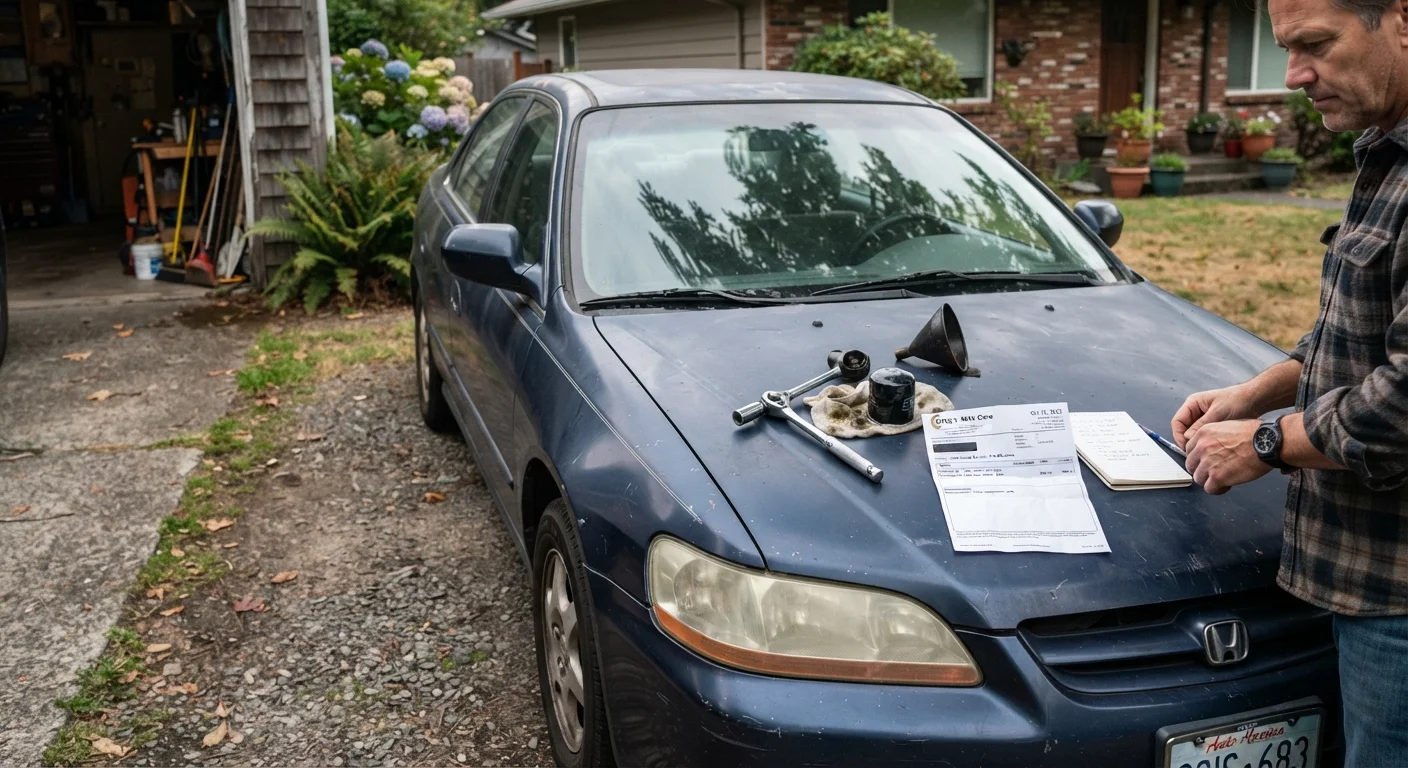
Photo credit: ArticlesHaven.net
In this article
Lower payments vs. higher repair risk—a balanced look at the financial and practical trade-offs of holding onto an older car.
Key Takeaways
- Keeping a high-mileage vehicle avoids car payments but typically increases maintenance and repair spending.
- Insurance costs often drop on older vehicles, but comprehensive coverage trade-offs deserve scrutiny.
- A documented service history and honest repair cost projections are essential before deciding to hold on.
- The break-even point between keeping and replacing depends heavily on your vehicle's make, model, and condition.
No monthly car payment frees up cash
Eliminating a loan payment often saves several hundred dollars per month, money that can be redirected toward repairs, savings, or other financial priorities.
Lower insurance premiums on older vehicles
As market value declines, owners may qualify for lower premium tiers, and some may reasonably adjust coverage levels-though this warrants a conversation with an insurer first.
Depreciation curve is already behind you
New vehicles lose value most sharply in the first few years. A high-mileage vehicle you already own has passed that phase, meaning you're no longer absorbing that financial loss.
Familiarity reduces surprises
Owners who have driven a vehicle for years understand its quirks, maintenance needs, and history-often better than any used-car inspection could reveal about an unfamiliar vehicle.
Avoids new loan interest in a high-rate environment
Auto loan rates fluctuate, and in periods of elevated rates, the total interest cost of financing a replacement vehicle can be substantial over a five- or six-year term.
Repair costs become harder to predict
Aging components fail with less warning, and a single major repair-such as a transmission or engine issue-can cost thousands and arrive with little notice.
Reliability risk grows with age and mileage
Breakdowns create compounding costs beyond the repair itself: towing, rental vehicles, and time lost can quickly add up to more than anticipated.
May lack modern safety technology
Older vehicles often don't have automatic emergency braking, lane-keeping assist, or updated crash-protection standards that are now common in newer models.
Fuel efficiency may lag newer alternatives
Engine wear and outdated technology can reduce fuel economy over time, increasing per-mile operating costs in ways that aren't always obvious without tracking.
Resale value is limited and declining
Holding a high-mileage vehicle means the window to extract meaningful resale or trade-in value is narrowing, which reduces future flexibility if you do eventually want to sell.
Why This Decision Is More Complex Than It Looks
Many drivers assume that a high odometer reading automatically signals it's time to trade in. In practice, the decision hinges on far more nuanced factors: the vehicle's maintenance history, the nature of upcoming repairs, current loan rates for replacements, and how you use the car day to day.
Mileage alone is a poor proxy for vehicle health. A 150,000-mile car that has received consistent, documented service can outperform a 90,000-mile vehicle that was neglected. Understanding how mileage affects long-term ownership costs helps frame this decision with accurate expectations rather than assumptions.
Before making a call, owners benefit from a clear-eyed look at both sides.
No monthly car payment frees up cash
Eliminating a loan payment often saves several hundred dollars per month, money that can be redirected toward repairs, savings, or other financial priorities.
Lower insurance premiums on older vehicles
As market value declines, owners may qualify for lower premium tiers, and some may reasonably adjust coverage levels-though this warrants a conversation with an insurer first.
Depreciation curve is already behind you
New vehicles lose value most sharply in the first few years. A high-mileage vehicle you already own has passed that phase, meaning you're no longer absorbing that financial loss.
Familiarity reduces surprises
Owners who have driven a vehicle for years understand its quirks, maintenance needs, and history-often better than any used-car inspection could reveal about an unfamiliar vehicle.
Avoids new loan interest in a high-rate environment
Auto loan rates fluctuate, and in periods of elevated rates, the total interest cost of financing a replacement vehicle can be substantial over a five- or six-year term.
The Financial Case for Holding On
The most immediate argument for keeping an older vehicle is the elimination of a monthly car payment. New vehicle loan payments frequently run several hundred dollars per month, and even used vehicle loans carry meaningful interest costs in a higher-rate environment.
~$700+
Avg. monthly new vehicle payment in recent years
Industry tracking data from sources such as Edmunds and Cox Automotive has consistently shown average new vehicle monthly payments exceeding $700 in recent model years.
200,000+
Miles many modern vehicles can reach with proper care
Consumer Reports and automotive analysts note that many contemporary makes and models are engineered to reach 200,000 miles with consistent, documented maintenance.
Insurance premiums also tend to decrease as a vehicle ages and its market value falls. Owners may legitimately reconsider whether comprehensive and collision coverage still makes financial sense relative to the car's actual worth-though this is a calculation that varies by situation and should account for your specific risk tolerance and driving environment. Consult your insurer before adjusting coverage.
Depreciation is another often-overlooked factor. A newer vehicle loses value most steeply in its first few years. By keeping an older car, you sidestep that depreciation curve entirely. The Shopping Smarter principle applies here: sometimes the asset you already own is the more efficient choice.
The Real Risks of Staying the Course
Repair costs become harder to predict
Aging components fail with less warning, and a single major repair-such as a transmission or engine issue-can cost thousands and arrive with little notice.
Reliability risk grows with age and mileage
Breakdowns create compounding costs beyond the repair itself: towing, rental vehicles, and time lost can quickly add up to more than anticipated.
May lack modern safety technology
Older vehicles often don't have automatic emergency braking, lane-keeping assist, or updated crash-protection standards that are now common in newer models.
Fuel efficiency may lag newer alternatives
Engine wear and outdated technology can reduce fuel economy over time, increasing per-mile operating costs in ways that aren't always obvious without tracking.
Resale value is limited and declining
Holding a high-mileage vehicle means the window to extract meaningful resale or trade-in value is narrowing, which reduces future flexibility if you do eventually want to sell.
Repair costs are the central risk. High-mileage vehicles are statistically more likely to need significant work on components like water pumps, timing belts or chains, struts, and eventually transmissions or engines. A single major failure can cost more than several months of car payments compressed into one bill.
Reliability is harder to predict as systems age, and an unexpected breakdown can create cascading costs-towing, rental cars, and rushed repair decisions. Skipping scheduled maintenance accelerates this risk considerably, turning manageable wear into expensive failures.
There's also a safety dimension. Older vehicles may lack modern driver-assistance features and updated structural standards. While this doesn't automatically make them unsafe, it's a legitimate factor in households with young passengers or high-accident-risk driving environments.
Insurance Coverage Is Worth Revisiting
As a vehicle's market value drops, the math on comprehensive and collision coverage shifts. If the annual premium for those coverages approaches the vehicle's actual cash value, some owners reconsider whether the coverage still makes financial sense. That said, dropping coverage has real risk implications-particularly if you rely on the vehicle for daily transportation or couldn't easily absorb an out-of-pocket loss. Discuss any coverage changes with a licensed insurance agent who can walk through the specific numbers for your situation.
How to Make the Decision Systematically
A practical framework starts with a pre-decision inspection from a trusted, independent mechanic-not the selling dealer if you're already considering a trade. Get an itemized list of what needs attention now and what is likely within the next 12-24 months.
Compare that total against what a replacement vehicle would cost you over the same period, including loan interest, higher insurance, and registration fees. If projected repairs are less than 50-60% of replacement cost, holding on typically wins on pure economics-though individual circumstances vary.
Maintaining a detailed service record strengthens your position regardless of which direction you go. A vehicle maintenance log helps you track patterns, demonstrates responsible ownership, and improves resale value if you eventually do sell.
Don't overlook the peripheral costs. Tires on aging vehicles often need attention, and tire care and longevity directly affects both safety and fuel economy. Factor these into your cost projection honestly.
If you're weighing the alternative of purchasing another used vehicle rather than new, it's worth reviewing the pros and cons of buying a high-mileage used vehicle to understand what that trade looks like from the other side.

Author
Articles Haven Editorial Contributor
Articles Haven Editorial Team is the collective byline for our editorial team and contributor network. Articles published under this byline or an editorial pen name are researched, written, and reviewed according to our editorial standards for clarity, consistency, and independence before publication.
View all articles →