
What 'As-Is' Really Means When Buying a Used Car
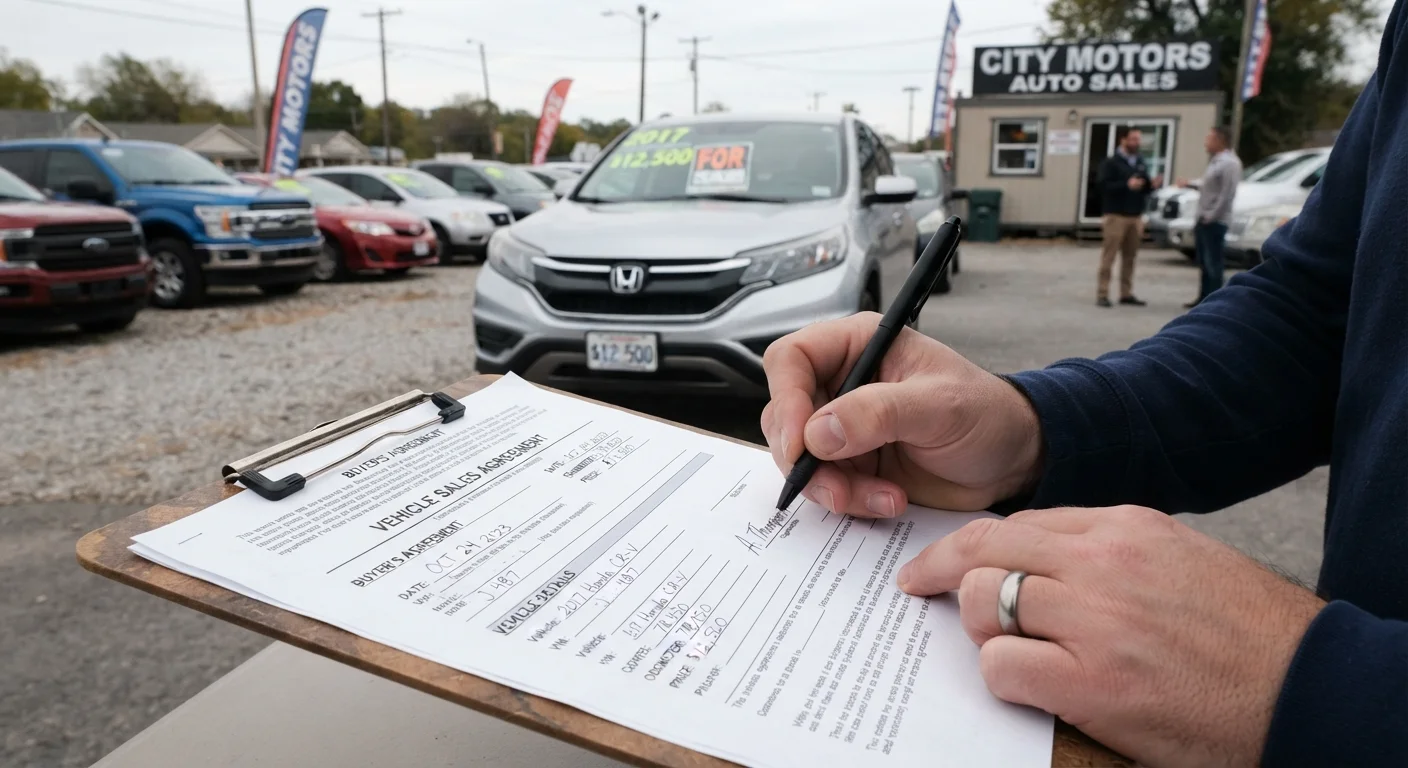
Photo credit: ArticlesHaven.net
In this article
As-is sales offer no implied warranty. Understand what that means legally and practically before signing anything on a used vehicle.
Key Takeaways
- An as-is sale strips away implied warranty protections in most U.S. states.
- Dealers must disclose as-is status on the FTC-required Buyers Guide sticker.
- A pre-purchase inspection is your strongest defense before signing anything.
- Fraud protection still applies - sellers cannot legally hide known defects in many states.
- Private party sales are almost always as-is, with fewer consumer protections than dealerships.
What 'As-Is' Actually Means Legally
The phrase "as-is" is a legal term, not just casual shorthand for "older car." In a used vehicle transaction, it means the seller is disclaiming any warranty - implied or otherwise - about the car's condition, performance, or fitness for use. Once you sign, the vehicle's problems become your problems.
In most U.S. states, the law recognizes an implied warranty of merchantability - a baseline expectation that a product is fit for ordinary use. An as-is clause specifically waives that protection. So if the transmission fails two weeks after purchase, you generally have no warranty claim to fall back on.
It's worth noting that state laws vary. A handful of states - including Massachusetts and Connecticut - limit how broadly as-is clauses can be applied, offering buyers some additional protections. Check your state's consumer protection statutes before assuming you have zero recourse.
State Laws Can Modify As-Is Rules
A small number of states have consumer protection statutes that limit the reach of as-is disclaimers, particularly for sales between dealers and consumers. Before assuming an as-is clause gives a seller complete protection, verify the rules in your specific state. Your state attorney general's office or a consumer law attorney can clarify what applies to your situation.
The FTC Buyers Guide: What That Sticker Tells You
If you're buying from a licensed dealer, federal law requires them to display a Buyers Guide in the vehicle's window. This document has two possible states: "As Is - No Dealer Warranty" or "Dealer Warranty," with coverage terms spelled out.
The Buyers Guide also lists which major systems - engine, transmission, brakes - the dealer is aware of as potentially needing repair. Dealers are not required to inspect the vehicle before selling it, but they cannot knowingly hide defects they are aware of.
Private sellers are not covered by the FTC Used Car Rule, which is a meaningful distinction. When you buy from an individual, you're typically operating entirely as-is with no required disclosures. That's one core reason the purchase path matters - as explored in our comparison of private party sales and dealerships.
~40%
Used car sales that are private party transactions
Industry estimates suggest roughly 40% of used vehicle transactions occur between private individuals, where FTC disclosure rules do not apply.
$100-$200
Typical cost of a pre-purchase inspection
Independent mechanic inspections generally range from $100 to $200, a fraction of the potential repair costs they can help buyers avoid.
What 'As-Is' Does Not Protect Sellers From
Sellers sometimes treat "as-is" as a blanket shield. It isn't. As-is disclaims warranty liability - it does not grant immunity from fraud or misrepresentation claims.
If a seller knowingly conceals a salvage title, a prior flood history, a rolled-back odometer, or a serious mechanical defect they're aware of, you may still have legal grounds to pursue them - even after signing an as-is agreement. Courts in many states distinguish between a seller who disclosed nothing (legally acceptable in as-is) and one who actively lied or hid information (not acceptable).
This is why asking direct, documented questions before purchase matters. If a seller denies knowing about a problem that later turns out to be obvious and long-standing, those communications can be important evidence.
Document Everything Before You Sign
Ask the seller pointed questions about known issues, accident history, and title status - and get responses in writing whenever possible (email or text works). If a dispute arises later over concealment or misrepresentation, documented communication can be critical. A vehicle history report from a recognized data provider is also worth pulling before committing to any used car purchase.
Your Best Defense: Independent Inspection Before Signing
The single most effective tool you have in an as-is purchase is a pre-purchase inspection by an independent mechanic. For a relatively modest fee, a qualified technician can identify issues the seller may not have disclosed - or may not even know about.
An inspection covers what most buyers can't evaluate on their own: compression, fluid condition, frame integrity, emissions readiness, and signs of prior accident damage. For a detailed breakdown of what gets checked, see what a mechanic looks for in a pre-purchase inspection.
If a seller refuses to allow an independent inspection, treat that as a significant red flag. Reputable sellers - private or dealer - have little reason to block a routine inspection. And before you even schedule a test drive, make sure you've done your homework: asking the right questions upfront can save you from wasting time on vehicles not worth inspecting.
For a broader checklist of what to evaluate in person, this guide to inspecting a used car before you commit walks through what to look, listen, and ask about during your evaluation.
Frequently Asked Questions

Author
Articles Haven Editorial Contributor
Articles Haven Editorial Team is the collective byline for our editorial team and contributor network. Articles published under this byline or an editorial pen name are researched, written, and reviewed according to our editorial standards for clarity, consistency, and independence before publication.
View all articles →