
Private Party Sale vs. Dealership: The Real Differences for Used Car Buyers
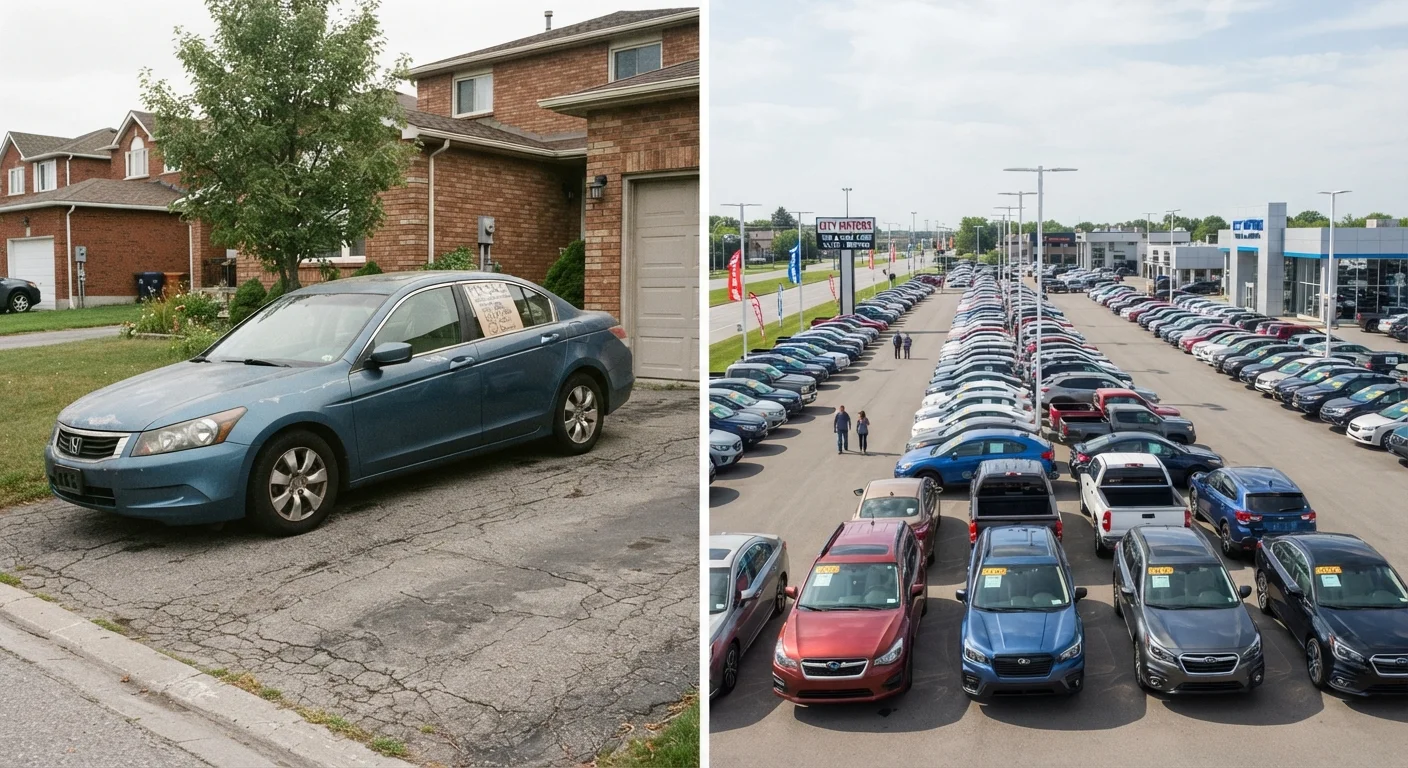
Photo credit: ArticlesHaven.net
In this article
Buying from a private seller and buying from a dealer involve very different processes, risks, and protections. Compare both honestly.
Key Takeaways
- Private party sales typically offer lower purchase prices but come with fewer legal protections.
- Dealerships are required to disclose more information and must comply with federal and state consumer protection laws.
- Financing a private party purchase is possible but generally requires more planning ahead.
- An independent pre-purchase inspection is strongly advisable regardless of which route you choose.
- The right choice depends on your risk tolerance, budget, and how much time you can invest in the process.
How the Two Paths Actually Work
When you buy a used car from a private seller, you're dealing directly with an individual - typically the current owner. There's no intermediary, no showroom, and no sales team. Transactions are usually cash or cashier's check, negotiated one-on-one, and completed with a simple title transfer through your state's DMV.
Buying from a dealership is a more structured process. The dealer holds the title, handles paperwork, and in most states must comply with specific disclosure requirements under federal and state consumer protection law. Dealers can also offer financing in-house, certified pre-owned programs, and in some cases limited warranties. For a broader look at how this purchase path fits your overall options, see New, Used, or Leased: Which Vehicle Path Makes the Most Sense for You?.
Price, Negotiation, and Hidden Costs
Private sellers generally list vehicles closer to actual market value without a markup to cover overhead, reconditioning, or dealer profit margins. That gap can be meaningful - sometimes several thousand dollars on the same make, model, and year. However, private sales rarely include any refund policy, warranty, or recourse if a problem surfaces the next week.
Dealerships price vehicles with margin built in, but they also absorb reconditioning costs and documentation fees. You may also pay dealer fees that vary widely by state - doc fees, title fees, and sometimes advertising fees. These should appear on the purchase agreement and are worth scrutinizing. Negotiation is possible at both venues, but dealerships have more levers to pull, including trade-in values, financing terms, and add-on products. If you're selling your current vehicle as part of the deal, the private sale vs. trade-in trade-off is a separate decision worth thinking through first.
| Private Party Sale | Dealership Purchase | |
|---|---|---|
| Typical Price | Generally lower, closer to market value | Higher, includes overhead and margin |
| Consumer Protections | Minimal - largely caveat emptor | FTC Buyers Guide required; state laws apply |
| Warranty Options | Rarely available; usually sold as-is | As-is or limited/CPO warranty available |
| Financing Access | Possible but requires advance planning | In-house and outside lender options |
| Paperwork & Process | Handled by buyer and seller via DMV | Dealer handles most documentation |
| Inspection Flexibility | Often easier to negotiate pre-inspection | Varies; CPO cars have standard checklist |
| Trade-In Option | Not available | Available, though may affect negotiation |
Consumer Protections and Legal Exposure
This is where the two paths diverge most sharply. Licensed dealerships are regulated businesses. They must comply with the FTC's Used Car Rule, which requires a Buyers Guide disclosing whether the vehicle is sold as-is or with a warranty. Many states layer on additional disclosure requirements. If a dealer misrepresents a vehicle, there are established legal channels for dispute.
Private sellers have no such obligation in most states. A private sale is largely governed by the principle of caveat emptor - buyer beware. The seller isn't required to disclose known defects in many jurisdictions, though intentional fraud is still illegal. Understanding what "as-is" means legally is essential here; what 'as-is' really means when buying a used car gives a full breakdown of what you're accepting when you sign that paperwork.
Private Sales Offer Little Recourse After Signing
Once you've signed the title over and handed the seller cash, your options for dispute are extremely limited. Even if a significant mechanical issue surfaces within days, there is generally no legal obligation for the seller to refund you unless you can prove deliberate fraud. This is why a pre-purchase inspection from an independent mechanic is not optional in a private sale - it's one of your only safeguards.
Financing: Who Offers It, and at What Cost
Most banks, credit unions, and online lenders will finance a dealership purchase straightforwardly - the dealer is a known entity and the transaction is well-documented. Dealers can also arrange financing directly, sometimes offering competitive rates, though it's worth comparing outside offers first. See dealer financing vs. bank or credit union loans for a full comparison of those options.
Financing a private party purchase is possible but requires more legwork. Many credit unions and some banks offer private party auto loans, but rates are often slightly higher than for dealer purchases, and lenders typically have stricter requirements around vehicle age and mileage. You'll need to arrange financing before completing the transaction - sellers won't wait while you sort out a loan. For more context on how lender terms shift between vehicle types, financing a used car vs. a new car is worth a read.
Get Pre-Approved Before You Shop
If you're considering a private party purchase, secure loan pre-approval from your bank or credit union before you start seriously negotiating. This clarifies your actual budget and signals to sellers that you're a credible buyer. Pre-approval also gives you a rate benchmark if you later decide to go through a dealer instead.
Due Diligence: What You Need to Do Either Way
Regardless of where you buy, certain steps apply universally. Pull a vehicle history report using the VIN - it covers accident history, title status, odometer readings, and prior ownership. Review service records if available. And strongly consider paying for an independent pre-purchase inspection from a mechanic you trust, not one recommended by the seller or dealer.
With private sellers, you may have more flexibility to negotiate time for an inspection. With dealers, certified pre-owned vehicles typically come with a manufacturer-backed inspection checklist, though the depth of that process varies. Understanding what affects a used car's market value can also help you judge whether a listed price is reasonable before you commit to either route. For more on what ownership actually costs beyond the purchase price, the Car Ownership hub covers the full picture.
~55%
Used vehicles sold through dealers
Industry estimates suggest dealerships account for roughly half or more of used vehicle transactions in the US, with private sales making up much of the remainder.
1-3%
Typical interest rate difference for private party loans
Private party auto loans from many lenders carry rates modestly higher than equivalent dealer-facilitated financing, though this varies by lender and borrower credit profile.

Author
Articles Haven Editorial Contributor
Articles Haven Editorial Team is the collective byline for our editorial team and contributor network. Articles published under this byline or an editorial pen name are researched, written, and reviewed according to our editorial standards for clarity, consistency, and independence before publication.
View all articles →