
New, Used, or Leased: Which Vehicle Path Makes the Most Sense for You?
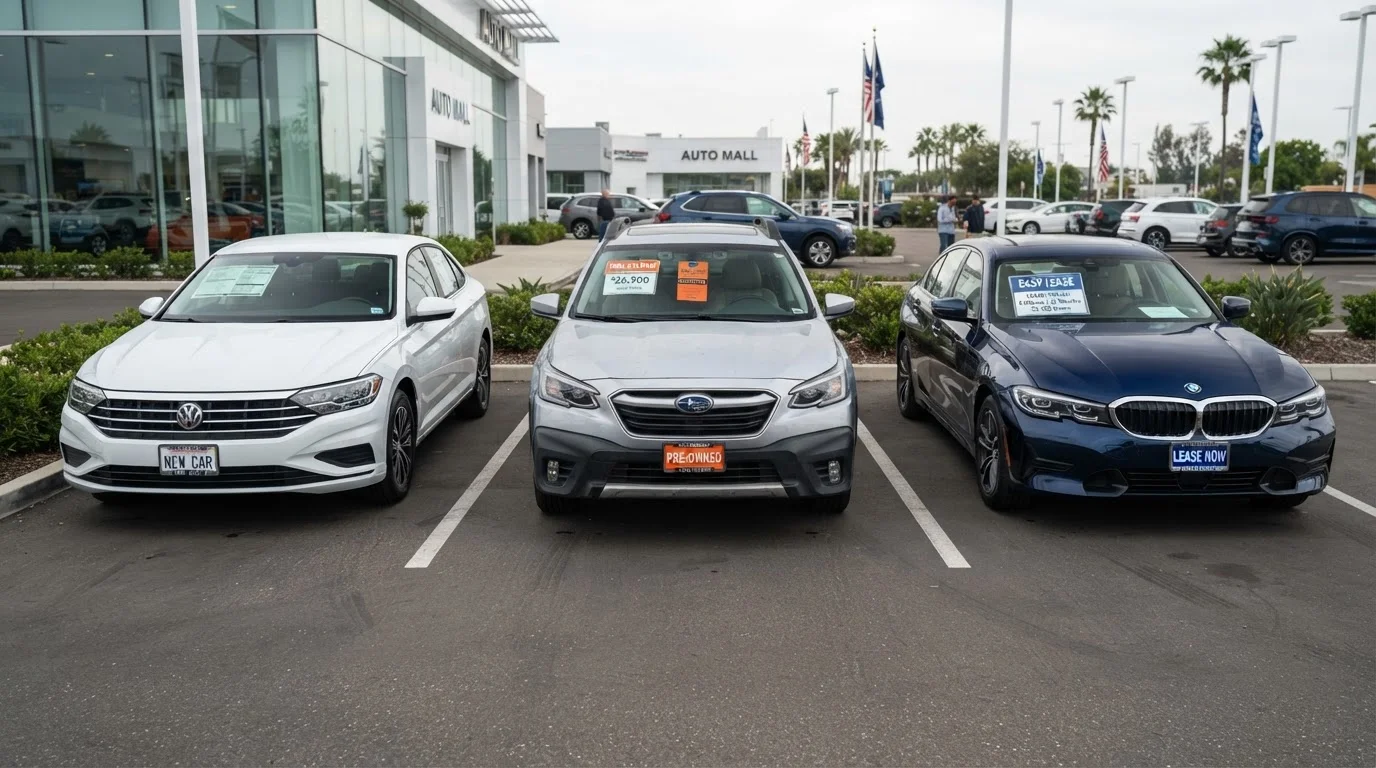
Photo credit: ArticlesHaven.net
In this article
Understand the real tradeoffs between buying new, buying used, and leasing a car so you can match the right path to your situation.
Key Takeaways
- Buying new offers the most features and warranty coverage but carries the steepest depreciation hit.
- Used vehicles typically cost less upfront and depreciate more slowly, but financing terms are often less favorable.
- Leasing keeps monthly payments lower but builds no equity and comes with mileage and condition restrictions.
- Your driving habits, budget horizon, and how long you keep vehicles should drive the decision more than monthly payment alone.
The Core Trade-Off Each Path Asks You to Make
Every vehicle acquisition path forces a version of the same core bargain: how much do you pay now, how much flexibility do you give up, and what do you walk away with at the end? Getting clear on your own priorities makes the comparison far more useful than chasing the lowest monthly payment.
Buying new means paying a premium for zero history, full warranty, and the latest safety and technology features. Buying used means accepting some unknowns in exchange for a lower purchase price and slower depreciation going forward. Leasing means paying for access rather than ownership - lower monthly costs, but no asset at term's end and strict conditions during the contract. For a deeper look at how the numbers stack up between leasing and buying, see our side-by-side financial comparison.
| Buy New | Buy Used | Lease | |
|---|---|---|---|
| Upfront Cost | Highest | Moderate to low | Low (down payment often required) |
| Monthly Payment | High | Moderate | Lowest for same vehicle |
| Depreciation Exposure | High in first years | Lower - already absorbed | None - you don't own it |
| Ownership at End | Full ownership | Full ownership | No - return the vehicle |
| Warranty Coverage | Full manufacturer warranty | May be expired or limited | Covered during lease term |
| Mileage Flexibility | Unlimited | Unlimited | Restricted - penalties apply |
| Financing Rates | Typically most competitive | Often higher than new | Determined by money factor |
| Best Horizon | 8+ years | 5-10 years | 2-4 years |
Buying New: When It's Worth the Premium
New vehicles depreciate quickly - often losing a significant portion of value within the first few years of ownership. That's the frequently cited argument against buying new. But depreciation is only a real loss if you sell shortly after buying. For drivers who plan to own a vehicle for eight or more years, that initial dip matters less because they're spreading ownership costs over more time.
New cars also come with manufacturer warranties, current safety ratings, and access to the most recent driver-assistance technology. Financing rates on new vehicles are typically more competitive than on used ones, which can partially offset the higher sticker price. See how lender terms differ between new and used vehicle loans for more context.
Think Total Cost, Not Just Monthly Payment
Monthly payment comparisons can be misleading - a lower lease payment over 36 months may cost more in total than a used-car loan over the same period once fees and the lack of residual equity are factored in. Before comparing paths, estimate total outlay for your expected ownership or use period, not just the monthly figure.
The new-car path works best for: long-term owners, buyers with strong credit who qualify for low financing rates, and anyone for whom warranty coverage and technology access are genuinely important rather than just appealing.
Buying Used: The Value Argument and Its Limits
A used vehicle that's two to four years old has already absorbed the steepest depreciation curve, meaning the next owner bears less of that loss. That's the foundation of the used-car value argument, and it holds up well for most everyday buyers.
The trade-offs are real, though. Used financing rates are often higher than new-car rates, loan terms may be shorter, and the vehicle's history - even with a clean report - introduces more uncertainty than a new purchase. Older vehicles may also lack current safety features or fall outside warranty coverage, shifting maintenance risk to you sooner.
Don't Skip the Vehicle History and Inspection
A clean vehicle history report is a useful starting point, but it doesn't capture everything - unreported accidents, deferred maintenance, or flood damage can still appear on an otherwise clean record. Before buying used, budget for an independent pre-purchase inspection by a qualified mechanic. The cost is minor compared to the repair bills an undetected problem can generate.
For those considering older or higher-mileage options specifically, our article on the pros and cons of high-mileage used vehicles walks through what to weigh. You can also review what ownership costs actually look like across both categories before committing.
Leasing: Lower Payments, Real Restrictions
A lease is a contract to use a vehicle for a set period - typically two to four years - in exchange for monthly payments that are generally lower than a purchase loan for the same vehicle. At the end, you return the car. You build no equity, but you also carry less long-term financial exposure to the vehicle.
Leasing works well for drivers who keep mileage within the contract's annual limit (commonly 10,000-15,000 miles), maintain the vehicle carefully to avoid excess-wear charges, and genuinely value cycling into a newer model every few years. It works poorly for high-mileage drivers, people who modify vehicles, or anyone who wants eventual ownership. There are also several persistent myths about leasing that affect how people evaluate it - separating those myths from how lease contracts actually work is worth the read before signing anything.
~50%
Typical value lost in first 3 years
Industry data consistently shows new vehicles can lose roughly half their value within the first three years of ownership, though this varies by make and model.
10,000-15,000
Annual mileage limit in most leases
Most standard lease agreements cap annual mileage in this range; exceeding it typically triggers per-mile overage charges outlined in the contract.
How to Match the Path to Your Situation
Rather than starting with a payment budget, start with two questions: How long will you realistically keep this vehicle? And how predictable is your usage? Long holders who drive average miles and want an asset at the end lean toward buying - used if budget-conscious, new if warranty and features matter more. Frequent upgraders with predictable, moderate mileage lean toward leasing.
Your credit profile also shapes the comparison in practice. Strong credit opens up competitive new-car financing and favorable lease money factors. Thinner credit may make used-car financing the only realistic path, though rates will be higher. For a broader framework on making confident purchase decisions, the Shopping Smarter hub covers useful evaluation approaches across categories.
Once you've identified the right path, the body style decision follows naturally - our guide on matching vehicle type to your actual driving patterns can help you narrow from there. And if used is the direction you're heading, reviewing what to ask before a used car test drive is a practical next step.

Author
Articles Haven Editorial Contributor
Articles Haven Editorial Team is the collective byline for our editorial team and contributor network. Articles published under this byline or an editorial pen name are researched, written, and reviewed according to our editorial standards for clarity, consistency, and independence before publication.
View all articles →