
Sedan, SUV, Truck, or Minivan: Matching Vehicle Type to Your Life
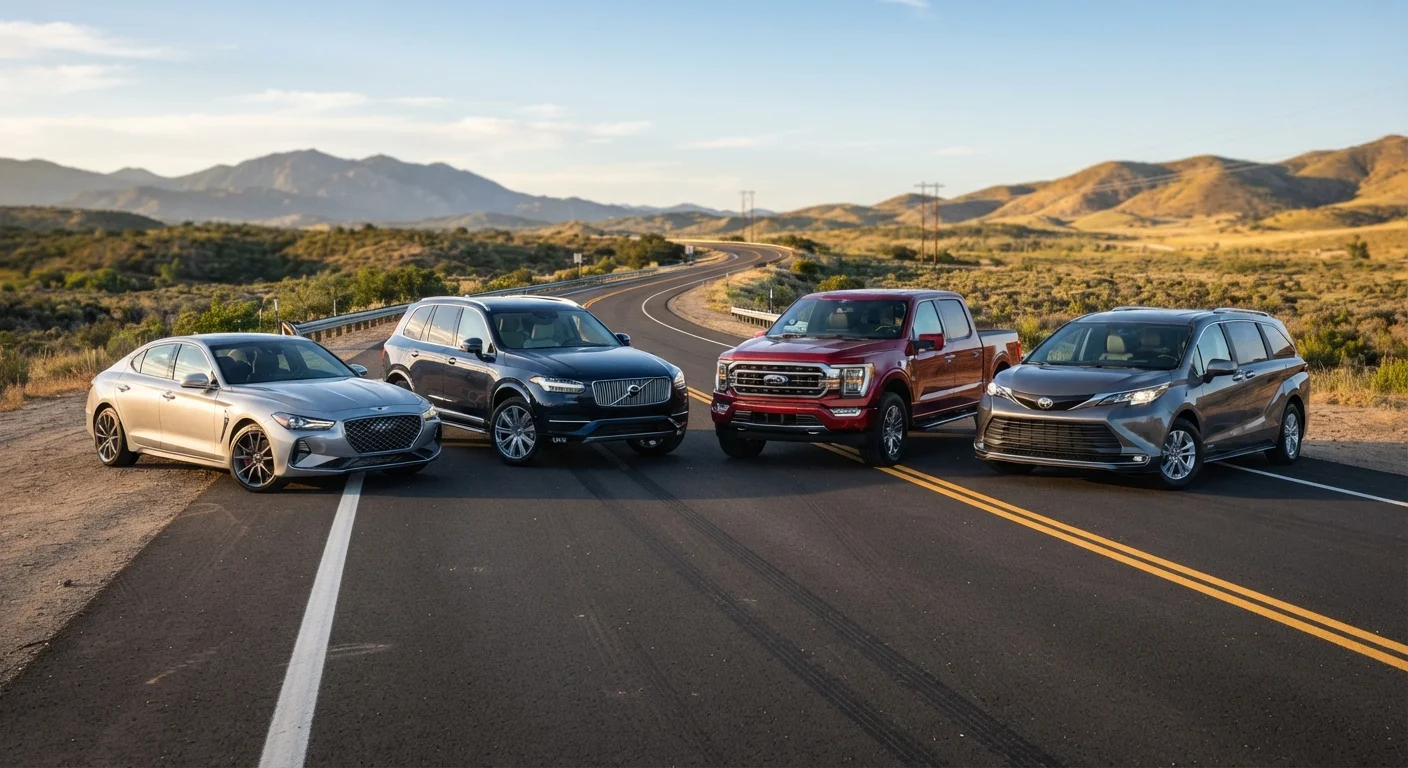
Photo credit: ArticlesHaven.net
In this article
Each body style involves practical tradeoffs in cargo, fuel, cost, and utility. Find the layout that fits your actual driving patterns.
Key Takeaways
- Sedans offer the lowest operating costs but limited cargo and passenger flexibility.
- SUVs balance passenger space and cargo versatility, though fuel costs run higher.
- Trucks excel at towing and hauling but sacrifice interior passenger comfort.
- Minivans provide the most practical family-hauling space per dollar spent.
- Your actual driving patterns - not aspirational use - should drive the decision.
Why Body Style Is a Practical Decision, Not a Style Choice
Most vehicle shoppers spend significant time on color and trim level while spending surprisingly little time questioning whether the body style itself fits their life. That order of priorities is backward. A vehicle's body style determines cargo capacity, seating configuration, fuel economy, insurance rating, and total cost of ownership - all before you get to optional packages.
The good news: each major body style has a clear set of strengths and weaknesses that map predictably onto real-life scenarios. If you know how you actually drive - not how you imagine driving - you can eliminate two or three options immediately. See our guide to evaluating total cost of ownership for a framework to compare vehicles financially once you've narrowed down the type.
Sedans: Low Cost, Low Complexity
Sedans remain the most fuel-efficient mainstream option and typically carry lower sticker prices, insurance premiums, and maintenance costs than comparably equipped SUVs or trucks. Their lower center of gravity also means more predictable handling, which matters in wet or wintry conditions.
The tradeoffs are real, though. A standard sedan trunk holds roughly 13-16 cubic feet of cargo - enough for grocery runs and a weekend bag, but not a stroller plus sports gear plus a dog crate. Ground clearance is limited, which matters on unpaved roads or in heavy snow. Passenger space in the rear can feel cramped for adults on longer trips.
Sedans make the most sense for single occupants or couples with straightforward commuting and errand patterns. If you live in an urban setting where parking is a constraint, a sedan's smaller footprint is a genuine daily advantage. The city vs. suburbs cost comparison breaks down how vehicle size affects urban ownership costs.
Match the Vehicle to Your Typical Week
Before visiting a dealership, write down your actual weekly driving patterns: how many passengers, how much cargo, and what road conditions you encounter. Most buyers overestimate exceptional use cases (ski trips, hauling) and underestimate routine ones (school runs, parking). Basing your decision on a typical Tuesday rather than a hypothetical Saturday usually leads to a better fit.
SUVs: Flexibility at a Fuel Cost
The SUV's mass-market dominance isn't arbitrary - it genuinely does more things reasonably well than any other body style. Crossover SUVs (built on car platforms) deliver better fuel economy than traditional truck-based SUVs while offering 30-40% more cargo space than a typical sedan. Three-row configurations seat seven or eight passengers. Most mid-size SUVs offer available all-wheel drive, which is a meaningful safety upgrade in regions with significant winter weather.
The cost premium is consistent. SUVs carry higher sticker prices, heavier insurance rates, and lower average fuel economy than sedans. Larger truck-based SUVs - often called full-size or body-on-frame SUVs - can tow significantly (sometimes 7,000-8,000 lbs) but get markedly worse fuel economy and cost more to maintain.
If your household has two or more children, regularly carries sports equipment, or needs occasional AWD capability, an SUV usually justifies its premium over a sedan. Just be honest about whether you actually need the larger, more expensive three-row version or whether a compact crossover covers your real use case. You may also want to explore hybrid SUV options, which can substantially cut fuel costs.
~4 mpg
Average fuel economy gap: compact SUV vs. sedan
EPA combined ratings consistently show compact crossovers trailing comparable sedans by roughly 3-5 mpg, translating to measurable annual fuel cost differences.
140+ cu ft
Minivan max cargo volume with seats removed
Most full-size minivans with all rear seats folded or removed offer cargo volumes significantly exceeding three-row SUVs in the same price range.
Trucks: Purpose-Built, Not General Purpose
Full-size pickup trucks offer something no other body style can match: rated towing capacity regularly in the 10,000-13,000 lb range and payload capacity of 1,500-2,000 lbs in the bed. For buyers who regularly pull a boat, haul construction materials, or work on job sites, this utility is non-negotiable.
For everyone else, trucks involve real compromises. Rear-seat legroom in crew-cab configurations has improved substantially, but the cabin still prioritizes work over comfort. Beds are cargo-efficient for bulky items but terrible at keeping loose cargo contained or protected from weather without a cover or liner. Fuel economy in full-size trucks typically trails sedans by 8-12 mpg in combined driving. Parking in urban or dense suburban environments is genuinely difficult. Insurance and registration costs (in states with weight-based fees) run higher.
Don't Buy Towing Capacity You Won't Use
Full-size trucks carry significant cost premiums - in purchase price, fuel, insurance, and maintenance - that are justified when towing capacity is genuinely needed on a regular basis. If you tow rarely, renting a truck or using a tow service for occasional needs will typically cost far less than the ongoing premium of full-size truck ownership. Be honest about frequency before committing.
If your "truck use" consists of one or two Home Depot runs per year and a camping trip, a sedan or SUV with a rental truck for occasional hauling will almost certainly cost you less overall. See how location shapes vehicle costs if you're weighing this in a suburban or urban context.
Minivans: The Practical Choice That Gets Overlooked
Minivans have an image problem that has no basis in their actual utility. By nearly every objective measure - passenger capacity, cargo volume, per-seat cost, interior flexibility - minivans outperform three-row SUVs at a lower price point. Sliding rear doors are dramatically easier to use in tight parking lots than SUV swing doors. The lower floor height makes loading children and cargo easier.
A typical minivan seats seven or eight passengers with genuine adult legroom in all three rows, something most three-row SUVs can't honestly claim. Cargo volume with all seats folded or removed can exceed 140 cubic feet, far beyond most SUVs. Fuel economy is generally better than comparably sized three-row SUVs as well.
The limitation is real estate outside the vehicle: they're long, and parking can be tight. They also offer no towing capacity to speak of, and all-wheel drive is not available across most minivan lineups. If you have three or more children, regularly carpool, or frequently transport elderly family members, the minivan's practical advantages are hard to dismiss on objective grounds.
| Sedan | SUV | Truck | Minivan | |
|---|---|---|---|---|
| Typical cargo space | 13-16 cu ft (trunk) | 30-80 cu ft | Bed: 50-60 cu ft | Up to 140+ cu ft |
| Passenger capacity | 5 | 5-8 | 3-6 (crew cab) | 7-8 |
| Fuel economy | Highest | Moderate | Lowest-moderate | Moderate-good |
| Towing capability | Low (1,000-1,500 lbs) | Moderate-high | Highest (10,000+ lbs) | Low (none to minimal) |
| AWD/4WD availability | Limited | Widely available | Widely available | Rare or unavailable |
| Typical purchase price range | Lower | Moderate-high | Moderate-high | Moderate |
| Urban parking ease | Easiest | Moderate | Difficult | Moderate-difficult |
| Best everyday use case | Commuting | Family versatility | Work/hauling | Large family transport |
Once you've identified the right body style, the next step is choosing between new, used, or leased - see our comparison of new, used, and leased vehicles for a clear breakdown of each path.

Author
Articles Haven Editorial Contributor
Articles Haven Editorial Team is the collective byline for our editorial team and contributor network. Articles published under this byline or an editorial pen name are researched, written, and reviewed according to our editorial standards for clarity, consistency, and independence before publication.
View all articles →