
Certified Pre-Owned vs. Used: What the Label Actually Guarantees
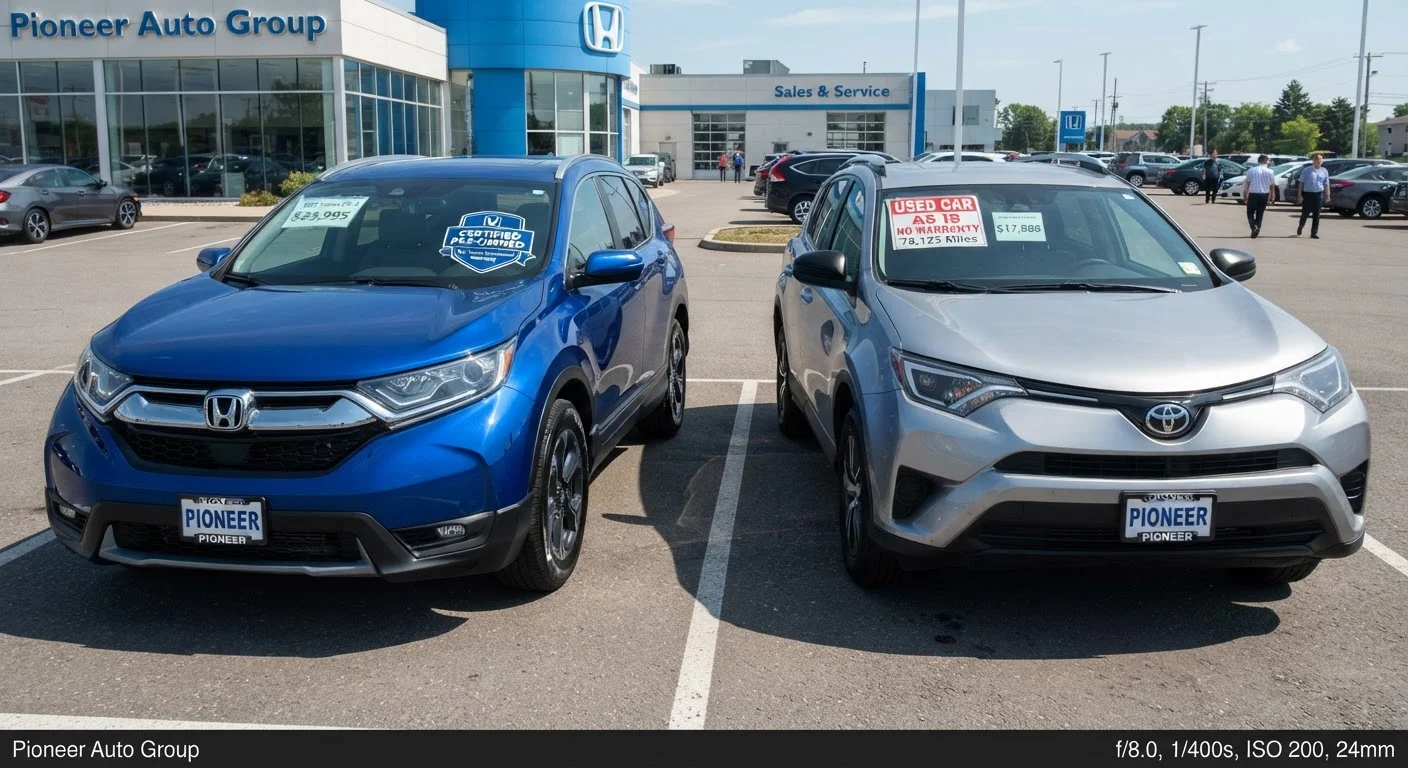
Photo credit: ArticlesHaven.net
In this article
CPO programs vary widely. Learn what certification actually covers, where it adds value, and where it may not justify the price premium.
Key Takeaways
- CPO programs are not standardized - coverage, inspection depth, and warranty terms vary by manufacturer and dealer.
- A CPO label typically costs $1,000-$3,500 more than a comparable standard used vehicle.
- Standard used vehicles can be a smart buy when paired with a thorough independent inspection.
- Manufacturer CPO programs generally offer stronger protections than dealer-run certification schemes.
- Extended warranty length and powertrain coverage are the most meaningful CPO differentiators to evaluate.
- Neither option guarantees reliability - vehicle history, mileage, and condition still matter most.
What 'Certified' Actually Means - and What It Doesn't
The word certified implies a standard has been met, but in the used-car market, there is no universal definition. Two dealerships can both sell "certified" vehicles while offering completely different levels of inspection and protection. Understanding this gap is the first step toward making a well-informed purchase.
There are two main types of CPO programs: manufacturer-sponsored and dealer-run. Manufacturer programs - offered through franchised dealerships for that brand - follow documented inspection checklists, typically covering 100-150+ mechanical and cosmetic points. They also include a factory-backed limited warranty extension, often adding powertrain coverage for two to six years or up to 100,000 miles beyond the original sale. Dealer-run programs, by contrast, set their own standards. A dealer may call a vehicle "certified" after a basic inspection with no added warranty, or with a short-term dealer warranty of limited scope.
The practical takeaway: always ask to see the specific inspection checklist and the written warranty terms before treating "CPO" as meaningful. A certificate of completion isn't a guarantee of quality - it's documentation that certain steps were taken.
Manufacturer CPO vs. Dealer CPO: A Key Distinction
Manufacturer-sponsored CPO programs are administered by the automaker and backed by the factory warranty system. Dealer-run certification schemes are created and managed by individual dealerships and carry only the dealer's word - and their own limited warranty, if any. When evaluating a CPO vehicle, confirm in writing whether the certification is manufacturer-backed. This distinction has a direct impact on what happens if a covered component fails after purchase.
Standard Used: The Risk and the Opportunity
A standard used vehicle carries no implied inspection or warranty beyond what's legally required in your state - which in most cases is very little. Most used car sales are completed "as-is," meaning any mechanical problems discovered after purchase are the buyer's responsibility.
That sounds alarming, but it doesn't have to be a deal-breaker. The risk of buying standard used is manageable when you take the right steps. Pulling a vehicle history report (covering prior accidents, title status, and odometer readings) and commissioning a pre-purchase inspection from an independent mechanic can surface most of the issues a CPO inspection would catch - often for $100-$200 combined. For a practical walkthrough of what to evaluate before committing, see what to inspect before buying a used car.
The opportunity in the standard used market is straightforward: lower sticker prices. If the CPO version of a vehicle costs $2,500 more than a comparable standard used unit, that gap can fund multiple years of routine maintenance or absorb a moderate repair without leaving you worse off financially.
$1,000-$3,500
Typical CPO price premium over standard used
Industry estimates from automotive market analysts suggest CPO vehicles consistently carry this range of markup over equivalent non-certified inventory.
100-172
Inspection points in common manufacturer CPO programs
Major automakers publish their CPO inspection checklists; point counts vary significantly between brands, ranging from roughly 100 to over 170 items.
$100-$200
Typical cost of an independent pre-purchase inspection
Independent mechanic inspections generally run in this range and can identify most of the same issues a CPO inspection would flag.
Head-to-Head: CPO vs. Standard Used
The comparison below reflects general patterns across the used-car market. Specifics vary by manufacturer, dealer, vehicle age, and mileage. Always verify program details in writing before purchase.
| Criterion | Certified Pre-Owned | Standard Used |
|---|---|---|
| Inspection documentation | Formal checklist (varies by program) | None required; buyer-arranged |
| Warranty coverage | Manufacturer or dealer warranty included | As-is; no warranty by default |
| Price premium | Typically $1,000-$3,500 more | Lower sticker price |
| Vehicle age/mileage limits | Usually under 5-7 yrs / 80K-100K mi | No restrictions |
| Financing options | May qualify for manufacturer rates | Standard used-car financing |
| Wear item coverage | Generally excluded | Not applicable (as-is) |
| Program consistency | Varies widely by brand and dealer | Consistent: no guarantees |
| Where available | Franchised dealerships only | Dealers, private sellers, auctions |
For a broader look at how purchase path affects total cost, see the full comparison of new vs. used ownership costs, which covers insurance, financing, and depreciation across vehicle types.
Where CPO Adds Genuine Value - and Where It Doesn't
CPO programs add the most value in three specific situations. First, when you're buying a vehicle that's still relatively new - typically under five years old and under 60,000 miles - a manufacturer CPO warranty extension can meaningfully overlap with the original factory coverage period, giving you continuity of protection. Second, when the vehicle is complex or expensive to repair (luxury brands, turbocharged engines, advanced driver-assistance systems), the warranty backstop is worth more in real dollar terms. Third, when you lack easy access to a trusted independent mechanic, the documented inspection provides at least a baseline of due diligence.
CPO adds less value when the vehicle is older and higher-mileage (many programs cap eligibility at five to seven years or 80,000-100,000 miles), when you can conduct thorough independent due diligence yourself, or when the premium is particularly steep relative to the market. It's also worth noting that CPO warranties typically exclude wear items like tires, brakes, and wiper blades - the parts most likely to need attention on a used vehicle. Review exclusions carefully. The concept of condition labeling and what it actually covers is a recurring theme across consumer categories - grading standards for refurbished goods face the same inconsistency issues as CPO programs.
If you're considering a high-mileage vehicle - CPO-eligible or not - weigh the trade-offs carefully before committing. The car ownership hub has additional guidance on evaluating total cost and long-term responsibilities.
This article is for general informational purposes only and does not constitute financial, legal, or professional automotive advice. Warranty terms, financing rates, and program specifics vary by manufacturer, dealer, and state. Always review program documentation and consult a licensed dealer or independent adviser before making a purchase decision.

Author
Articles Haven Editorial Contributor
Articles Haven Editorial Team is the collective byline for our editorial team and contributor network. Articles published under this byline or an editorial pen name are researched, written, and reviewed according to our editorial standards for clarity, consistency, and independence before publication.
View all articles →