
Europe on a First Trip: How to Choose Between Major Regions
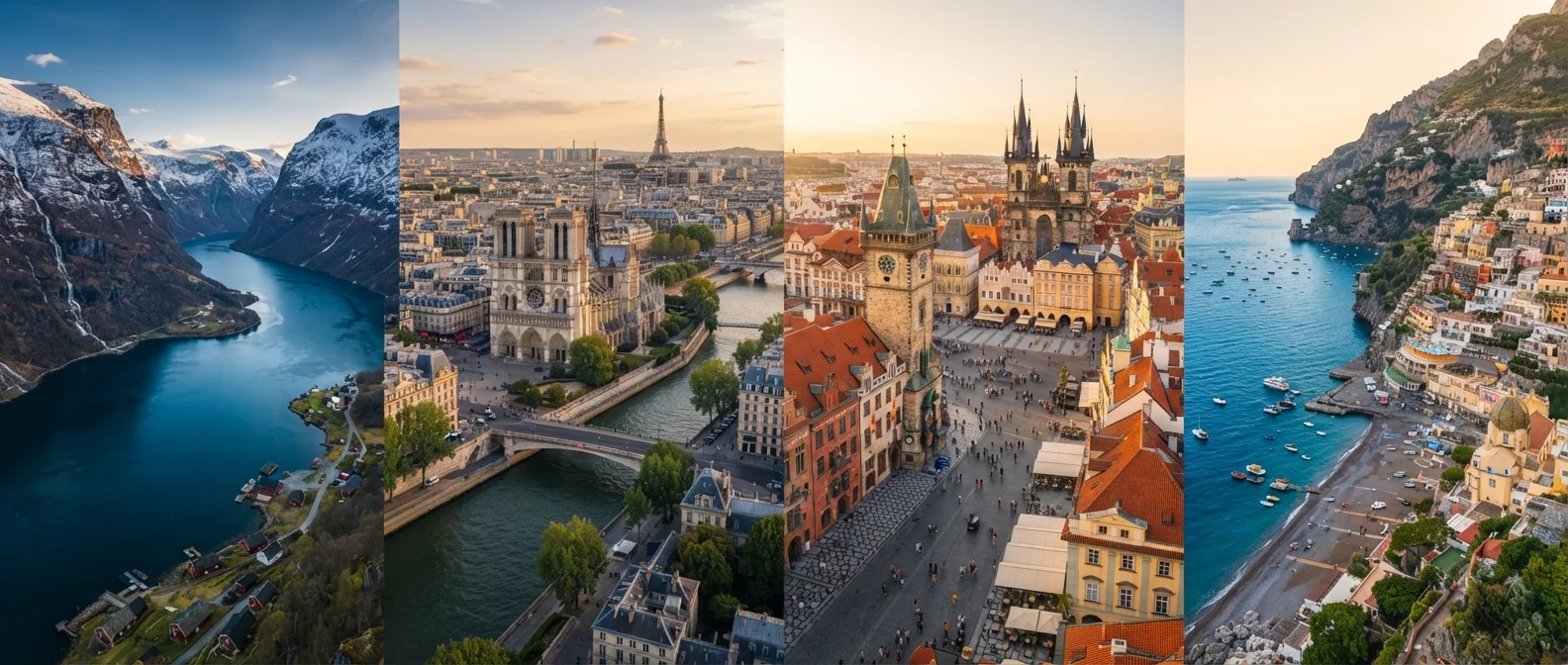
Photo credit: ArticlesHaven.net
In this article
Western Europe, Eastern Europe, Scandinavia, or the Mediterranean? Compare atmospheres, costs, and logistics for first-time visitors.
Key Takeaways
- Western Europe is the most straightforward region logistically but costs more than alternatives.
- Mediterranean countries offer rich history and food culture; summer crowds can be intense.
- Eastern Europe delivers comparable culture and history at noticeably lower daily costs.
- Scandinavia has dramatic scenery but is among the most expensive travel regions in the world.
- Season matters as much as destination - research shoulder seasons before booking.
- Entry requirements, rail connections, and English-language access vary significantly by country.
Why Region Matters More Than You Think
Europe is not one experience - it's roughly 50 countries with wildly different price levels, languages, climates, and infrastructure. Choosing a region before choosing a city is a smarter starting point than picking a postcard destination and working backward from there.
The major regions most first-timers consider - Western Europe, the Mediterranean, Eastern Europe, and Scandinavia - each have a distinct character. They differ not just in scenery but in how far a dollar goes, how easy it is to move between cities, and how crowded the experience tends to feel. Getting clear on those factors before you book saves frustration later.
Schengen Area
A group of 27 European countries that share open internal borders, allowing travelers to move between them without passport checks. US citizens can stay for up to 90 days within any 180-day period across the entire zone.
Shoulder season
The travel periods just before and after peak season - typically spring and early fall in Europe. Crowds are thinner, prices are often lower, and weather is usually still agreeable.
Rail pass
A prepaid ticket product that allows unlimited or set-number train journeys across participating European countries over a defined period. Not always the cheapest option depending on your itinerary.
Point-to-point ticket
A train ticket purchased for a specific route between two cities, bought individually rather than through a pass. Often cheaper for travelers who have a fixed itinerary.
Budget per diem
Your estimated total daily spending, including accommodation, meals, transport, and activities. This figure varies dramatically between European regions and city types.
For pre-trip research habits that go beyond just picking a region, the destination research guide covers what to verify before committing to a booking.
Western Europe: The Classic First-Timer's Circuit
France, Germany, the UK, the Netherlands, and their neighbors represent the most heavily traveled route for American first-timers - and for understandable reasons. Rail connections are extensive, English is widely spoken, and the infrastructure is designed for international visitors. You can move between Paris, Amsterdam, and London with relative ease.
The trade-off is cost. Accommodation, dining, and attractions in Western European capitals are priced accordingly. You'll also be sharing those cities with large numbers of tourists at peak times. If budget is a priority, this region requires more planning around accommodation and timing.
Look Beyond the Capital Cities
Secondary cities across every European region often deliver a richer, less crowded experience at a lower price point. In France, Lyon rivals Paris for food culture. In Spain, cities like Seville or San Sebastián offer distinct character with fewer tourists. Building in at least one non-capital stop is one of the most consistent ways to improve a first European trip.
Western Europe also rewards travelers who think beyond the capitals. Secondary cities - think Lyon, Porto, Bruges - offer comparable culture and charm with meaningfully smaller crowds and lower prices.
Mediterranean Europe: Warmth, History, and Slower Pace
Italy, Spain, Greece, and Croatia draw travelers with a combination of ancient history, distinct food culture, and warm weather. The Mediterranean basin is approachable for first-timers but does require some planning around seasonality - peak summer brings intense crowds and heat to many coastal and heritage sites.
Costs sit in a mid-range relative to Europe overall. Greece and Croatia tend to be more affordable than Italy or Spain's major cities, though prices have risen in popular island and coastal areas. The pace of daily life tends to be slower - a feature, not a flaw, if that's what you're after.
Summer Crowds at Heritage Sites Can Be Extreme
Popular Mediterranean sites - the Amalfi Coast, Santorini, Dubrovnik's old town - attract enormous volumes of visitors between June and August. Some areas have implemented visitor caps or timed entry systems that require advance booking. If you're visiting in peak summer, research entry requirements for specific sites well ahead of your trip.
Eastern Europe: More Space, Lower Costs, Fewer Crowds
Poland, Czech Republic, Hungary, and the Baltic states offer rich history, distinct architecture, and a genuine sense of place - often at significantly lower daily costs than Western counterparts. Cities like Kraków, Prague, and Tallinn are well set up for visitors but haven't been fully saturated in the way Paris or Rome have.
The trade-off here is logistics. Rail connections exist but are less seamless than in Western Europe; some areas require more advance research. English proficiency is generally strong in tourist-facing contexts in larger cities, but varies more in rural areas. For travelers comfortable with a bit more independent research, the value is hard to match.
If you're traveling solo, solo travel destination guidance has useful notes on which region types tend to be more forgiving for first-time independent travelers.
Scandinavia: Spectacular but Expensive
Norway, Sweden, Denmark, and Finland offer landscapes unlike anywhere else in Europe - fjords, northern lights, midnight sun - alongside clean cities with strong public transit. The catch is straightforward: Scandinavia is expensive. Accommodation, dining, and activities consistently rank among the highest costs in Europe.
For a first Europe trip on a limited budget, Scandinavia is worth weighing carefully. For travelers who have flexibility and a specific draw - a fjord hike, a design-focused city stay - it can absolutely be worth prioritizing. Denmark's Copenhagen is the most accessible entry point; Norway is the most dramatic but also the most costly.
Scandinavia Works Well in Winter Too
While summer offers the midnight sun and accessible hiking, winter travel to Scandinavia is a distinct and worthwhile experience - northern lights viewing, Christmas markets, and ski culture all draw visitors between November and February. Costs don't necessarily drop significantly in winter, but the tourist volumes at urban sites are considerably lighter.
How to Match Your Style and Budget to a Region
The honest answer is that most first-time visitors will be happy almost anywhere in Europe - the challenge is aligning expectations with reality. Use these questions to focus your decision:
- Budget: Eastern Europe and parts of the Mediterranean stretch money furthest. Scandinavia and major Western European capitals require more financial cushion.
- Logistics comfort: If this is your first international trip, Western Europe's infrastructure offers the smoothest on-ramp. Eastern Europe rewards a bit more preparation.
- Travel style: City-focused or nature-focused? See city break vs. nature escape for a framework that applies across all regions.
- Season: Shoulder season travel (spring and fall) improves almost every region. Peak summer is worth avoiding unless your destination and budget account for it.
- Group dynamics: Traveling with others adds a layer of decision-making. group destination planning outlines how to narrow options when multiple preferences are in play.
Once you've settled on a region, flights and hotels is a practical next step for comparing booking options. And if you plan to travel between cities, the guide to European train travel is essential reading before you commit to an itinerary.
This article provides general travel information for planning purposes. Entry requirements, prices, safety conditions, and travel advisories can change - always verify current information through official government and provider sources before booking or traveling.
Frequently Asked Questions

Author
Articles Haven Editorial Contributor
Articles Haven Editorial Team is the collective byline for our editorial team and contributor network. Articles published under this byline or an editorial pen name are researched, written, and reviewed according to our editorial standards for clarity, consistency, and independence before publication.
View all articles →