
Unit Pricing Explained: The Supermarket Skill That Transfers Everywhere
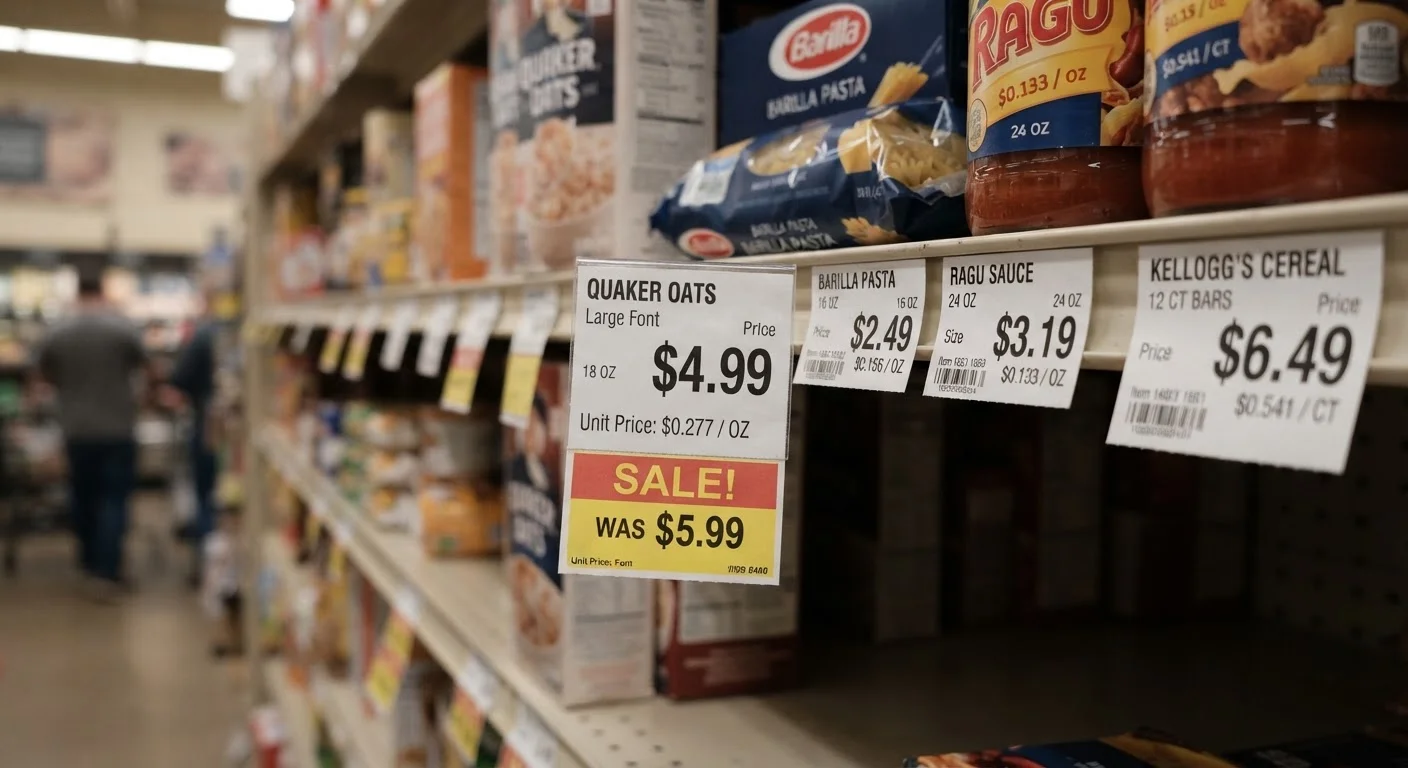
Photo credit: ArticlesHaven.net
In this article
Unit pricing lets you compare products of different sizes on equal footing. Learn how to read it and why it's one of the most useful shopping habits.
Key Takeaways
- Unit pricing converts total package price into a standardized cost-per-measure, enabling fair comparisons.
- A lower sticker price does not always mean a lower unit price - size and quantity matter.
- The skill applies beyond grocery stores to cleaning supplies, personal care, home goods, and online shopping.
- Bulk sizes aren't always the better deal once unit price is calculated.
- Store-brand products frequently win unit price comparisons against name-brand equivalents.
What Unit Pricing Actually Tells You
When you grab two bottles of the same shampoo off a shelf - one 12 oz for $3.99, one 20 oz for $5.49 - your instinct might be to compare sticker prices. That instinct is usually wrong. Unit pricing converts both prices into the same scale so the comparison is honest.
The formula is simple: divide the total price by the quantity or weight. The 12 oz bottle works out to about $0.33 per ounce. The 20 oz bottle comes to about $0.27 per ounce. The larger bottle wins - and you couldn't have seen that just by looking at total price.
This is exactly what shelf unit pricing labels do for you automatically. Most U.S. retailers display a small cost-per-measure figure on the shelf tag. Learning to glance at that number rather than the big price takes about ten seconds of habit-building and pays off indefinitely.
30-40%
Typical unit price difference between sizes
Consumer behavior researchers have observed that unit price gaps between small and large package sizes frequently fall in this range, though variation by category is significant.
~35
U.S. states with some unit pricing laws
Roughly 35 states have enacted some form of unit pricing requirement for grocery or retail goods, though coverage and enforcement vary considerably by jurisdiction.
Common Mistakes Unit Pricing Helps You Avoid
The most frequent error shoppers make is treating a lower total price as proof of a better deal. As the shampoo example shows, a cheaper-looking package can cost significantly more per unit of use. This mistake is compounded by packaging design - some manufacturers use oversized containers relative to their contents, making a product appear larger than it is.
A related trap: assuming the sale item is always the better unit price. A "buy one get one 50% off" promotion on a smaller size may still cost more per ounce than the non-sale larger size sitting next to it. Unit pricing cuts through promotional framing. For more on how retailers use price framing to influence perception, see how price anchoring works.
Another common pitfall is mismatched units. Two similar products may show their unit prices in different measures - one in price per ounce, another in price per gram. Always verify the unit before comparing, or convert manually.
Quick Check Before You Grab
Before adding any packaged product to your cart, take three seconds to find the unit price on the shelf label. If it's missing, divide the price by the weight or count listed on the package. Making this a reflex - rather than a deliberate calculation - is what separates occasional savings from consistent ones.
Beyond Groceries: Where This Skill Travels
Unit pricing isn't a supermarket-only concept. The same calculation logic applies almost anywhere products are sold in varying sizes or quantities.
- Cleaning supplies: Concentrate formulas may carry a higher sticker price but deliver far more uses per dollar when measured per load or per application.
- Personal care: Vitamins, supplements, and skincare products are routinely sold in different count sizes at varying unit prices.
- Home goods: Light bulbs, batteries, and paper goods reward the unit-price check - pack sizes vary widely and so do the economics.
- Online shopping: Many e-commerce platforms display unit pricing in product listings. When they don't, the math is the same: price divided by quantity.
The habit connects naturally to related decision-making frameworks. Thinking in cost-per-use extends this logic further - factoring in how often you'll actually use something, not just how much of it you're getting. And if you're weighing whether a bulk purchase makes financial sense, bulk buying has trade-offs worth understanding beyond unit price alone, including storage and spoilage.
Putting Unit Pricing Into Practice
If shelf labels don't display unit prices - or if you're shopping online without them - the manual calculation takes seconds. Divide the total price by the total quantity or weight shown on the package. Many shoppers keep a basic calculator app open while browsing.
A few practical habits that reinforce the skill:
- Always check the unit on the label before comparing - ounces vs. pounds, sheets vs. rolls, count vs. weight.
- Don't skip the comparison because one option is on sale; calculate both.
- Factor in realistic usage. A low unit price on a perishable product that you'll waste is no bargain.
Unit pricing is one input in a broader comparison process, not a standalone decision rule. Price-only comparisons frequently backfire for reasons that go beyond volume - quality, shelf life, and household fit all matter. Unit pricing sharpens the financial side of that evaluation so at least one variable is clear.
Unit Price Isn't the Whole Picture
Unit pricing answers the question of cost per measure - it doesn't account for quality differences, expiration dates, storage constraints, or personal preference. A product with a lower unit price that you'll only use half of before it expires is not necessarily the better purchase. Use unit pricing as one reliable input among several when evaluating options.
Frequently Asked Questions

Author
Articles Haven Editorial Contributor
Articles Haven Editorial Team is the collective byline for our editorial team and contributor network. Articles published under this byline or an editorial pen name are researched, written, and reviewed according to our editorial standards for clarity, consistency, and independence before publication.
View all articles →