
How Price Anchoring Shapes What You're Willing to Pay
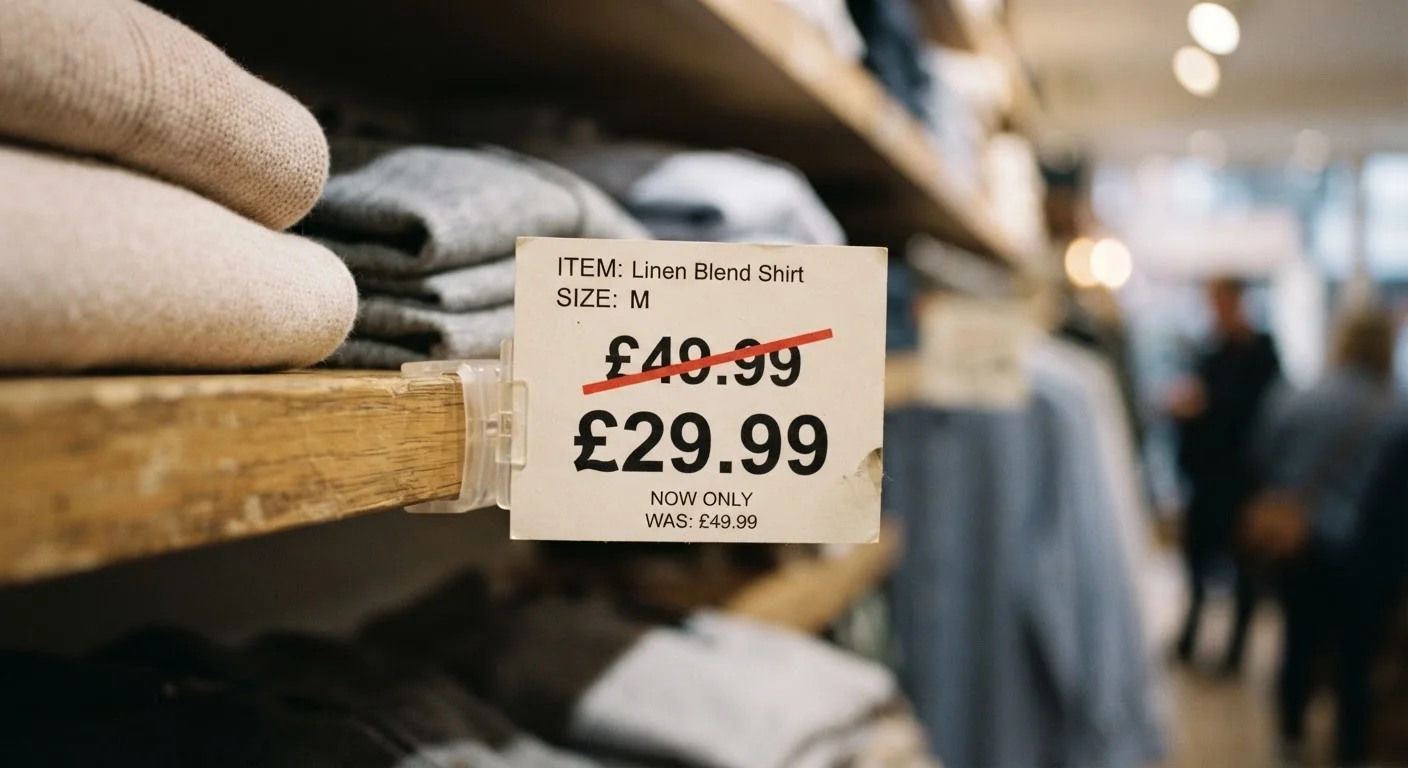
Photo credit: ArticlesHaven.net
In this article
That 'original price' shown next to a sale tag is doing psychological work. Learn how price anchoring works and how to shop past it.
Key Takeaways
- The first price you see for a product disproportionately influences what you think is fair to pay.
- Retailers often set high 'original' prices specifically to make discounts look more attractive.
- Anchoring works even when shoppers know about it - awareness alone isn't enough to fully counteract it.
- Comparing a price to external benchmarks - not just the listed original - is the most reliable counter-strategy.
- Sale percentages and strikethrough prices can be misleading without context about what the item normally sells for.
Why That Crossed-Out Price Is There
Walk through any retailer - physical or online - and you'll see them everywhere: prices with a line through them, followed by a lower number in bold. The crossed-out figure isn't just informational. It's a psychological lever.
When you see "Was $120, Now $79," your brain doesn't evaluate $79 on its own merits. It compares $79 to $120. The gap between those two numbers - not $79 itself - is what generates the feeling that you're getting a deal. That's anchoring in action.
The anchor doesn't have to be legitimate to work. Research in behavioral economics has shown that an arbitrary starting number can significantly shift what someone considers a reasonable price - even when the anchor bears no logical connection to the item's actual value. As sale prices aren't always the lowest prices in ways that anchor-awareness can help you catch.
“The anchoring effect is one of the most robust findings in behavioral science. It affects experts and novices alike, and awareness of the bias does surprisingly little to reduce its influence.”
— Daniel Kahneman, Nobel Prize-winning psychologist and author of 'Thinking, Fast and Slow'
How Retailers Set the Anchor
The mechanics vary, but the goal is consistent: make the price you're paying feel like a win relative to a number you just saw.
- Inflated MSRPs: Manufacturers' suggested retail prices are often set high so that any retailer's real selling price looks like a discount.
- Brief 'original' price windows: Some retailers list an item at a high price for a short period, then mark it down permanently - technically offering a discount against a real price, but one almost no one paid.
- Tiered pricing displays: Showing three versions of a product (basic, standard, premium) at different prices anchors your perception of the middle option as reasonable, even if the premium tier was never meant to sell.
Understanding this framing is central to distinguishing retail price from true value - a skill that transfers to nearly every purchase decision.
~60%
Shoppers influenced by reference prices
Research published in behavioral economics literature consistently finds a majority of consumers adjust their willingness to pay based on an initial reference price, even when they suspect it may be inflated.
3x
Perceived value lift from high anchor
Experimental studies have demonstrated that presenting a high anchor before a selling price can increase perceived value of the product by a factor of roughly three compared to presenting the price alone.
What Anchoring Looks Like in Practice
Price anchoring isn't limited to clothing sales or electronics promotions. It shows up across consumer contexts in slightly different forms.
The common thread: a number is introduced before you've formed your own value estimate, and it shapes every comparison you make afterward.
How to Evaluate Price Without the Anchor
The practical antidote to anchoring is replacing the retailer's reference point with your own. Here's how to do that:
- Look up external prices first. Check what the same item costs at multiple retailers before viewing any individual listing's 'original' price. This prevents the anchor from forming before you have context.
- Use price history tools. Browser extensions and dedicated sites track price changes over time, letting you see whether the 'original' price was ever genuinely in effect.
- Ask what it's worth to you. Before seeing any price, estimate roughly what you'd consider fair for the item based on its function. Write it down if that helps.
- Compare per-unit, not per-package. Unit pricing gives you a stable, anchor-resistant basis for comparison - especially for groceries and household goods.
Build Your Own Reference Before Shopping
Before browsing a sale or clicking into a product listing, spend two minutes forming your own estimate of what the item is worth - or what you'd be willing to pay. This gives you an internal anchor that's harder for a retailer's pricing display to displace. Even a rough figure helps counteract the effect of an externally imposed number.
It also helps to ask whether you need the item at all - anchoring works partly because the deal framing shifts focus from "do I want this?" to "how much am I saving?" Those are very different questions. For a fuller framework, thinking in cost-per-use offers a durable counterweight to sale-price thinking. And before completing any purchase, it's worth checking whether the deal is genuinely strong - what makes a discount actually worth it goes deeper on that question.
Frequently Asked Questions

Author
Articles Haven Editorial Contributor
Articles Haven Editorial Team is the collective byline for our editorial team and contributor network. Articles published under this byline or an editorial pen name are researched, written, and reviewed according to our editorial standards for clarity, consistency, and independence before publication.
View all articles →